How to Tell if Your Long Island Egress Installation Company Cut Corners on the Drain
How to Tell if Your Long Island Egress Installation Company Cut Corners on the Drain
Adding an egress window to your basement is one of the smartest investments a Long Island homeowner can make. It floods your lower level with natural light, provides a life-saving exit in an emergency, and significantly boosts your property value. However, as a Creative Consultant at Long Island Egress Pros, I have seen the “dream renovation” turn into a literal swamp far too many times. The culprit is almost always the same: a $50 shortcut taken on the drainage system.
When you hire a Long Island egress installation company, you are paying for more than just a hole in the wall and a piece of glass. You are paying for the engineering required to keep the Atlantic Ocean – or at least the local water table – out of your finished basement. If the drainage isn’t handled with surgical precision, that new window becomes a funnel. I’ve walked into homes where the drywall is crumbling and the air is thick with the scent of mildew, all because an egress window contractor promised a “deal” that skipped the most vital step of the process. In this guide, I’m going to teach you how to be a forensic detective of your own home’s safety.
Why Drainage is the “Invisible” Priority in Long Island Egress
Long Island presents a unique set of challenges for any egress window company. Our geography is a patchwork of sandy soils that drain quickly and heavy clay pockets that hold water like a bathtub. Furthermore, we are seeing a dramatic shift in local weather patterns. We no longer just get “rain”; we get “events.” We’ve seen the devastation of flash flooding in East Rockaway and the persistent drainage struggles faced by residents on Marjorie Lane. These aren’t just anomalies; they are the new reality for egress window long island projects.
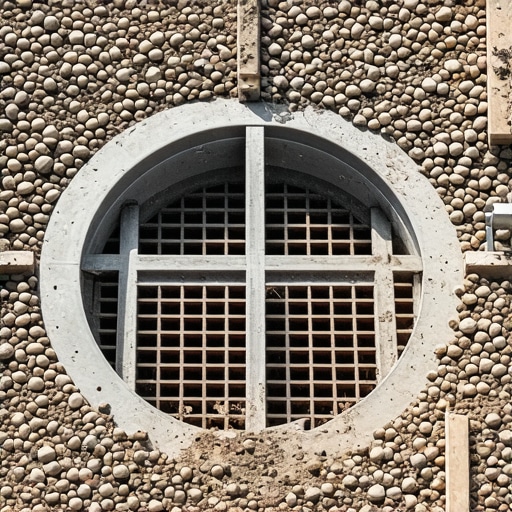
In a typical basement egress window installation, the window well acts as a collection point. During a heavy downpour, thousands of gallons of water can run off your roof and across your lawn. If your gutters are slightly clogged or the ground is already saturated, that water will seek the lowest point. Without a robust, professionally installed drain, that lowest point is the bottom of your window well. Once the water rises above the windowsill, the pressure becomes immense. It will find a way through the seals, the frame, or even the foundation itself. This is often Why Your New Long Island Egress Window is Leaking and How to Fix It, but the root cause is almost always the drain, not the window.
Red Flag #1: The “Gravel Pit” Fallacy
One of the most common ways a cut-rate egress window installation company will save time and money is by employing the “Gravel Pit” method. They dig the hole, install the well, and then dump about 12 inches of crushed stone at the bottom. They tell the homeowner, “The water will just soak into the ground through the gravel.”
This is a dangerous half-truth. While gravel does allow water to pass through it, it doesn’t create a “drain” – it creates a “temporary bucket.” On Long Island, especially in areas with high water tables, the soil beneath that gravel can only absorb water so fast (this is known as the percolation rate). During a severe storm, the water will fill the gaps between the stones in minutes. Once those gaps are full, the water has nowhere to go but up. A legitimate basement egress window installation requires a dedicated pipe that leads the water away from the foundation. If your contractor didn’t install a vertical drain pipe that disappears deep into the ground or connects to a larger system, they haven’t installed a drain; they’ve installed a ticking time bomb.
Red Flag #2: No Connection to the Footing Drain (The “Weeper”)
If you want to know if you’ve hired the best Long Island egress window installers, watch how deep they dig. A professional installation should ideally involve “tapping into the weepers.” The “weeper” or footing tile is a perforated pipe that runs along the perimeter of your home’s foundation at the footing level. Its job is to collect groundwater and direct it to a sump pump or a daylight exit.
A high-quality Long Island egress installation company will dig all the way down to the footing of your house. They will then install a 4-inch PVC drain pipe that connects directly into that existing drainage tile using a “T” or “Y” connector. This ensures that any water entering the window well is immediately whisked away into the home’s primary drainage system. If your egress window contractors stopped digging just a few inches below the bottom of the window, they skipped the “weeper” connection. Without this connection, your window well is an isolated island of water during a storm. This oversight is a primary reason Why Your Laminate Floor smells like a wet basement months after the job is done.
Red Flag #3: Missing Permits and “Private” Communication
The administrative side of the job is often a reflection of the technical side. In the world of egress window installation, permits are not optional – they are your protection. A permit triggers a town inspection. An inspector’s job is to ensure that the egress window installation company followed local building codes, which include specific requirements for drainage and structural integrity.
I always warn homeowners about contractors who call from “private numbers” or push to work without a permit to “save you money.” If they are hiding from the town, they are likely hiding their sub-standard work from you. A reputable Long Island egress company will always be transparent, provide a written contract, and handle the permit process from start to finish. If your contractor didn’t pull a permit, it’s a near-certainty that no one verified the depth or connection of your drain. You are essentially taking their word for it, and in my experience, “trust me” is not a valid waterproofing strategy.
Red Flag #4: Improper Pitch and Well Grading
Drainage isn’t just about what happens inside the well; it’s about what happens around it. After a Long Island egress window contractor finishes the excavation and installation, the way they backfill the soil is critical. The land immediately surrounding the window well should have a positive pitch, meaning it should slope away from the window well at a grade of at least one inch per foot for the first six feet.
Many basement egress window installation companies simply dump the dirt back in and level it off with a shovel. Over the next few months, that loose soil will settle. If it wasn’t properly compacted and pitched, it will eventually slope toward the well, creating a funnel that directs every drop of rain from your yard into your new egress. You can check this yourself with a simple level or even by watching how water pools during a light rain. If you see water sitting against the outer edge of the window well, the grading is wrong. This is a common issue that arises when homeowners prioritize a Long Island Kitchen Remodel or basement finish without first ensuring the exterior “shell” of the basement is hydro-dynamically sound.
The “Water Test”: How to Verify Your Drain Today
You don’t have to wait for the next hurricane to find out if your egress window installation was done correctly. You can perform what I call the “Garden Hose Audit.” This is a simplified version of The ‘Drip Test’ for Checking Your Shower Pan Liner for Pinholes, adapted for exterior drainage.
Step-by-Step Drainage Verification:
- Clear the Debris: Ensure the bottom of the well is free of leaves, toys, or loose dirt.
- The Hose Placement: Take a garden hose and place it at the bottom of the window well. Do not spray the window directly, as you don’t want to force water through the seals yet; you are testing the drain, not the glass.
- The Flow Test: Turn the water on to a moderate flow. A properly installed drain connected to a dry well or footing tile should be able to handle a standard garden hose indefinitely without the water level rising more than an inch or two.
- The Observation: If the water begins to pool and rise toward the windowsill, turn off the hose immediately. This is a “fail.” It means the drain is either clogged, improperly sized, or – worst of all – it’s just a “gravel pit” that has reached capacity.
If your well fails this test, you need to contact a professional Long Island egress window contractor immediately. Do not wait for the soil to become saturated during a week-long rain spell.
Advanced Technical Standards: What Should Be There?
To truly understand if your egress window installation company cut corners, you need to know what a “Gold Standard” installation looks like. At Long Island Egress Pros, we follow a rigorous protocol that accounts for the hydrostatic pressure specific to our region.
The Triple-Protection Strategy:
- The Deep-Bore Drain: If we cannot connect to a footing tile (sometimes the case in very old homes), we install a deep-bore drain that reaches down into the sandy strata of the Long Island soil, far below the foundation level.
- The Filter Fabric Wrap: A common reason for drain failure is “silting.” Over time, fine dirt particles wash into the gravel and the pipe, eventually clogging it. A pro will wrap the drainage stone and the pipe in a high-quality filter fabric to keep the system clear for decades.
- The Sump Connection: In areas with exceptionally high water tables (like parts of the South Shore), the only safe option is to run the egress drain into an interior sump pump system. This ensures that even if the ground is completely saturated, a mechanical pump is actively removing water from the window well.
Maintenance: Your Role in Preventing a Flood
Even the best basement egress window installation requires a little bit of homeowner love. Think of your egress drain like the gutters on your roof. If they are full of leaves, they won’t work. I recommend a seasonal maintenance check:
- Spring: Remove any silt or mud that may have washed in during the winter snowmelt.
- Fall: Clear out fallen leaves. A single large maple leaf can act like a plug over your drain grate.
- Winter: Ensure snow isn’t piled high inside the well. When that snow melts rapidly during a “January Thaw,” it can overwhelm the drain if the ground is still frozen.
Conclusion: Don’t Wait for the Next Storm
Cutting corners on drainage is a gamble where the homeowner is the only one who loses. An egress window installation company that saves a few hours by skipping the footing connection or the proper grading will be long gone by the time the first major flood hits your neighborhood. The structural integrity of your foundation and the health of your family (due to mold risks) are far too important to leave to chance.
If you have any doubts about the quality of your current egress, or if you are planning a new basement egress window installation and want it done right the first time, don’t settle for “good enough.” Look for the red flags: the lack of permits, the “gravel-only” drainage, and the poor exterior grading. A true professional will be happy to explain their drainage strategy in detail and show you exactly where that water is going to go.
At Long Island Egress Pros, we specialize in fixing the mistakes of others and setting the standard for new installations across Nassau and Suffolk counties. We understand the local soil, the local codes, and the local weather. Don’t let a $50 shortcut ruin your basement. Contact us today for a professional inspection or a quote on a high-quality, guaranteed Long Island egress system.