Why Your Laminate Floor is Peeling at the Edges
I once walked into a house where a expensive wide-plank laminate floor was peaking so bad the edges looked like miniature mountain ranges. The homeowner was devastated. They spent five figures on the material and labor, yet six months later, the decorative layer was flaking off like a bad sunburn. I checked the humidity. I checked the subfloor. Then I looked in the utility closet and saw a steam mop. That one tool destroyed the entire investment. People think laminate is bulletproof because it is made of plastic resins, but the core is a thirsty beast that never stops looking for a drink. If you are seeing peeling at the edges, your floor is telling you a story about moisture, friction, or mechanical failure that started long before the first flake fell off.
The microscopic reality of edge delamination
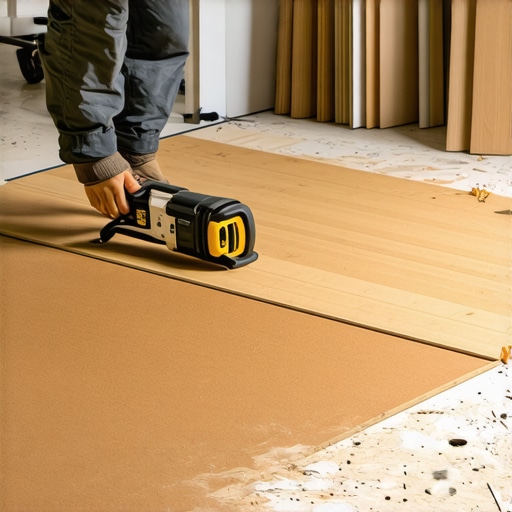
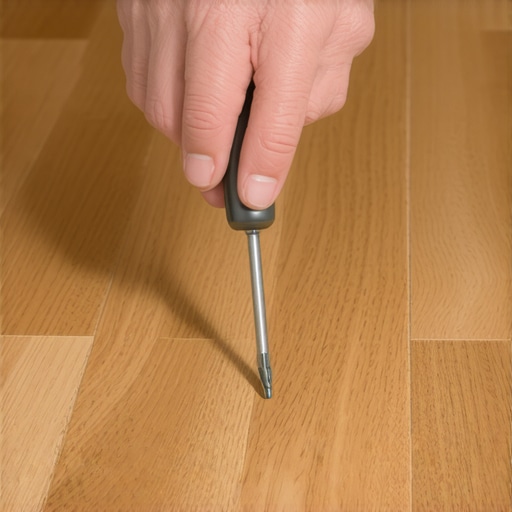
Laminate floor peeling occurs when the decorative melamine layer separates from the high-density fiberboard core due to moisture infiltration or excessive heat. This process, known as delamination, usually begins at the seams where the protective aluminum oxide coating is thinnest. Once moisture penetrates the HDF core, the wood fibers swell and push against the surface layer until the chemical bond snaps. [IMAGE_PLACEHOLDER] The physics of this failure are rooted in the hygroscopic nature of the wood fibers used in the core construction. Even the best resins cannot completely seal every fiber. When these fibers absorb water vapor, they expand in volume. This expansion is not uniform. The core expands more than the top wear layer. This creates a shear force at the interface. Eventually, the tension exceeds the strength of the adhesive bond. You see this as a lifting or curling of the decorative paper. If you catch it early, you might save the floor by stabilizing the environment. If the edges are already brittle and breaking away, the structural integrity of the plank is gone. This is why liquid spills must be dried immediately. It is not about the surface. It is about the vulnerable tongue and groove joint where the raw core is exposed to the elements.
Why your subfloor is lying to you
An uneven subfloor creates vertical movement that stresses the locking mechanisms and causes the protective surface layers to crack and peel. If your floor leveling was not done to within 3/16 of an inch over a 10 foot radius, the planks will flex every time you walk on them. This constant rubbing at the joints acts like sandpaper, wearing down the factory seal until moisture can enter easily. I spent three days grinding concrete on a job last month just so the floor would not click like a castanet. Most installers skip this. They think the underlayment will hide the dip. It will not. When the floor dips into a void, the tongue of one plank rubs against the groove of another. This friction generates localized heat and mechanical wear. Over thousands of footsteps, this wear breaks down the melamine coating at the very edge of the plank. Once that coating is compromised, even ambient humidity from a nearby shower can get inside. The floor might look flat to the naked eye, but your feet feel the deflection. That deflection is the primary driver of premature edge failure in modern click-lock systems.
“A floor is only as good as the subfloor beneath it; deflection is the enemy of every joint.” – Master Flooring Axiom
The ghost in the expansion gap
A lack of proper expansion gaps at the perimeter causes planks to crush against each other, leading to chipped and peeling edges. Laminate floors are floating systems that expand and contract with seasonal changes in temperature and humidity. If the floor is locked against a wall or a heavy kitchen island, the pressure has nowhere to go but into the seams. This crushing force is immense. It can actually pulverize the HDF core at the joint. When the core loses density, the surface layer loses its support. You will notice the edges looking slightly raised or “peaked” before they start to peel. This is why we use spacers. A 3/8 inch gap is not a suggestion. It is a requirement. I have seen floors buckle so hard they lifted the baseboards off the wall. When the planks are under that much compression, the edges are under a constant state of stress. Any minor impact, like a vacuum cleaner or a dropped toy, will cause the stressed edge to chip. Once a chip starts, the peeling spreads. It is like a snag in a sweater. The integrity of the entire surface depends on that factory edge remaining intact and under no lateral pressure.
Performance metrics for core stability
| Core Material Type | Density Rating | Moisture Resistance | Edge Failure Risk |
|---|---|---|---|
| Standard HDF | 800 kg/m3 | Low | High |
| Wax-Coated HDF | 850 kg/m3 | Medium | Moderate |
| Water-Resistant HDF | 900+ kg/m3 | High | Low |
| PVC Composite | 1200 kg/m3 | Total | Very Low |
The density of your floor core determines how much abuse the edges can take before they fail. Higher density means tighter fibers and less room for water to move. If you live in a high humidity area, you should never settle for anything less than 900 kg/m3. The cheaper stuff you find at big-box discount retailers is often closer to 750 kg/m3. It feels light in your hand and it behaves like a sponge. I always tell my clients to check the weight of a single box. If you can lift it with one finger, your edges are going to peel within two years. Weight is a proxy for resin content and compression. More resin means better edge stability and a stronger bond between the decorative layer and the core.
The steam mop disaster and cleaning errors
Using a steam mop on laminate flooring is the fastest way to cause edge peeling because it forces pressurized moisture into the joints. The high temperature of the steam melts the adhesives that hold the decorative layer to the core while simultaneously swelling the wood fibers. While most people want the thickest underlayment, too much cushion actually causes the locking mechanisms on LVP to snap under pressure. The same logic applies to cleaning. You want a damp mop, not a wet one. The water should evaporate within thirty seconds. If it sits longer, it is searching for a way into the core. I have seen beautiful floors ruined by homeowners who thought they were being extra clean. They were actually cooking the glue. The heat from a steam mop can reach over 200 degrees Fahrenheit. Melamine is tough, but the bond underneath it is not designed for that kind of thermal stress. Once you break that bond, there is no way to glue it back down. The repair involves replacing the entire plank, which usually means pulling up the floor from the nearest wall.
“Proper acclimation is the delta between a successful installation and a catastrophic failure of the mechanical bond.” – Flooring Standards Manual
The checklist for edge preservation
- Maintain indoor relative humidity between 35 and 55 percent year round.
- Use a 6-mil poly film moisture barrier over all concrete subfloors.
- Verify that the subfloor is flat to within 3/16 inch over 10 feet.
- Never install heavy fixed cabinetry on top of a floating laminate floor.
- Avoid all steam cleaners and wet-mopping techniques.
- Use felt pads on all furniture legs to prevent lateral shear on the edges.
Acclimation and the invisible expansion
Skipping the 48 hour acclimation period leads to dimensional instability that manifests as edge peeling and joint separation. Planks must reach equilibrium with the home environment before they are locked together. If you take cold planks from a warehouse and install them in a warm, humid house, they will expand. Since they are already clicked together, that expansion creates internal pressure. The edges rub against each other with incredible force. This is a common mistake for DIY installers who want to get the job done in a weekend. They bring the boxes home and start cutting immediately. That is a recipe for a callback. I have seen planks grow by an eighth of an inch in 24 hours. That might not sound like much, but across a 20 foot room, that is two and a half inches of total movement. If the floor cannot move, the edges will pay the price. The friction will eventually cause the wear layer to fray and peel. It is a slow death for a floor. You might not see the damage for a year, but the clock starts the moment you ignore the acclimation instructions. This is why professional installers always insist on dropping the material off a few days before the start date. It is not about convenience. It is about the physics of the material. A stable floor is a long lasting floor.