Why Your Shower Grout Turns Pink No Matter How Much You Clean
I spent three days grinding concrete on a job last month just so the floor wouldn’t click like a castanet. That job taught me that people focus too much on what they see and not enough on what is happening at a molecular level beneath their feet. When it comes to your shower, that pink stain is not just an eyesore. It is a biological red flag. I have walked into hundreds of bathrooms where the homeowner is scrubbing until their knuckles bleed, yet the pink returns within forty-eight hours. They think they have a cleaning problem. The reality is they have a moisture management and physics problem. Most guys skip the leveling compound or ignore the pre-slope, and that is exactly where the trouble starts.
The biological invasion in your bathroom
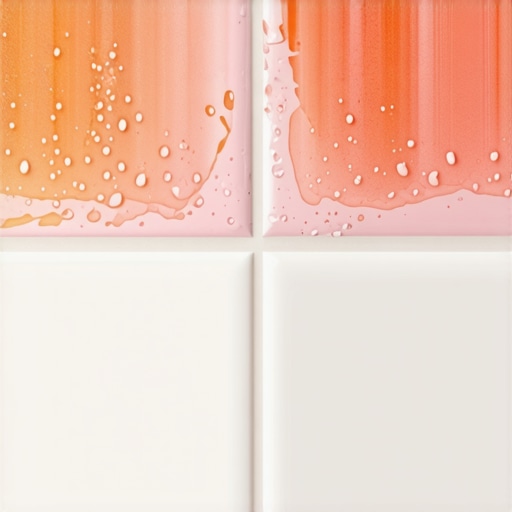
Serratia marcescens is the primary bacterium responsible for the pink or orange film in showers and on grout lines. This organism is airborne and thrives in moist environments where it can feed on fatty acids and phosphorus found in soap scum and shampoo residues. It produces a red pigment called prodigiosin at room temperature. Many people mistake this for mold, but it is a highly resilient gram-negative bacterium. It does not just sit on the surface. It embeds itself into the porous structure of cementitious grout, making it nearly impossible to eradicate with standard surface-level wiping. To stop it, you must understand the chemistry of the biofilm it creates. This biofilm acts as a protective shield, allowing the colony to survive even when you splash a bit of diluted bleach on it. You are not just cleaning a stain. You are fighting a microscopic war against a colony that has found a perfect structural home in your shower installation.
“A floor is only as good as the subfloor beneath it; deflection is the enemy of every joint.” – Master Flooring Axiom
The structural failure of poor drainage
Poor drainage and incorrect slope are the leading causes of pink bacteria growth in tile showers. If the shower pan does not have a 1/4 inch per foot slope toward the drain, water will pool in the microscopic valleys of the grout. This standing water creates a stagnant reservoir where Serratia marcescens can multiply without disturbance. In my twenty-five years of floor leveling and tile work, I have seen that even a 1/8 inch dip in the subfloor can ruin the entire waterproofing system. When water sits, it begins to saturate the mortar bed. If your installer did not clear the weep holes in the drain assembly, that water has nowhere to go. It sits there, rotting, and providing a constant source of moisture that wicks up through the grout by capillary action. You can scrub the top all you want, but the bacteria are being fed from a saturated sub-surface. This is why a shower that stays wet for hours after use is a breeding ground for biofilm.
Why your cleaning products are failing
Cleaning products that contain phosphates or organic oils actually provide nutrients for the pink slime to grow faster. Many homeowners use natural cleaners that contain plant-based fatty acids, which are essentially a buffet for Serratia marcescens. Furthermore, abrasive scrubbers can create micro-scratches in the tile glaze and grout surface, providing even more surface area for the bacteria to anchor themselves. To effectively kill the colony, you need a disinfectant that can penetrate the porosity of the cement. Using a phenolic disinfectant or a bleach solution is a start, but if you do not address the sealing of the grout, you are leaving the door wide open for re-infection. The chemistry of the bond between the bacteria and the grout is stronger than most people realize. You need to break the biofilm first, often with a steam cleaner or a heavy-duty alkaline cleaner, before the sanitizer can even reach the pathogen.
| Material Type | Moisture Resistance | Bacterial Retention | Maintenance Level |
|---|---|---|---|
| Sanded Grout | Low (Porous) | High | High |
| Epoxy Grout | High (Impermeable) | Very Low | Low |
| Laminate Flooring | Very Low | Moderate | N/A (Not for Showers) |
| Glazed Porcelain | High | Low | Low |
| Vinyl Plank (LVP) | High | Low | Low |
The physics of the shower pan slope
Gravity is the only water management tool that never fails, provided the geometry of the installation is correct. In a standard shower, the pre-slope is a layer of deck mud or concrete underneath the waterproofing liner that directs water toward the weep holes. If the installer placed the liner flat on the subfloor and then built the slope on top of it, they created a water trap. This trap is where pink bacteria flourish. The moisture stays trapped in the sand bed, never reaching the drain, and creates a swamp-like environment under your tiles. This is similar to a carpet install where the padding gets wet. You can dry the carpet, but the pad stays damp and grows mildew. In a shower, the grout is your carpet, and the mortar bed is your pad. Without a proper pre-slope, your shower will never truly be clean. This is why I always check the subfloor levelness before a single piece of tile goes down. A level subfloor is the foundation of a sloped shower pan.
“Proper drainage is not just about the surface but about the moisture management within the setting bed itself.” – TCNA Installation Manual
The 1/8 inch that ruins everything
Small deviations in the floor surface lead to hydrostatic pressure issues that most DIYers ignore. If you have a 1/8 inch depression near the drain, water will settle there every single time you turn off the faucet. This micro-pooling is the epicenter of the pink stain. The bacteria settle there first because the concentration of soap scum is highest in standing water. As the water evaporates, the nutrients become concentrated, fueling a growth spurt in the bacterial colony. This is why floor leveling is just as important in a bathroom as it is when preparing for a laminate or hardwood installation. You cannot expect a liquid to behave properly if the substrate is working against physics. I have seen expensive stone floors ruined because the installer thought the thin-set would bridge the gaps. It does not. It just creates hollow spots where moisture and bacteria can hide.
How moisture migrates through porous grout
Cementitious grout is a capillary network that acts like a sponge. When you see pink stains, you are often seeing the bloom of a colony that is living inside the grout, not just on top of it. This migration is driven by evaporation. As the surface water dries, it pulls moisture and dissolved nutrients from deeper within the grout joint to the surface. This brings bacteria with it. To stop this, you must use a penetrating sealer that hydrophobically blocks these capillaries. However, the contrarian truth is that if you seal a grout joint that is already saturated, you are trapping the moisture inside. This can lead to grout cracking or spalling as the water vapor tries to escape. You must ensure the installation is bone dry, usually with industrial fans for 48 hours, before applying any sealer. A cheap sealer from a big-box retailer will not cut it. You need a professional-grade fluorochemical sealer to truly repel the organic oils that Serratia feeds on.
Preventing the pink biofilm at the source
Environmental control is the final structural layer in preventing pink grout. You must reduce the ambient humidity in the bathroom to below 50 percent within thirty minutes of showering. This requires a high-CFM exhaust fan that is properly vented to the exterior, not just into the attic. If the air stays humid, the grout never reaches a dry state, and the bacteria never enter dormancy. Furthermore, you must eliminate the food source. Switching from bar soap, which contains tallow (animal fat), to liquid body wash can significantly reduce the biofilm buildup. This is not aesthetic advice. It is mechanical maintenance for your floor system. Just as you would not install carpet in a wet basement, you should not provide a fat-rich environment in a damp shower. Consistency in squeegeeing the walls and floor after every use is the only way to ensure the moisture does not have time to penetrate the grout joints.
- Check your slope: Ensure water flows directly to the drain without pooling.
- Clear weep holes: Make sure the drain assembly is not clogged with mortar.
- Switch to liquid soap: Reduce the fatty acid supply for bacteria.
- Run the exhaust fan: Keep the fan on for at least 30 minutes post-shower.
- Seal your grout: Use a high-quality penetrating sealer every 6 to 12 months.
- Sanitize correctly: Use a bleach-based cleaner periodically to kill airborne spores.
- Inspect the caulking: Replace any cracked silicone where water can seep behind tiles.
The chemistry of fatty acid accumulation
The pink slime is not just living organisms. It is a complex matrix of calcium carbonate, soap scum, and bacterial cells. When hard water reacts with soap, it forms insoluble curds. These curds precipitate out of the water and bond to the grout. This creates a textured surface that is perfect for bacterial attachment. If your home has hard water, you are at a much higher risk for pink grout because the mineral content acts as a scaffold for the biofilm. This is the same reason why carpet install professionals worry about soil filtration. The minerals and oils create a sticky site that attracts more contaminants. In a shower, this sticky site is a growth chamber. Addressing water hardness with a softener can actually be a flooring preservation strategy. It keeps the surface of your porcelain and ceramic tiles smooth, making it much harder for Serratia marcescens to gain a foothold.
The ghost in the expansion gap
Every professional shower installation requires expansion joints at all plane changes, such as where the floor meets the wall. Using grout in these corners is a structural error. Grout is rigid and will crack as the house shifts. Those cracks are superhighways for water to enter the wall cavity. Once water is behind the tile, it sits against the waterproofing membrane or, worse, the backer board. This hidden moisture is what feeds pink bacteria from the backside. You might see pink stains appearing at the base of the wall, and no amount of scrubbing will fix it because the colony is thriving behind the tile. You must use 100 percent silicone caulk in all corners. Silicone is flexible and contains antimicrobial agents that resist the growth of Serratia marcescens. If your corners are grouted and cracked, that is your smoking gun for chronic pink slime issues.