The Iron and Towel Hack for Carpet Indentations
Most guys skip the leveling compound. They think the underlayment will hide the dip. It won’t. I spent three days grinding concrete on a job last month just so the floor wouldn’t click like a castanet. That job taught me that even the smallest imperfection eventually telegraphs to the surface, whether you are dealing with a 50 ounce plush carpet or a high end laminate. You can ignore the physics of the subfloor for a while, but eventually, the structural reality of the house will catch up to you. I have seen fifteen thousand dollar wide plank walnut floors cup like a potato chip because a guy didn’t check the crawlspace humidity. The smell of floor wax and sawdust is a constant in my life, and after twenty five years on my knees, I have learned that a floor is not a decoration. It is a precision engineered performance surface. When we talk about the iron and towel hack for carpet indentations, we are really talking about the molecular restoration of synthetic and natural fibers through thermal energy and moisture. It is a trick of the trade, but it requires an understanding of how fibers behave under pressure.
The physics of compressed carpet fibers
Carpet indentations occur when heavy furniture exerts localized pressure on the pile for extended periods, causing the individual fibers to lose their structural memory. This phenomenon is particularly prevalent in high pile carpets or those with a dense secondary backing. When you place a heavy sofa or a mahogany desk on a carpet, the weight compresses the air out of the yarn bundles and flattens the twist. Synthetic fibers like nylon or polyester are polymers. Under constant load, these polymers undergo a process of physical deformation where the hydrogen bonds within the fiber chains are temporarily locked into a flattened state. This is why a simple vacuuming session rarely fixes a deep divot. You are fighting against a molecular change in the fiber orientation. To fix this, you must introduce heat and moisture to break those temporary bonds and allow the fiber to return to its original heat set shape. If the carpet install was done correctly with a high density pad, the recovery is easier. If the installer used a cheap, low density foam, the pad itself may have collapsed, which means no amount of ironing will fix the surface because the foundation is dead.
“A floor is only as good as the subfloor beneath it; deflection is the enemy of every joint.” – Master Flooring Axiom
The thermal restoration process
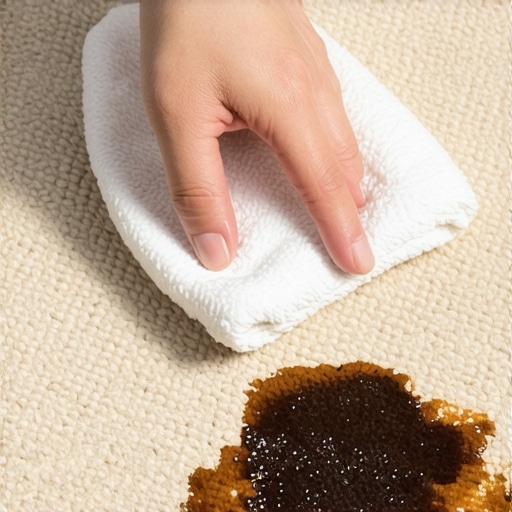
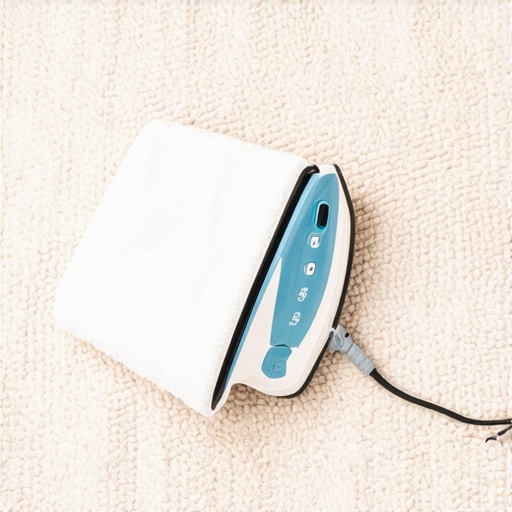
The iron and towel method works by using steam to penetrate the carpet pile and relax the crushed polymer chains. You start with a clean white cotton towel. Do not use a colored towel because the heat can cause dye transfer, which will ruin a light colored carpet faster than the indentation ever could. Saturate the towel with water and wring it out so it is damp but not dripping. Place the towel directly over the crushed area. Set your steam iron to the highest setting. You are not trying to iron the carpet directly. You are using the iron to turn the water in the towel into steam. Press the iron onto the damp towel for thirty to sixty seconds, moving it in small circles. The moisture from the towel protects the synthetic fibers from melting. Most carpets are made of nylon or polyester, and these materials have a specific glass transition temperature. If you touch the iron directly to the carpet, you will glaze the fibers, creating a hard, shiny plastic patch that is permanent. By using the towel as a buffer, you create a controlled steam chamber that allows the fibers to absorb moisture and expand. Once you lift the iron and the towel, use a carpet rake or a common kitchen spoon to gently agitate the fibers back into an upright position. Leave the area alone until it is completely dry. This is where most people fail. They step on the damp fibers immediately, which just re compresses them while they are in a vulnerable, heated state.
[image_placeholder_1]
The subfloor secret that contractors ignore
If your carpet indentations are occurring in the same spots where no furniture exists, you are likely dealing with a subfloor dip or a failed floor leveling attempt. I have walked onto countless jobs where the homeowner complained about carpet wear, only to find that the 3/4 inch plywood subfloor was delaminating or the joists were spaced too far apart. In the world of laminate and hardwood, a dip of more than 1/8 inch over a ten foot span is a death sentence. For carpet, it is less of a structural failure and more of an aesthetic one, but it still indicates a lack of precision. When I prep a room for carpet install, I am looking for high spots in the concrete or plywood. I use a ten foot straight edge to find the low points. If the floor is concrete, I use a diamond cup wheel on a grinder to take down the humps. It is a dusty, miserable job that smells like a rock quarry, but it is the only way to ensure the floor feels solid. If the subfloor is wood, I am checking for squeaks and loose fasteners. A squeaky subfloor under a brand new carpet is a sign of a lazy installer. I always screw down the subfloor every six inches along the joists before the pad goes down. This prevents the friction that causes noise and ensures that the floor leveling compound, if used, will not crack due to vertical deflection.
| Fiber Type | Heat Sensitivity | Recovery Rate | Risk of Glazing |
|---|---|---|---|
| Nylon 6,6 | Medium | High | Moderate |
| Polyester (PET) | High | Medium | High |
| Triexta (PTT) | Medium | High | Low |
| Wool | Low | Very High | Very Low |
Carpet versus laminate structural limits
While you can steam a carpet back to life, you cannot fix a dented laminate floor with heat and moisture. Laminate is a multi layer product consisting of a wear layer, a photographic layer, and a high density fiberboard (HDF) core. If you drop a heavy object on laminate and it chips or dents, the HDF core has been crushed. Introducing moisture to a laminate floor is the worst thing you can do. The HDF core is essentially compressed sawdust and resin. If water gets into the joints, the core will swell, a phenomenon we call peaking. Once laminate peaks, it never goes back down. This is why I always tell people that waterproof LVP is not a license to flood your home. The planks might be waterproof, but the subfloor beneath them is not. If water gets trapped under a click lock floor, it will grow mold and rot the subfloor while the vinyl looks perfectly fine on top. This is the danger of the modern flooring market. Everything is sold as indestructible, but nothing is indestructible if the installation ignores the physics of moisture vapor transmission. In showers and wet areas, the TCNA standards are even more rigid. You need a 100 percent waterproof membrane, not just a water resistant board. The same logic applies to floor leveling. If you don’t use a primer on the concrete before pouring your self leveler, the dry concrete will suck the moisture out of the leveler too fast, causing it to shrink and crack.
“Deflection in the subfloor is the primary cause of click-lock system failure; no amount of underlayment can compensate for a structurally unsound base.” – Tile Council of North America Standard
Why subfloor flatness dictates surface longevity
The industry standard for floor flatness is 3/16 of an inch over a ten foot radius for most hard surfaces. People think that a thick underlayment will hide the dips in a subfloor. This is a myth. While most people want the thickest underlayment, too much cushion actually causes the locking mechanisms on LVP or laminate to snap under pressure. When you walk across a floor that has a dip, the boards flex into that void. That vertical movement puts immense stress on the thin plastic or wood tongues that hold the floor together. Over time, those tongues will shear off. Then the floor starts to gap and click. I have seen guys try to fill dips with scraps of carpet pad or cardboard. It is a hack job that will fail within a year. The only real solution is a high quality self leveling underlayment that contains calcium aluminate cement. This stuff flows like water and sets up hard enough to withstand the compression of heavy furniture. Before you even think about the iron and towel hack, make sure your furniture isn’t actually sinking into a void in the subfloor. If you can feel the floor move when you step near a chair leg, the problem isn’t the carpet pile. It is the structure.
- Always use a moisture meter on wood subfloors to ensure they are below 12 percent MC.
- Check concrete slabs for alkalinity as high pH can break down adhesive bonds.
- Vacuum the subfloor twice before laying pad to prevent crunching sounds underfoot.
- Install a vapor barrier over concrete even if the flooring says it is not required.
- Never use a steam mop on laminate or hardwood despite what the commercials say.
The ghost in the expansion gap
Every floating floor needs room to breathe. I have seen beautiful laminate floors buckle in the middle of a room because the installer didn’t leave a 1/4 inch gap at the perimeter. They tight fit the boards against the baseboards, and as soon as the humidity rose, the floor expanded and had nowhere to go. It is a simple concept, but it is ignored every single day. The floor becomes a giant sail, lifting up off the subfloor. In the case of carpet, the tension is held by the tack strips. If the tack strips are installed too far from the wall, the carpet will eventually develop ripples. These ripples are just like indentations. They are a sign that the tension of the installation has failed. You can try to iron them out, but you are just wasting your time. The carpet needs to be power stretched and re hooked. Flooring is about managing forces. Whether it is the thermal energy of an iron or the lateral expansion of a wood plank, you have to respect the material. If you don’t, the material will eventually embarrass you. A well installed floor should last twenty years. A hack job will look good for twenty days.