Why your laminate floor is gapping in the winter
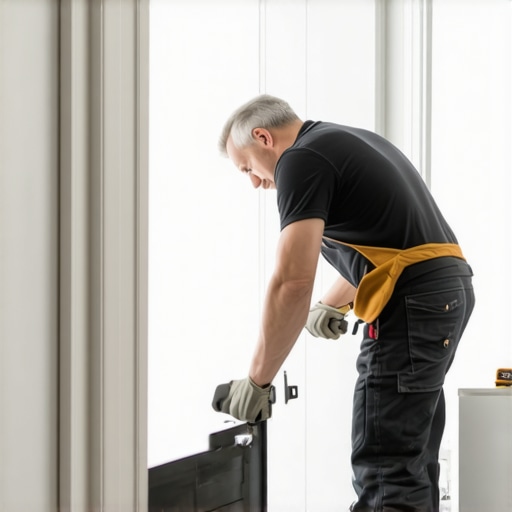
I once walked into a house where a five thousand dollar laminate floor was gapping so bad it looked like a barcode because the installer didn’t check the crawlspace humidity or the home heating settings. I spent twenty minutes just standing there, smelling the dry oak dust and the faint scent of floor wax from the owner trying to buff out the problem. You cannot buff out physics. The homeowner thought the floor was defective, but the floor was just reacting to an environment that was drier than a bone in the Mojave. I have spent twenty five years on my knees with a moisture meter and a level, and I can tell you that a floor is a living, breathing mechanical system. If you treat it like a static piece of plastic, it will fail you every single time. Laminate is an engineered product, but it is still mostly wood fiber. When that fiber loses moisture, it shrinks. When it shrinks, those tight click-lock joints you paid for start to pull apart, leaving you with ugly gaps that collect dirt and dog hair.
The winter of the shrinking plank
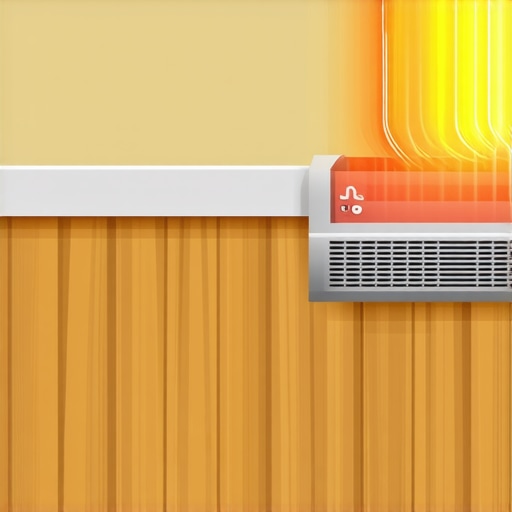
Laminate floors gap in the winter because the high-density fiberboard core contracts as indoor humidity levels drop below thirty percent. This physical reaction occurs because wood fibers are hygroscopic, meaning they absorb and release moisture to stay in equilibrium with the surrounding air. When the heat kicks on in November, it strips the moisture from the air, and the planks begin to pull away from each other at the weakest points of the installation. This is not a manufacturing defect, it is a failure of environmental control and acclimation. You might think your floor is waterproof, but the core is still a thirsty sponge made of compressed sawdust and resins. I have seen guys do a perfect carpet install one day and then try to tackle laminate the next without realizing that laminate has a memory and a temper. If the house is at sixty percent humidity during the install and drops to ten percent in January, those planks are going to move. There is no adhesive on earth that can stop the cellular contraction of wood fibers when the air gets that dry. It is a structural reality that most big-box retailers forget to mention when they are selling you on the beauty of the grain.
Molecular reality of the fiberboard core
The core of a laminate plank is composed of High-Density Fiberboard or HDF which is a mix of wood fibers and urea-formaldehyde resins. These fibers retain their cellular structure even after being ground and pressed, which means they expand and contract based on the water vapor pressure in your home. When we talk about the physics of a floor, we are looking at the equilibrium moisture content or EMC. In the summer, your floor might be at a nine percent moisture content. In the winter, if your furnace is running constantly without a humidifier, that moisture content can drop to four percent. That five percent difference might sound small, but across a twenty foot room, that can equate to a half-inch of total shrinkage. Because laminate is a floating floor, it is supposed to move as one giant sheet. However, friction against the subfloor, heavy furniture, or improper floor leveling can cause that movement to become uneven. Instead of the whole floor shifting slightly under the baseboards, the tension breaks at a single joint, and suddenly you have a gap you can fit a nickel into. I have seen people try to wood-filler these gaps. Do not do that. When the humidity returns in the spring, the floor will expand again and crush that filler, likely damaging the locking mechanism forever.
“A floor is only as good as the subfloor beneath it; deflection is the enemy of every joint.” – Master Flooring Axiom
The lie of the level floor
Floor leveling is the most skipped step in residential installations and it is the primary reason why winter gaps look so much worse on certain sections of the room. A subfloor that has a dip of more than one eighth of an inch over ten feet creates a vertical void. When you walk over that dip, the plank flexes down into the hole. This vertical deflection puts immense mechanical stress on the tongue and groove system. In the winter, when the material is already brittle and contracted, this flexing causes the locking mechanism to lose its grip. I spent three days grinding concrete on a job last month just so the floor wouldn’t click like a castanet. If your subfloor isn’t flat, your floor is doomed before you even open the first box. Many homeowners think the underlayment will hide the dip. It won’t. Underlayment is for sound and moisture, not for structural support. If you have a valley in your subfloor, the winter shrinkage will find it, and that is exactly where your first gap will appear. This is especially true near heavy areas like kitchens or near transitions to showers where moisture might have already softened the subfloor material over time.
Locking mechanisms under mechanical stress
The click-lock system of a laminate floor relies on friction and the integrity of the milled profile to keep planks together without glue. During the winter, the tension on these joints increases as the planks pull in opposite directions due to thermal and hygroscopic contraction. There are different types of joints, from the traditional angle-angle to the drop-lock. Each has a breaking point. When the core shrinks, the tongue becomes slightly smaller and the groove becomes slightly wider. This microscopic change reduces the friction that holds the floor together. If the installer didn’t use a tapping block correctly or if they damaged the edge during the install, the joint will fail. I have seen cheap laminate where the locking mechanism is so thin it snaps under the pressure of a cold snap. You want a floor with a high Janka rating for the surface, but the core density is what actually keeps it together in the winter. While most people want the thickest underlayment, too much cushion actually causes the locking mechanisms on LVP or laminate to snap under pressure because the floor bounces too much. You want a firm, high-density pad that limits vertical movement while allowing the floor to slide horizontally as it breathes.
| Condition | Humidity Range | Effect on Laminate |
|---|---|---|
| Extreme Dry | 0% – 25% | Significant gapping and joint failure |
| Ideal Range | 30% – 50% | Stable joints and minimal movement |
| High Humidity | 55% – 70% | Plank cupping and potential peaking |
| Flood Zone | 75%+ | Core swelling and permanent damage |
The ghost in the expansion gap
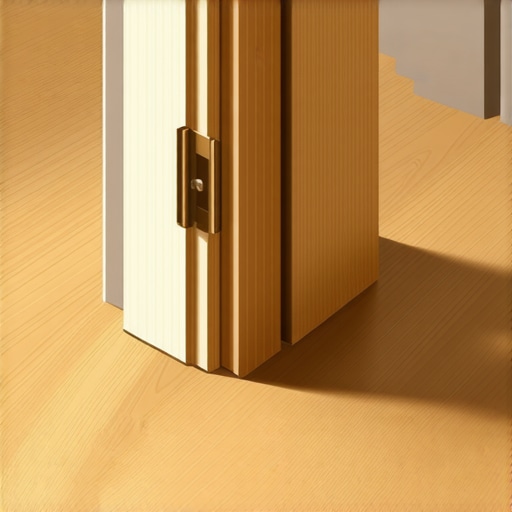
The expansion gap is the empty space left around the perimeter of the room to allow the entire floor to grow and shrink without hitting walls or cabinets. If this gap is missing, the floor has nowhere to go and the tension will manifest as gaps in the middle of the room. I have walked into jobs where the installer ran the laminate tight against the drywall. When winter comes and the floor tries to shrink, it might get hung up on a door casing or a transition strip. If one side of the floor is pinned and the other side is trying to pull away, the floor will pull apart at its weakest point. This is often seen near heavy kitchen islands. Homeowners always ask why their waterproof vinyl or laminate is buckling or gapping. Usually, it’s because they locked it under a heavy kitchen island, killing the floor’s ability to breathe. You cannot pin a floating floor down with five hundred pounds of cabinetry and expect it to behave. It needs to be able to slide. If the floor is pinned on one end by a cabinet and on the other end by a tight fit against a wall, the winter shrinkage will tear a gap right across the center of your living room. It is a mechanical certainty.
The 1/8 inch that ruins everything
A single eighth of an inch of subfloor unevenness can lead to a gap that ruins the aesthetic of an entire room during the heating season. This happens because the downward pressure of footsteps forces the tongue out of the groove when the material is at its most contracted state. You have to be a stickler for the details. I use a ten foot straight edge on every single job. If I see a light under that bar, I am reaching for the self-leveling compound or the grinder. You might think I am being difficult, but I am saving you from a call-back in January. The physics of a floor are simple. If the surface is not flat, the joints are under constant stress. Add the stress of winter shrinkage, and the system fails. It is the same reason why you don’t build a house on a swamp. The foundation is everything. Most guys skip the leveling compound. They think the underlayment will hide the dip. It won’t. I’ve seen it happen in the best houses. A tiny dip in the plywood subfloor causes the planks to separate just enough to see the brown core beneath the decorative layer. It looks cheap, and it is entirely avoidable.
“Floor covering is a science of tolerances; exceed them and the material will eventually reclaim its original shape.” – NWFA Technical Manual
Measuring the invisible air
The most important tool in your house for maintaining your floor is not a mop but a hygrometer to measure the relative humidity of your air. If you keep your home between thirty five and fifty percent humidity, your laminate floor will rarely gap. Most people don’t realize how dry their homes get. Forced air heat is a moisture killer. You might feel fine, but your floor is suffering. If you see your floor starting to gap, the first thing you should do is check your humidity levels. Buying a humidifier for your HVAC system is often cheaper than replacing a ruined floor. You also need to consider the acclimation process. If you brought that laminate in from a cold garage and installed it immediately in a warm house, you have already failed. The material needs at least forty eight hours to reach equilibrium with the room’s temperature and humidity. I prefer seventy two hours. I like to open the boxes and cross-stack them to let the air circulate around every single plank. It is about patience. If you rush the install, you are just scheduling a repair for six months down the line.
How to save the floor before spring
- Check the relative humidity in the room using a digital hygrometer.
- Increase the humidity to at least 35 percent using a portable or whole-house humidifier.
- Remove the baseboards to see if the floor is pinned against a wall or heavy object.
- Inspect the expansion gaps to ensure there is at least one quarter inch of space.
- Use a floor suction gap fixer tool to gently pull the planks back together if the joints are not broken.
- Avoid using wood glue or filler in the gaps as this prevents natural seasonal movement.
- Check for heavy furniture that might be acting as an anchor and preventing the floor from floating.
The solution to winter gapping is almost always environmental. You have to respect the material. Laminate is a fantastic, durable option for most homes, but it is not magic. It is subject to the same laws of thermodynamics as anything else. If you take care of the subfloor and keep the air from getting too dry, those gaps will stay closed. If you ignore the signs and let your house turn into a kiln, you will be looking at those gaps until the humid air of summer returns to save you. And by then, the damage to the locking mechanisms might already be done. Treat your floor like the structural engineering challenge it is, and it will last you for decades. Treat it like a rug, and you will be calling me to rip it out and start over before the next snow falls. It is a simple choice between doing it right or doing it twice. I always choose to do it right the first time because my knees can’t handle the alternative anymore.