Why your laminate floor is starting to cup upward
The silent war beneath your feet
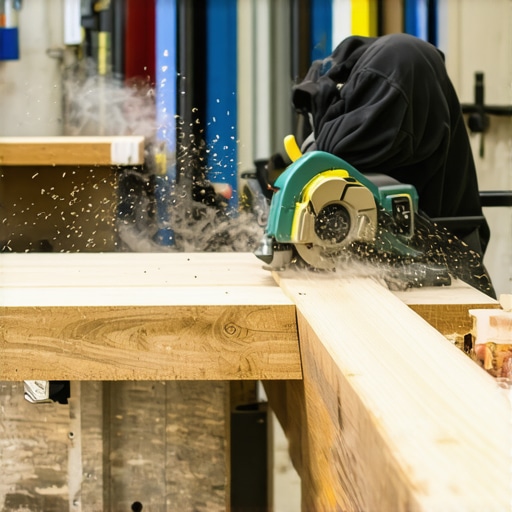
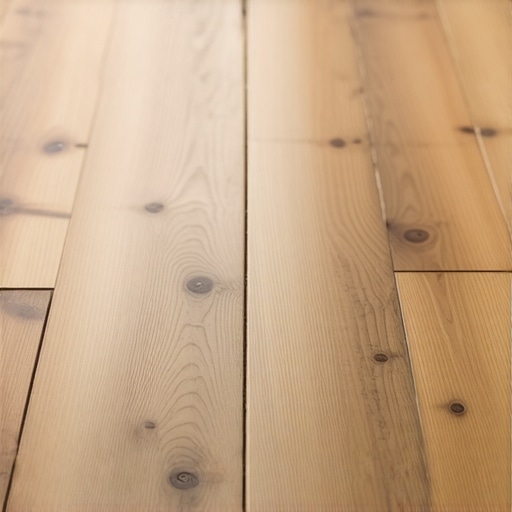
Laminate floor cupping occurs when the bottom of the plank absorbs more moisture than the top, causing the High-Density Fiberboard core to expand at an uneven rate across its vertical profile. Most homeowners see a warped edge and assume the floor is cheap. The truth is usually found in the subfloor or the installation physics. I spent twenty years dragging a knee kicker and a levels across job sites. I have seen thousand dollar floors ruined by a five dollar roll of cheap tape. I once walked into a house where a three thousand square foot laminate install was buckling so hard it looked like a mountain range. The homeowner had installed a massive granite kitchen island directly on top of the floating floor. By pinning the laminate to the subfloor with five hundred pounds of stone, they killed the floors ability to breathe. When the humidity spiked in July, the floor had nowhere to go but up. That is the reality of a floating system. It must be free to move or it will destroy itself. If your planks are curling at the edges, you are witnessing a structural failure caused by environmental pressure. It is not a decoration. It is an engineering challenge that you are currently losing.
The microscopic expansion of fiberboard
Laminate is not wood, but it is a wood product. The core is typically HDF, which stands for High-Density Fiberboard. This material is a sponge made of cellulose fibers and resin. When we zoom into the molecular level, we see that these fibers are hygroscopic. They attract water. When the relative humidity in your crawlspace or concrete slab rises, those fibers swell. Because the top of your laminate is protected by a wear layer often made of aluminum oxide or melamine, it remains stable. The bottom is often just a balancing paper or a thin plastic film. This creates a moisture differential. The bottom grows while the top stays still. This physics problem results in a concave shape. It is a mechanical response to a chemical change in the core material. You cannot fix this with a hammer. You have to fix the air and the moisture levels.
“A floor is only as good as the subfloor beneath it; deflection is the enemy of every joint.” – Master Flooring Axiom
The expansion gap mistake everyone makes
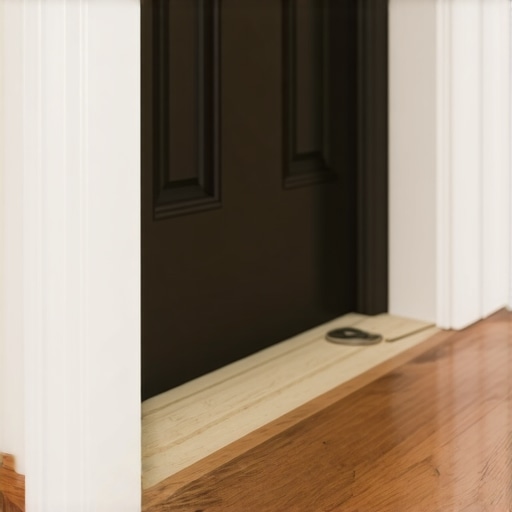
Every floating floor requires a perimeter expansion gap. This is the space between the edge of the laminate and the wall. Most manufacturers require at least one quarter of an inch, though three eighths is safer for large spans. If you jam the laminate tight against the baseboards or the door frames, the floor is locked. When the temperature changes or the humidity shifts, the wood fibers expand. Without a gap, the planks push against the wall. The wall does not move. The floor must bend. This creates a tension that manifests as cupping or peaking. I have seen installers use T-moldings incorrectly or skip them entirely in large rooms. This is a recipe for disaster. Laminate needs to be able to slide as a single unit across your subfloor. If it gets caught on a single nail or a tight corner, the physics of the entire room change instantly.
| Material Property | HDF Core Laminate | Engineered Wood | Solid Hardwood |
|---|---|---|---|
| Moisture Sensitivity | High | Moderate | Extreme |
| Acclimation Time | 48-72 Hours | 72+ Hours | 7-10 Days |
| Ideal Humidity % | 35-55% | 30-50% | 35-50% |
| Expansion Gap Req. | 1/4 to 3/8 inch | 1/2 inch | 3/4 inch |
Why your subfloor is lying to you
A subfloor might look flat to the naked eye, but the physics of laminate require precision. The industry standard is typically a variation of no more than three sixteenths of an inch over a ten foot radius. If you have a dip in your concrete or a hump in your plywood, the laminate planks will bridge that gap. Every time you walk over that spot, the locking mechanism flexes. Over months, this repetitive stress fatigues the HDF tongue and groove. Eventually, moisture enters these weakened joints more easily. This accelerates the cupping process. You should have used a self-leveling compound. I have spent three days grinding concrete on a job just so the floor would not click like a castanet. It is dirty work, but it is the only way to ensure the long term stability of the wear layer. Skipping the prep work is why most floors fail within the first two years.
The 1/8 inch rule for concrete slabs
Concrete is a porous material. It acts like a hard sponge. Even if it feels dry, it is constantly emitting water vapor. This is called the Moisture Vapor Emission Rate. If you did not install a six mil poly film vapor barrier over your concrete, you are asking for trouble. The moisture travels up through the slab and hits the bottom of your laminate. This creates a micro-climate under the planks that is significantly more humid than the air in your room. This is the primary driver of edge cupping. Most people want the thickest underlayment they can find, but too much cushion actually causes the locking mechanisms on LVP or laminate to snap under pressure. You need density, not fluff. A dense underlayment with a high IIC rating will provide sound dampening without compromising the structural integrity of the click-lock system.
“Moisture migration through a concrete slab is a constant force that can only be managed, never fully stopped.” – NWFA Technical Guidelines
The checklist for a stable installation
- Verify subfloor moisture levels using a calcium chloride test or a pinless meter.
- Ensure the room humidity is maintained between 35 and 55 percent year round.
- Leave a minimum 3/8 inch expansion gap at all vertical obstructions including pipes.
- Use a 6-mil polyethylene vapor barrier over all masonry subfloors.
- Acclimate the planks in the room where they will be installed for at least 48 hours.
- Check that the subfloor is flat within 3/16 inch over a 10 foot span.
The chemistry of aluminum oxide and HDF
The wear layer of a high quality laminate is a marvel of material science. It uses aluminum oxide particles suspended in a resin. This creates a surface that is nearly as hard as diamonds on the Mohs scale. However, this hard shell is brittle. When the HDF core beneath it begins to cup, the wear layer is put under immense tension. If the cupping is severe enough, the wear layer will actually micro-crack. This allows even more moisture from the air to penetrate the core from the top. It is a feedback loop of destruction. This is why you cannot simply wait for a cupped floor to dry out. Once the fibers have been stretched and the resin bonds have been stressed, the floor rarely returns to its original flat state. You are looking at a replacement job, not a repair job. To avoid this, you must control the environment from day one. Do not treat your floor like a rug. Treat it like a piece of precision machinery.