Why Cheap Laminate Padding Is a Recipe for Floor Failure
I spent three days grinding concrete on a job last month just so the floor wouldn’t click like a castanet. The homeowner thought I was trying to run up the bill. Then I showed them the 1/4 inch valley in the middle of their living room. You can’t hide a canyon with a piece of cheap blue foam. I have spent twenty five years with sawdust under my nails and the smell of WD-40 on my clothes. I have seen every shortcut in the book and most of them end with a dumpster full of ruined material. Flooring is not a cosmetic choice. It is a structural engineering challenge that happens to look like wood. Most people focus on the color of the planks while ignoring the physics of the subfloor. That is a mistake that costs thousands of dollars. If you think a three dollar roll of padding will protect your ten thousand dollar investment, you are wrong. It will buckle. The structural integrity of your home depends on what you cannot see.
The ghost in the expansion gap
Expansion gaps are the most misunderstood aspect of laminate installation because they allow the floor to move as a single unit during humidity shifts. If you use cheap padding that lacks grip or density, the floor moves unevenly. This creates tension at the perimeter. A floor needs room to breathe. Without a proper gap and a stable base, the planks will hit the drywall and peak at the joints. This creates a hollow sound that echoes through the house. I have seen floors lift three inches off the ground because an installer didn’t leave a gap and used a pad that was basically bubble wrap. You must respect the perimeter. Every fixed object like a kitchen island or a heavy cabinet acts as an anchor. If the floor is anchored, it cannot expand. This leads to the locking mechanisms shearing off under the pressure of thermal expansion.
Why your subfloor is lying to you
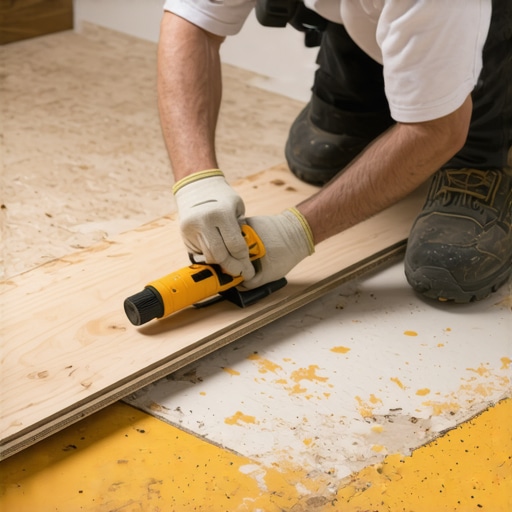
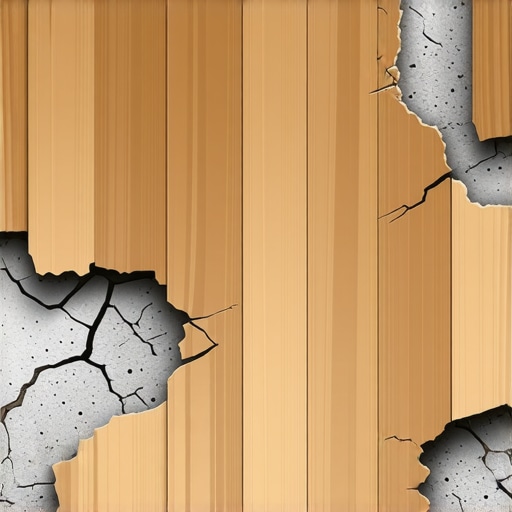
Subfloor flatness is the single most important factor in a successful installation because any deviation creates a void that the laminate must bridge. Most installers think a thick pad will fill a dip. It will not. It only hides the problem until the warranty expires. When you walk over a void, the laminate flexes. This is called deflection. Over time, that constant bending fatigues the wood fibers in the tongue and groove. Eventually, the joint snaps. I use a ten foot straightedge on every job. If I see a gap larger than 1/8 of an inch, I reach for the floor leveling compound. You have to prep the slab. This involves grinding high spots and filling the low ones with a high strength polymer modified cement. It is dirty work. It is loud. But it is the only way to ensure the floor stays quiet. If you skip this, your floor will click and pop every time you take a step. It sounds like cheap plastic because, at that point, that is exactly what it is.
“A floor is only as good as the subfloor beneath it; deflection is the enemy of every joint.” – Master Flooring Axiom
The 1/8 inch that ruins everything
A deviation of just one eighth of an inch over ten feet can cause a floating floor to feel unstable and bouncy. This bounce is not just annoying. It is a mechanical failure in progress. The padding acts as the shock absorber. Cheap foam padding has a high compression set. This means once it is squashed, it does not bounce back. You end up with a floor that feels hollow in some spots and mushy in others. High density underlayment like heavy felt or cross linked polyethylene keeps the floor plane consistent. It provides a firm foundation that supports the weight of furniture and foot traffic without collapsing. Think about the chemistry. Open cell foam is full of air. Under the weight of a refrigerator, those air bubbles pop. Once they are gone, you have zero protection. You have zero support. The floor is basically sitting on the concrete at that point. Any moisture coming up from the slab will then hit the bottom of your laminate and start the swelling process.
The chemistry of compression and cell structure
The molecular density of underlayment determines how well it will resist long term loads and prevent the locking system from failing. Cheap pads are usually made of low density polyethylene (LDPE) with an open cell structure. This is essentially the same material used in packing peanuts. It is designed to be disposable. When you install it under a floor, you are asking it to perform for twenty years. It cannot do it. High quality underlayment uses closed cell technology. This means the individual cells of the foam are sealed off from one another. This provides better resistance to moisture and higher compressive strength. It also affects the sound. A dense material absorbs high frequency vibrations. Cheap foam reflects them. This is why some laminate floors have that annoying tinny sound. It is the sound of your footsteps reflecting off a low quality pad. If you want the solid feel of real hardwood, you need a pad with a high mass per square foot. It is about the physics of energy dissipation.
| Material Type | Density (lb/ft³) | Compression Resistance | Acoustic Rating (IIC) |
|---|---|---|---|
| Basic Blue Foam | 1.2 – 1.5 | Low | 50 |
| Cross-linked Poly | 2.0 – 3.5 | High | 68 |
| Recycled Felt | 10.0 – 12.0 | Very High | 71 |
| High-Density Rubber | 25.0+ | Extreme | 74 |
Why air bubbles are the enemy of your warranty
Warranty claims for laminate flooring are almost always denied if the installer used an unapproved underlayment or failed to level the floor. Manufacturers spend millions on testing. They know that their locking systems fail when the padding is too soft. If the pad is thicker than 3mm and has no density, it allows the planks to move too much. The manufacturer will call this site related failure. They will not pay for the replacement. You are left holding the bill for the material and the labor. It is a hard lesson to learn. I have seen families lose five figures because they wanted to save two hundred dollars on the pad. You must check the perm rating of your underlayment. A perm rating of less than 1.0 is required for a vapor barrier. Cheap pads often have a higher perm rating, meaning they allow moisture to pass through. This moisture gets trapped between the pad and the laminate. It rots the floor from the bottom up. You won’t see it until the seams start to peak and turn gray.
“Moisture vapor emission rate must not exceed three pounds per one thousand square feet in twenty four hours when testing with anhydrous calcium chloride.” – NWFA Technical Standard
The checklist for a professional installation
- Verify subfloor flatness using a 10 foot straightedge to ensure less than 1/8 inch deviation.
- Check the moisture content of the concrete slab using a calcium chloride test or an in-situ probe.
- Select a high density underlayment with a minimum IIC rating of 60 for multi-story homes.
- Ensure the underlayment has an integrated 6 mil poly vapor barrier if installing over concrete.
- Acclimate the laminate flooring in the room of installation for at least 48 hours.
- Clean the subfloor thoroughly to remove any grit that could cause grinding noises.
- Install the underlayment with the vapor barrier side down and tape all seams with moisture resistant tape.
The hidden link between showers and laminate failure
Laminate should never be installed in or near showers unless it is a specific waterproof line with sealed edges. Even then, the transition from a wet area to a dry area is a high risk zone. If moisture from a shower leaks under the transition strip, it will find its way into the padding. A cheap pad will soak up this water like a sponge. It then holds that water against the underside of the laminate. Because laminate is mostly wood fiber, it will swell. Once it swells, the edges will curl. This is irreversible. I always recommend a silicone bead at the edge of any wet area transition. This prevents water from getting under the floor in the first place. You have to think like water. Water wants to go down. It wants to find the path of least resistance. If your padding is a cheap open cell foam, you have provided a perfect highway for water to ruin your entire living room. I have seen a small leak in a bathroom ruin fifteen hundred square feet of flooring because the padding acted as a wick.
The final verdict on value versus price
There is a difference between price and value. The price is what you pay today. The value is how much it costs you over the next ten years. Cheap padding has a high long term cost. It leads to floor leveling issues, snapped joints, and moisture damage. When you are standing in the aisle of a big box store, the cheap roll looks fine. It is colorful. It feels soft. But that softness is your enemy. You want a pad that feels firm. You want a pad that has some weight to it. Professional floor leveling is the foundation of any good job. Do not let a contractor tell you they can skip it. If they don’t have a level in their hand during the bid, they aren’t the right person for the job. Use a high density underlayment. Tape your seams. Leave your expansion gaps. If you do these things, your floor will last for decades. If you don’t, I’ll see you in two years when you’re calling me to tear it all out and start over. Doing it right the first time is always cheaper than doing it twice.