Why Your Shower Grout Is Cracking in the Corners
I am standing here with the scent of WD-40 and oak dust clinging to my work shirt, looking at yet another shower floor that was doomed from the day the framing went up. Most people think a crack in the corner grout is just a cosmetic annoyance. They buy a tube of cheap caulk and smear it over the problem. They are wrong. That crack is a diagnostic signal from the structural soul of your house telling you that something is moving where it should be still. Most guys skip the leveling compound because they think the underlayment will hide the dip. It won’t. I spent three days grinding concrete on a job last month just so the floor wouldn’t click like a castanet, and that same level of obsession is what your shower needs. If your grout is failing, your shower is essentially breathing, and not in a healthy way. It is the result of physics, chemistry, and a fundamental misunderstanding of how materials interact under the stress of moisture and gravity.
The ghost in the expansion gap
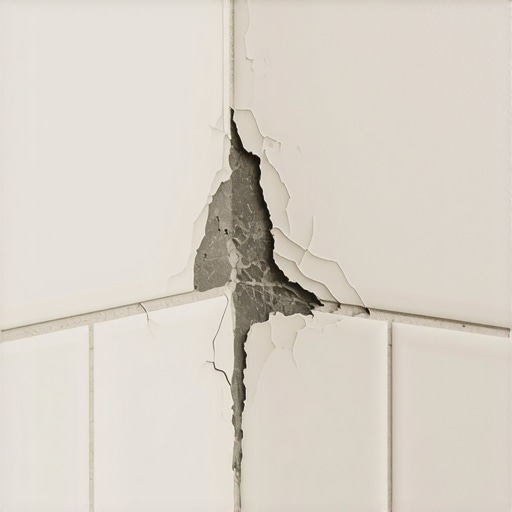
Grout cracks in shower corners because of structural movement and the lack of flexible movement joints at changes of plane. When two walls meet, or a wall meets a floor, they move independently due to seasonal shifts, wood shrinkage, and house settling. Hard cementitious grout cannot absorb this movement and inevitably fractures under the stress. This phenomenon is why the TCNA (Tile Council of North America) mandates the use of flexible sealants in all change-of-plane joints. Every house is a living organism that expands and contracts. When you lock two rigid planes together with a brittle material like Portland cement based grout, the physics of the house will win every single time. I have seen million dollar homes where the master shower looks like a spiderweb because the builder thought he could defy the laws of thermal expansion. He could not. The corner is where the tension of the entire wall assembly concentrates. If that tension has nowhere to go, it creates a fracture. This is the same reason why an improper laminate install will buckle or why carpet install techniques require stretching. Materials need room to exist without fighting their neighbors.
“A floor is only as good as the subfloor beneath it; deflection is the enemy of every joint.” – Master Flooring Axiom
The physics of structural deflection
Structural deflection refers to the degree to which a floor or wall system bends under a load, which directly impacts grout integrity. If your subfloor has too much flex, the tile will stay rigid while the substrate beneath it bows, causing the grout to pop out of the tracks. For stone or large format tile, we look for an L/720 rating, which means the floor moves very little. In many modern builds, the joist spacing is too wide or the plywood is too thin. This creates a trampoline effect. You might not feel the bounce when you walk, but the grout feels it. Over time, the microscopic vibrations from your footsteps or the weight of the water in the shower pan fatigue the crystalline structure of the cement. When the grout reaches its breaking point, it shears. This is often exacerbated by poor floor leveling. If the mortar bed varies in thickness because the floor is wavy, the drying rates and the strength of the bond will be inconsistent across the surface. This creates internal stress points that manifest as cracks in the weakest areas, which are almost always the corners.
Why your subfloor is lying to you
A subfloor might look flat to the naked eye but harbor moisture or dips that compromise the entire shower assembly. Moisture is the primary culprit behind subfloor treachery. If the wood framing behind your tile is not properly kiln-dried or if it absorbs humidity from the bathroom, it will swell. As the studs swell, they push against the backer board. If the installer did not leave an expansion gap at the corners of the backer board, that pressure is transferred directly into the tile and grout. I have seen studs in the Pacific Northwest expand by nearly an eighth of an inch during the rainy season. That is more than enough to crush a grout joint into powder. This is why floor leveling and moisture management are not just steps in a process. They are the foundation of the entire system. When I talk about floor leveling in the context of laminate or carpet install, I am talking about preventing humps. In a shower, I am talking about preventing a structural catastrophe. If the subfloor is not dead flat and stable, the waterproofing membrane will eventually stretch and fail, leading to rot that stays hidden until the floor literally drops.
The chemistry of a failed bond
Failed grout bonds are often the result of improper water-to-powder ratios or the use of outdated cementitious technology in high-movement areas. Grout is a precise chemical mixture. If an installer adds too much water to make it easier to spread, they are effectively diluting the polymer chains that give the grout its strength. As the excess water evaporates, it leaves behind microscopic voids. These voids make the grout porous and weak. On the molecular level, the grout becomes a sponge rather than a shield. When you combine this chemical weakness with the physical stress of a corner joint, failure is guaranteed. Furthermore, many installers still use old-school sanded grout in corners where they should be using a 100 percent silicone sealant. Silicone has a high modulus of elasticity, meaning it can stretch and return to its original shape. Cement cannot. It has a high compressive strength but almost zero tensile strength. If you pull it, it snaps. This is the same reason we see failures in laminate locking mechanisms when people use a cushion that is too thick. The material is asked to perform a mechanical function it was never designed for.
Choosing the right chemistry for longevity
| Grout Type | Flexibility | Moisture Resistance | Best Use Case |
|---|---|---|---|
| Sanded Grout | Low | Moderate | Large floor joints over 1/8 inch |
| Unsanded Grout | Very Low | Moderate | Polished stone and thin wall joints |
| Epoxy Grout | High | Extreme | Commercial kitchens and steam showers |
| High-Performance | Moderate | High | High-traffic residential showers |
| 100% Silicone | Maximum | Total | Corner joints and changes of plane |
The 1/8 inch that ruins everything
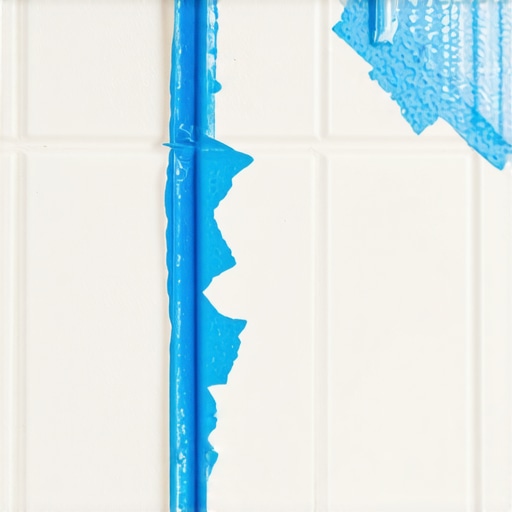
The standard requirement for a movement joint at any change of plane is at least 1/8 of an inch, filled with a flexible sealant. If your installer filled that corner gap with grout, they violated the basic principles of the TCNA handbook. It might look good for a month, but as soon as the seasons change and the house shivers, that grout will fall out. You need that 1/8 inch gap to act as a shock absorber. This is a common failure point I see when I am called in to fix a carpet install that meets a tiled threshold. The transition is ignored, and the tension of the carpet pull combined with the rigidity of the tile creates a failure point. In the shower, the 1/8 inch gap must be free of thin-set and grout. It should be a clean channel that is then filled with a high-quality silicone that matches the grout color. This allows the walls to move independently of the floor without breaking the water seal. If you see a crack, it means your shock absorber is missing. You are looking at the raw friction of your house grinding against itself.
Essential checklist for a permanent shower fix
- Verify that the subfloor meets L/720 deflection standards for stone or L/360 for ceramic.
- Ensure the backer board has a 1/8 inch gap at all corners and transitions.
- Clean all grout and thin-set out of the corner joints before sealing.
- Use a 100 percent silicone sealant that is mold and mildew resistant for all corners.
- Check the moisture content of the framing studs with a meter before closing the walls.
- Apply a waterproof membrane like Kerdi or RedGard over the leveling compound.
The reality of flooring is that it is a system of layers, each dependent on the one below it. Whether you are dealing with a complex shower pan or a simple carpet install, the rules of physics do not change for your convenience. If you ignore the leveling, the expansion, or the chemistry, the house will eventually reveal your shortcuts. I have spent 25 years watching floors fail because people wanted a shortcut. Do not be the person who has to tear out a ten thousand dollar shower because they wanted to save twenty minutes on a corner joint. Treat the subfloor with respect, understand the movement of the materials, and use the right chemicals for the job. Only then will you have a floor that lasts as long as the foundation it sits on.