Why Your Carpet Tack Strip Is Rotted Out
The chemistry of slow decay
A carpet tack strip rots because of excessive moisture vapor transmission or liquid intrusion from the subfloor or walls. High alkalinity in concrete slabs reacts with the wood fibers. This chemical breakdown destroys the structural integrity of the strip and the grip of the hardened steel nails.
I have spent twenty five years with sawdust under my nails and a moisture meter in my back pocket. I smell like WD-40 and oak dust most days. I once walked into a job where the homeowner complained about a musty smell. Most guys skip the leveling compound. They think the underlayment will hide the dip. It won’t. I spent three days grinding concrete on a job last month just so the floor wouldn’t click like a castanet. When I pulled the old carpet, the strips were black mush. It was a failure of the slab, not the carpet. The tack strip was a warning sign they ignored for five years. It will buckle. The floor always wins if you do not respect the physics of moisture.
The physics of the perimeter breach
Moisture at the edge of a room originates from exterior drainage issues or thermal bridging at the foundation wall. When warm indoor air hits a cold perimeter slab, condensation forms. This liquid water is absorbed by the porous fir or pine used in standard tack strips.
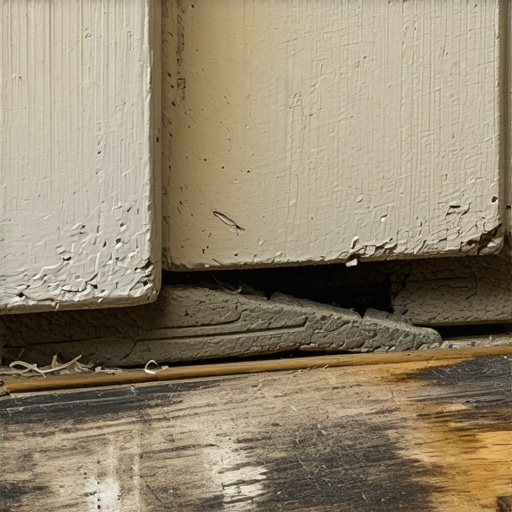
The tack strip is the sacrificial lamb of your flooring system. It sits at the most vulnerable point of the room. It is the intersection of the wall plate, the subfloor, and the exterior environment. When you see a black or crumbly strip, you are looking at fungal decay. This fungi requires four things to survive, which include oxygen, a temperature between 40 and 100 degrees, a food source like cellulose, and moisture. Your tack strip provides the food. Your home provides the temperature. The air provides the oxygen. The subfloor provides the moisture. If you eliminate the moisture, the rot stops. It is basic biology. Most installers just nail down a new strip and walk away. That is a crime. You are just feeding the mold a fresh snack.
“A floor is only as good as the subfloor beneath it; deflection is the enemy of every joint.” – Master Flooring Axiom
The 1/8 inch that ruins everything
Floor leveling is not an optional aesthetic choice for modern flooring installations. A subfloor that deviates more than 3/16 of an inch over 10 feet will cause mechanical failure in click-lock systems. For carpet, uneven subfloors create air pockets where moisture accumulates and rots the tack strips.
If your subfloor is not flat, the carpet tension is uneven. This puts lateral stress on the tack strip. If that strip is already softened by moisture, the steel tacks will pull right out of the wood. I have seen it a thousand times. The homeowner thinks the carpet is just old. In reality, the tack strip is failing because the installer did not prep the slab. We use a 10 foot straight edge to find the low spots. Then we use a high flow self leveling underlayment. We do not use the cheap stuff from the big box store. We use high strength compounds with a minimum of 4000 psi. If you put a heavy kitchen island over an unlevel floor, you lock it down and kill the ability for the floor to breathe. This leads to localized rot at the perimeter.
| Material Type | Rot Resistance | Ideal Subfloor | Janka Hardness |
|---|---|---|---|
| Standard Fir | Very Low | Plywood/OSB | 490 lbf |
| Architectural Plywood | Medium | Concrete Slabs | Variable |
| Plastic Composite | High | High Moisture Areas | N/A |
| Pre-primed Pine | Low | General Purpose | 380 lbf |
Why your subfloor is lying to you
Subfloor moisture is often invisible to the naked eye because it exists as vapor rather than liquid. Concrete slabs act like giant sponges that pull water from the earth through capillary action. Without a 6 mil poly vapor barrier, this moisture moves upward into your carpet.
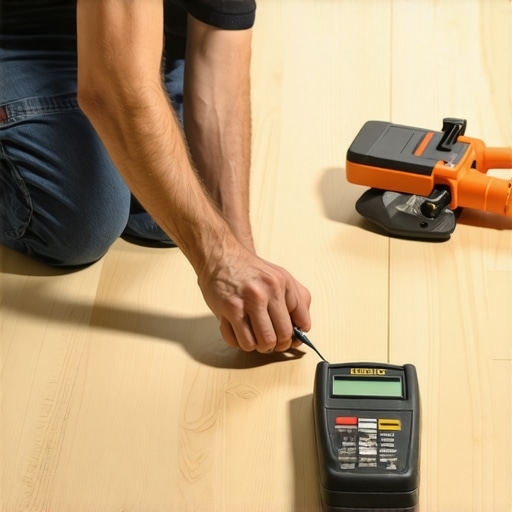
I use a calcium chloride test or an in-situ probe to measure the relative humidity of a slab. If the slab is over 75 percent relative humidity, you have a problem. The tack strip is usually the first indicator of this problem because it is nailed directly into the concrete. The nail creates a pathway for moisture. It is a conduit for decay. While most people want the thickest underlayment, too much cushion actually causes the locking mechanisms on LVP to snap under pressure. For carpet, a dense pad is better than a thick, soft one. A soft pad allows the carpet to flex too much at the edge, which eventually snaps the rotted wood of the tack strip. I have seen strips that looked fine on top but were completely decayed underneath. You have to pull them up to know the truth.
“The presence of moisture in the subfloor is the single most common cause of flooring failure.” – NWFA Technical Manual
The chemistry of wood rot and mold spores
Rot is a chemical reaction facilitated by enzymes produced by fungi like Serpula lacrymans. These enzymes break down the lignin and cellulose in the wood tack strip. The result is a loss of mass and structural integrity which leads to carpet wrinkles.
The color of the rot tells a story. Brown rot leaves the wood dry and crumbly. White rot makes it feel spongy. If your tack strips are black, you likely have a mold colony thriving on the organic matter trapped in the carpet fibers and the wood. This is a health hazard. It is not just about a flat floor. It is about the air you breathe. When we find rotted strips, we do not just replace them. We treat the area with a botanical disinfectant. We check the moisture levels again. We look for the source. Is it a leak from the showers nearby? Is the laminate floor in the next room buckling too? Usually, everything is connected. A leak in a bathroom can travel ten feet under the subfloor before it shows up as a rotted tack strip in a bedroom.
Professional Repair Checklist
- Remove all affected tack strips and bag them immediately to contain mold spores.
- Check the subfloor moisture content using a pin-style or pinless meter.
- Inspect the wall plate and the bottom of the drywall for wicking moisture.
- Grind down any high spots in the concrete to ensure a flat transition.
- Apply a moisture-mitigating primer to the subfloor before installing new strips.
- Use stainless steel or galvanized tacks to prevent future rust and corrosion.
The verdict on moisture barriers
A moisture barrier is the only thing standing between your investment and the chemistry of the earth. In high humidity regions, a simple plastic sheet is not enough. You need an epoxy-based vapor mitigator to seal the slab.
If you are installing carpet, you want a pad with an integrated moisture barrier. This prevents spills from reaching the subfloor, but more importantly, it prevents slab vapor from reaching the carpet. However, you must be careful. If you seal the top and the bottom, you can trap moisture in the tack strip. This is why I prefer to use moisture-resistant tack strips made of plastic or treated plywood in basement installations. The dry heat of Phoenix will shrink your baseboards, but the humidity of a basement will expand your tack strips until they rot. Every environment is different. You have to adapt your strategy to the local climate. I never use standard wood strips on a grade level slab anymore. It is not worth the risk of a callback. I want my floors to last fifty years, not five.