How to Stop Your Laminate Flooring from Bouncing Near the Baseboards
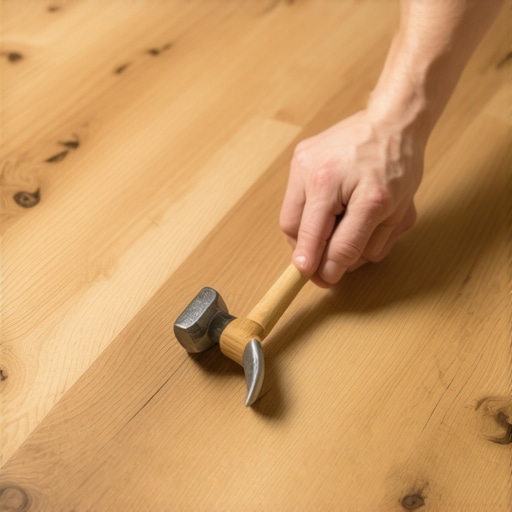
Most guys skip the leveling compound. They think the underlayment will hide the dip. It won’t. I spent three days grinding concrete on a job last month just so the floor wouldn’t click like a castanet. I once walked into a house where a brand new laminate install felt like walking on a trampoline. The homeowner was furious. The installer had ignored a quarter inch dip near the perimeter. I had to rip the baseboards off, pull the planks, and pour self-leveler. It is a messy, expensive lesson that most people only learn once. If your floor is bouncing, you are not looking at a cosmetic issue. You are looking at a structural failure of the assembly. Laminate is a floating system, but it is not a bridge. It requires a rigid, flat substrate to maintain the integrity of its locking joints. When you step on a plank that has air beneath it, you are putting hundreds of pounds of pressure on a piece of HDF plastic no thicker than a pencil. Eventually, that joint will snap.
The 1/8 inch that ruins everything
Laminate floor bouncing happens when the subfloor flatness exceeds the industry standard tolerance of 1/8 inch over a 10-foot radius. This deflection causes the tongue and groove locking system to flex, leading to vertical movement near baseboards. Fixing this requires subfloor leveling, shims, or high-density underlayment to eliminate the void. If you ignore this, the repetitive stress will cause the core material to fatigue. You will hear a clicking sound first. That is the sound of the friction between the locking profiles. Then comes the gap. Then comes the total failure of the floor. You cannot fix a broken lock with glue or prayers. You have to address the topography of the ground itself.
“A floor is only as good as the subfloor beneath it; deflection is the enemy of every joint.” – Master Flooring Axiom
The ghost in the expansion gap
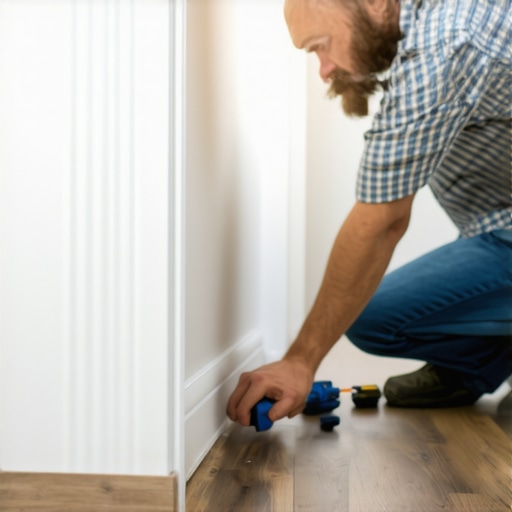
Expansion gaps are the breathing room for laminate planks, usually requiring 1/4 to 3/8 inch of space from the drywall or baseboard. If the floor is pinched against a wall, it cannot lay flat. This binding causes the floor to arch or bounce because the HDF core expands with humidity changes. Most people think more gap is bad, but the baseboard or shoe molding covers it anyway. If you jammed your planks tight against the wall, you have created a physical lever. When the temperature rises, the planks push against the wall. Since the wall won’t move, the floor must. It moves up. That is why your floor feels like a sponge near the edges. You need to get in there with a multi-tool and cut back that perimeter. Give the floor some room to exist.
[IMAGE_PLACEHOLDER]
Why your subfloor is lying to you
Subfloor levelness and subfloor flatness are two different metrics that installers often confuse. A floor can be sloped but still flat, which is acceptable for laminate installation. However, valleys and crowns in plywood or concrete create unsupported spans that lead to bouncing. You need to use a ten-foot straightedge. Anything more than an eighth of an inch of light showing under that bar is a failure. In my twenty five years, I have seen concrete slabs that look like the rolling hills of Kentucky. You cannot just throw a foam pad over that and hope for the best. The foam will compress. The air remains. You are essentially building a bridge out of sawdust and resin. It will fail. You need to grind down the high spots and fill the low spots with a high-compressive strength Portland-based leveler.
The role of underlayment density
Underlayment density is more important than underlayment thickness for preventing laminate floor movement. While many homeowners choose thick foam for sound dampening, excessive cushion allows too much vertical compression. This over-compression snaps the locking mechanisms under the weight of heavy furniture or foot traffic. This is a hard truth for many. They buy the 6mm thick gold-shield foam thinking it will make the floor feel soft. It makes the floor feel broken. You want a high-density fiber or a rubberized underlayment. It should feel firm to the touch. If you can squeeze it easily between your thumb and forefinger, it is too soft for a long-term laminate install. You need something with a high PSI rating to support those delicate joints.
| Underlayment Type | Density (lb/ft3) | Compression Resistance | Best Use Case |
|---|---|---|---|
| Standard PE Foam | 2.0 | Low | Temporary / Low Traffic |
| EVA Foam | 4.0 | Medium | Budget Residential |
| High-Density Rubber | 25.0 | Very High | Heavy Furniture / Long Life |
| Fiber Board | 18.0 | High | Subfloor Leveling / Acoustic |
The chemistry of moisture and bounce
Moisture vapor transmission from a concrete slab can cause laminate cores to swell, leading to warping and bouncing. Using a 6-mil poly vapor barrier is a mandatory requirement for all below-grade or on-slab installations to prevent hydrostatic pressure buildup. If you live in a place like Houston or Florida, the humidity is your constant enemy. The bottom of your plank is absorbing moisture while the top stays dry. This differential causes the board to cup. A cupped board does not sit flat. It creates a spring effect. You might think the floor is bouncing because of a dip, but it might be bouncing because the boards have turned into tiny rainbows. Always check your substrate with a moisture meter before you even open the boxes. If the concrete is reading over 4 percent, you have work to do before the first plank goes down.
“Substrate preparation is seventy percent of the job; the remaining thirty percent is just clicking pieces together.” – TCNA Installation Guide Reference
The subfloor audit checklist
- Check flatness with a 10-foot straightedge to ensure less than 1/8 inch deviation.
- Verify the moisture content of the subfloor using a pin or pinless meter.
- Ensure the expansion gap is a minimum of 1/4 inch around all vertical obstructions.
- Inspect the locking grooves for any factory debris or broken chips.
- Confirm the underlayment is not doubled up, which causes excessive softness.
- Check that baseboards are nailed to the wall, not through the flooring planks.
Fixing the bounce without a full teardown
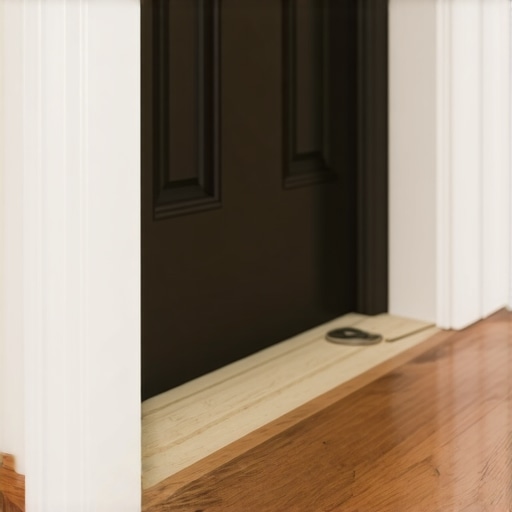
Injecting floor repair adhesive or using expanding foam are common DIY fixes for bouncing laminate, though they are often temporary. The professional solution involves removing the baseboard, lifting the peripheral planks, and applying self-leveling underlayment to the low spots. Sometimes you can get away with using asphalt shingles or roofing felt as shims in very shallow dips. It is a trick of the trade. But you have to be precise. If you over-shim, you create a hump, which is even worse than a dip. You are aiming for a flat plane. If you have a bounce near a doorway, it is often because the T-molding is pinned too tight or the subfloor was never leveled after the carpet was ripped out. Carpet hides a lot of sins. Laminate exposes every single one of them. You have to be the investigator. Find the void, fill the void, or give the floor room to move. There are no other ways around the physics of a floating floor system.