
Why Your Laminate Clicks When You Walk Near the Walls
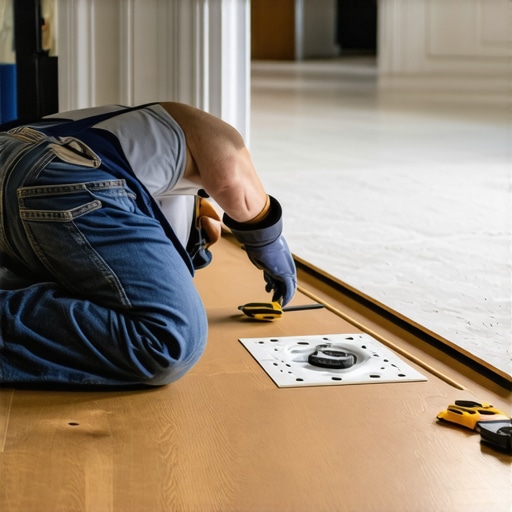
The sound of a clicking laminate floor is the sound of structural failure on a microscopic scale. When you walk near the perimeter and hear that rhythmic snap or tick, you are witnessing the mechanical interaction between a floating floor board and a subfloor that is not within tolerance. It is not a cosmetic defect. It is an engineering problem. Most installers ignore the physics of deflection and the chemistry of the subfloor, leading to a floor that sounds like a castanet every time someone walks to the kitchen. I spent three days grinding concrete on a job last month just so the floor wouldn’t click like a castanet. Most guys skip the leveling compound. They think the underlayment will hide the dip. It won’t. I had to wear a respirator for twelve hours a day while my diamond grinders ate through high spots that the previous crew called good enough. If you skip the prep, the floor will talk back to you.
The ghost in the expansion gap
Laminate floor clicking near walls is typically caused by vertical deflection when the locking mechanism is forced to bend over a subfloor dip. When the expansion gap is too tight or the baseboards are pinned too hard against the plank, the floating floor cannot move horizontally and instead moves vertically, creating a mechanical click. You have to understand that a floating floor is a giant, heavy sheet of wood fiber. It needs to breathe. It needs to move as the humidity in the room shifts from forty percent to sixty percent. If you jam that floor against the drywall, the tension has nowhere to go but up. When you step on it, the tongue and groove rub against each other like tectonic plates. That friction creates the sound. I have seen entire rooms where the floor was arched like a bridge because the installer did not leave the required half inch at the perimeter. They thought the shoe molding would hide a smaller gap. They were wrong. The floor expanded, hit the wall, and the clicking began within three weeks of the install.
Why your subfloor is lying to you
Subfloor flatness is the most misunderstood metric in residential construction and the primary reason for laminate floor noise. Most homeowners confuse a level floor with a flat floor, but for click-lock flooring, flatness within one eighth of an inch over ten feet is the only measurement that prevents tongue and groove failure. A floor can be slanted like a hill and still be flat enough for laminate. But if there is a birdbath or a hump, the floor will bridge over it. When your foot hits that bridge, the air is pushed out and the locking joint is stressed. Eventually, the plastic or fiberboard joints will fatigue. They will start to squeak, then click, and then they will snap entirely. I have pulled up floors where the locking joints were turned to dust because the subfloor had a quarter inch dip that the installer thought a foam underlayment would fill. Foam does not provide structural support. It provides a cushion, and too much cushion is a death sentence for a laminate joint.
“A floor is only as good as the subfloor beneath it; deflection is the enemy of every joint.” – Master Flooring Axiom
The 1/8 inch that ruins everything
Floor leveling requires a self-leveling underlayment or a cementitious patch to ensure that the subfloor meets the NWFA standards of flatness. If your laminate planks are clicking, it often means the installer failed to use a straight edge to identify low spots before the underlayment was rolled out. I use a ten foot box beam level. If I can slide a nickel under that level at any point, the floor is not ready for laminate. People ask about carpet install and why it does not have this problem. Carpet is a fabric. It follows the contour of the floor. Laminate is a rigid board. It cannot bend. When you try to force a rigid board to behave like a fabric, you get noise. You get failure. I have seen guys try to shim floors with layers of roofing felt or extra padding. That is a hack move. It creates a soft spot that allows even more vertical movement, which accelerates the clicking. The only real fix is a rigid patch that bonds to the substrate and creates a true plane.
| Subfloor Material | Flatness Requirement | Acclimation Time | Max Moisture Content |
|---|---|---|---|
| Concrete Slab | 1/8″ per 10 feet | 72 Hours | 3.0% Calcium Chloride |
| Plywood / OSB | 1/8″ per 10 feet | 48 Hours | 12% MC |
| Existing Tile | 1/16″ over joints | 48 Hours | N/A |
The physics of deflection and vertical movement
Vertical deflection occurs when the laminate floor locking system is pushed beyond its structural limits by a void in the underlying substrate. The High-Density Fiberboard or HDF core of a laminate plank is engineered to handle compression, but it is very weak in tension and shear. When the plank dips into a low spot, the top of the tongue is pulled away from the groove. This movement creates a stick-slip phenomenon where the resins in the wood fiber rub together. This is especially prevalent in showers adjacent areas where moisture might have slightly swollen the edges of the planks. If the core of the plank expands even by a fraction of a millimeter, the tolerances of the click-lock system are gone. The click you hear is the sound of the locking profile struggling to stay engaged while being pulled apart. It is a warning sign. If you ignore it, the joint will eventually separate, leaving a gap that will collect dirt and moisture, further destroying the floor.
How thick underlayment kills your locking joints
Underlayment thickness is a common installation error where homeowners choose a thick pad for sound dampening, unintentionally causing locking joint failure. While a thick cushion feels good underfoot, it provides too much vertical travel for the laminate planks, leading to mechanical clicking near the perimeter walls. You want a high density underlayment that is thin, usually two to three millimeters. If you go thicker, the floor acts like a trampoline. Every step creates a wave of movement that travels through the planks. When that wave hits the wall, the floor cannot move out, so it moves up and down violently. This is why the clicking is always worse near the walls. The edge of the floor is the most vulnerable point. It is where the weight of the person is often concentrated as they walk through doorways or transition from one room to another.
“Subfloor preparation is seventy percent of the job; the actual installation is just the victory lap.” – Master Flooring Axiom
Moisture management and the concrete slab reality
Moisture vapor emission from a concrete slab can cause laminate planks to cup or crown, which changes the geometry of the locking joint and causes clicking sounds. Even if the floor was flat when installed, hydrostatic pressure or high humidity in a crawlspace can warp the HDF core. You must use a six mil poly vapor barrier on any concrete substrate. I do not care if the slab is fifty years old. Concrete is a sponge. It breathes moisture constantly. If that moisture gets trapped under the laminate, the bottom of the board expands while the top stays dry. This causes the board to curl. A curled board will never sit flat on the subfloor, and it will click until the day you tear it out. I always tell people that a dry floor is a quiet floor. If you are installing in a high humidity region like the Gulf Coast, you need to be even more careful. You need to run the HVAC for two weeks before the floor even enters the house. Acclimation is not a suggestion. It is a requirement for the chemistry of the wood resins to stabilize.
Pre-Installation Audit Checklist
- Check subfloor flatness with a 10-foot straight edge
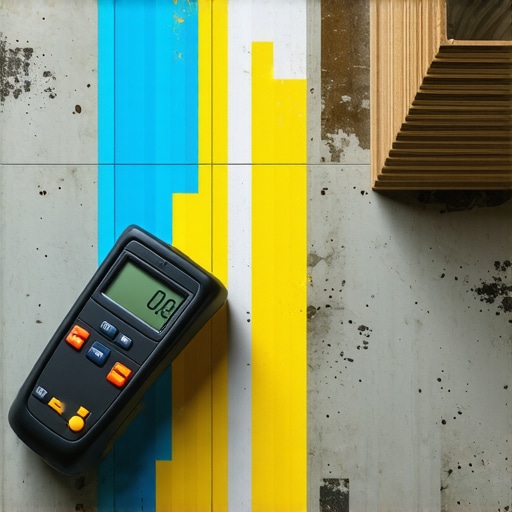
- Verify concrete moisture levels with a calcium chloride test
- Ensure a 1/2 inch expansion gap is maintained at all vertical obstructions
- Confirm the underlayment density is rated for the specific laminate thickness
- Check that the HVAC system has been operational for at least 14 days
- Remove all debris and drywall mud from the subfloor surface
- Inspect locking joints for factory defects before clicking them together
The chemical bond of modified thin set and leveling compounds
When we talk about floor leveling, we are talking about the chemical adhesion of polymer-modified cement to a porous substrate. If you are dealing with clicking floors, the remediation often involves injecting resins or lifting the floor to apply patching compounds. The chemistry matters here. You cannot just throw some wet cement into a hole and hope it sticks. You need a primer that creates a covalent bond between the old concrete and the new leveler. If the leveler cracks or delaminates under the floor, it will create a crunching sound that is even worse than the clicking. I have seen jobs where the installer did not prime the subfloor. The leveling compound turned into potato chips under the laminate. Every step sounded like someone walking on cornflakes. It was a disaster that required a full tear out. This is why I am a stickler for the technical data sheets. If the manufacturer says prime it, you prime it. If they say wait twenty four hours, you wait twenty four hours. There are no shortcuts in flooring physics.