Why Your Laminate Floor Clicks Like a Typewriter (And How to Muffle It)
The shadow of the concrete grinder
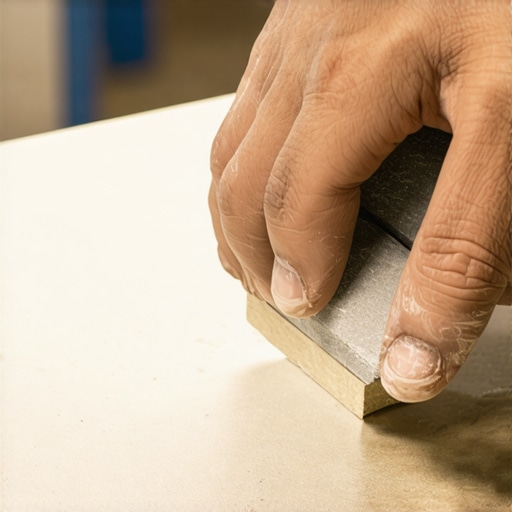
Most guys skip the leveling compound. They think the underlayment will hide the dip. It won’t. I spent three days grinding concrete on a job last month just so the floor wouldn’t click like a castanet. The dust was so thick it looked like a winter storm inside the living room. My vacuum was screaming. My knees were aching. But that is the price you pay for a silent floor. If you ignore the subfloor, the floor will eventually ignore your sanity. I have seen fifteen thousand dollar installs fail because the guy in charge thought 1/4 inch of foam could fix a 1/2 inch valley in the slab. It does not work that way. The laws of physics do not take a day off just because you are in a hurry to install baseboards.
The physics of the click
Laminate floor clicking occurs when the locking mechanisms of floating floors rub against each other due to subfloor deflection. This mechanical friction creates a sharp, percussive sound similar to a typewriter. To stop this, the subfloor must be flat within 1/8 inch over a 10 foot radius. When you step on a plank that is hovering over a low spot, the tongue and groove joint is forced to move. That movement is where the noise lives. It is not just an annoying sound. It is the sound of your floor slowly destroying itself. Every click is a tiny bit of friction wearing down the wood fibers in the locking system. Eventually, that joint will snap, and you will have a gap that no amount of tapping can fix.
Why foam underlayment is not a magic wand
Underlayment thickness determines the sound dampening and compression strength of a laminate installation. While people want the thickest cushion possible, too much cushion actually causes the locking mechanisms to snap under pressure. A common mistake is buying the 6mm thick soft foam thinking it will make the floor feel like a cloud. It will not. It will make the floor feel like a trampoline. That vertical movement is the enemy. You want a high density underlayment that resists compression. We measure this in pounds per cubic foot. A dense 2mm or 3mm pad provides enough support to keep the joints stable while still offering a thermal break and a bit of sound absorption. If the pad is too soft, the tongue of the plank acts like a lever in the groove. It bends until it cracks.
“A floor is only as good as the subfloor beneath it; deflection is the enemy of every joint.” – Master Flooring Axiom
The structural reality of floor leveling
Floor leveling requires self-leveling underlayment or patching compounds to create a flat substrate for laminate planks. You cannot simply pour it and walk away. You have to understand the chemistry of the bond. If you are working on concrete, you need to check for moisture and alkalinity. High pH levels in a slab will eat the adhesive in your patch or even the backing of your flooring. I always carry a pH pencil and a moisture meter. If the slab is pushing out water vapor at a rate higher than 3 pounds per 1,000 square feet, you are asking for trouble. You need a vapor barrier that actually seals, not just a piece of thin plastic. The leveling process is about geometry. You find the high spots with a straight edge and you grind them down. You find the low spots and you fill them. It is tedious work. It is dirty work. But it is the only way to ensure that when you walk across the room at midnight, you do not wake up the entire house.
Environmental expansion and the perimeter ghost
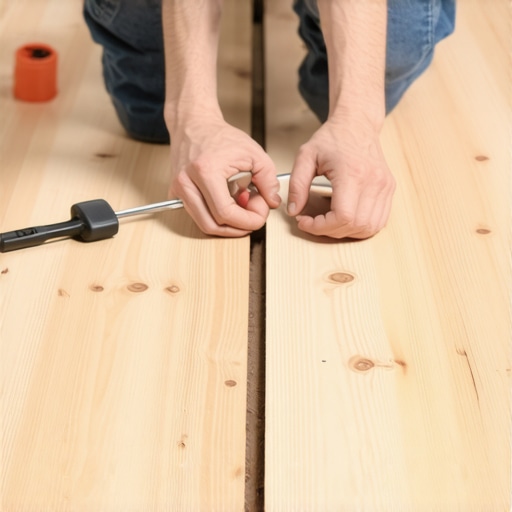
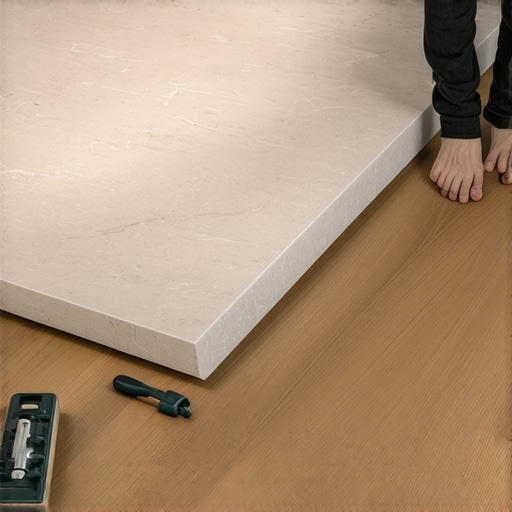
Laminate expansion gaps are necessary because high density fiberboard reacts to humidity changes in the home environment. If you pin the floor against the wall, it has nowhere to go when the air gets humid. It will arch up like a bridge. This is called crowning. When you walk on a crowned floor, it makes a hollow, thumping sound. You need at least 1/4 inch to 3/8 inch of space around the entire perimeter. That includes door frames, transitions, and heavy kitchen islands. Never, ever install a heavy island on top of a floating floor. You are effectively anchoring it to the ground. When the rest of the floor tries to move, it gets caught on that anchor and the joints start to scream. I have seen floors pull apart in the middle of a room because they were pinned under a refrigerator or a heavy cabinet.
Locking mechanism chemistry and friction
Laminate joints rely on precision milling and friction fits to stay together without glue. The chemistry of the core material is usually a mix of wood fibers and resins pressed under extreme heat. If the milling is off by even a fraction of a millimeter, the joint will not seat properly. Some manufacturers use a wax coating on the joints to help them slide together and to provide a bit of moisture resistance. This wax also helps quiet the floor. If you bought a cheap, bargain bin laminate, the milling is likely rough. Rough joints click. They rub like sandpaper. This is why I always tell clients to look at the profile of the plank before they buy. A clean, sharp drop lock or angle-to-angle system is worth the extra dollar per square foot.
| Subfloor Type | Maximum Deviation | Prep Requirement | Sound Risk |
|---|---|---|---|
| Concrete Slab | 1/8 inch per 10 feet | Grinding or Leveling | High clicking |
| Plywood Subfloor | 3/16 inch per 10 feet | Sanding joints | Moderate squeaking |
| Old Hardwood | 1/8 inch per 6 feet | Plywood Overlay | Low hollow sound |
| Ceramic Tile | 1/16 inch per 3 feet | Fill grout lines | Echoing |
The ghost in the expansion gap
Acclimation time allows the moisture content of laminate planks to stabilize within the installation environment. Most people want to install the floor the day it arrives from the warehouse. That is a recipe for a noisy floor. The warehouse was probably a cold, damp box. Your house is a warm, dry box. If you install those cold planks immediately, they will shrink. When they shrink, the locking joints loosen. Loose joints click. You need to let those boxes sit in the room for at least 48 to 72 hours. Cross stack them so air can circulate. Do not just pile them in a corner. The core of the stack will never acclimate if you do that. I have seen planks grow an 1/8 of an inch in length over two days. That does not sound like much until you multiply it by forty planks across a room. That is five inches of movement that needs to be accounted for.
Why your subfloor is lying to you
Subfloor flatness is different from subfloor levelness. A floor can be slanted and still be flat enough for laminate. But a floor that is perfectly level can have dips and humps that will ruin the install. I use a 10 foot box beam level. I slide it across the floor and look for light underneath. If I can slide a nickel under the level, that spot needs work. People think the underlayment will act like a sponge and fill those gaps. It does not. The underlayment is there for sound and moisture. It has zero structural integrity. If there is a void under the plank, the plank will flex into that void every time you step on it. This is the mechanical reality of the typewriter click. You are hearing the tongue of one plank hitting the bottom of the groove of the neighbor plank.
“Deflection is not just a nuisance; it is the primary cause of locking system fatigue in floating floors.” – NWFA Technical Guidelines
The 1/8 inch that ruins everything
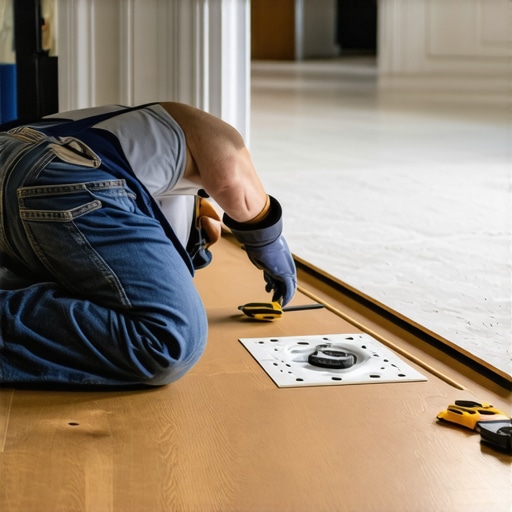
Installation tolerances are the strict measurements required by flooring manufacturers to maintain warranty coverage. If you ignore the 1/8 inch rule, you void your warranty. It is that simple. I have had reps come out to job sites with a digital micrometer to find reasons not to pay out a claim. They always look at the subfloor first. If they see that you did not use a primer before you poured your leveler, or if they see that you used a pad that was too thick, they will walk away. Professional installers know that the prep takes twice as long as the actual laying of the planks. If you are finished with the prep in an hour, you did it wrong. You should be covered in gray dust and your back should be sore before the first plank ever touches the floor.
- Check every square foot for high spots with a 10 foot straight edge.
- Use a concrete grinder with a vacuum shroud for high spots on slabs.
- Apply a high quality primer before using self-leveling compounds.
- Ensure the underlayment seams are taped perfectly to prevent moisture migration.
- Verify that the expansion gap is consistent around every single vertical obstruction.
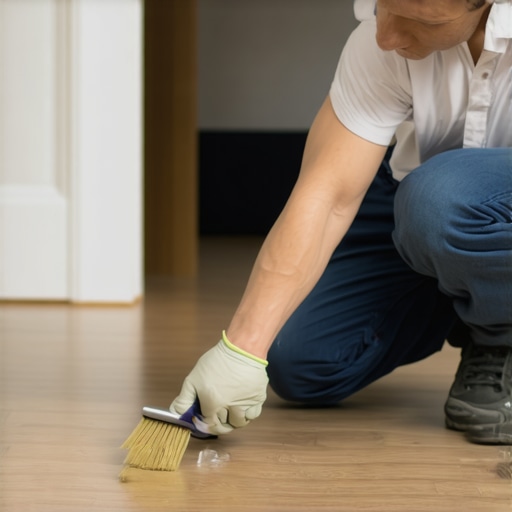
- Vacuum the subfloor three times to remove any grit that could cause grinding sounds.
Transitioning from showers to laminate
Moisture barriers and silicone caulking are necessary when laminate flooring meets bathroom tile or shower curbs. Even if the laminate says it is waterproof, the subfloor is not. Water can seep through the transition strip and get under the laminate. Once water is trapped under there, it has nowhere to go. It will sit on the subfloor and grow mold, or it will cause the HDF core of the laminate to swell from the bottom up. When the bottom of the plank swells but the top stays dry, the plank cups. This cupping creates new gaps and new noises. I always use a 100 percent silicone sealant in the expansion gap near wet areas. It stays flexible so the floor can still move, but it keeps the water out. It is a small step that saves a lot of headaches later.
Why a professional carpet install feels different
Carpet installation involves tack strips and power stretching to ensure the textile surface stays taut over the padding. When people move from carpet to laminate, they are often shocked by the noise. Carpet is a giant acoustic sponge. It absorbs everything. Laminate is a hard surface. It reflects sound. If you are used to the silence of a thick frieze carpet, the click of a laminate floor will be jarring. This is why you cannot skimp on the underlayment. You are trying to replicate the sound absorption of carpet using only a few millimeters of material. It is a difficult engineering challenge. You need to look at the IIC (Impact Insulation Class) ratings. A rating of 50 is the bare minimum for most condos, but I prefer to see something in the 60s or 70s if the homeowner is sensitive to noise.
The final walk through
The reality of a quiet floor is found in the prep work. You can buy the most expensive Swiss-made laminate on the market, but if you lay it over a subfloor that looks like a topographical map of the Andes, it will sound terrible. Take the time to grind. Take the time to level. Respect the expansion gaps and let the wood acclimate to your home’s unique climate. If you do those things, your floor will be a silent, solid surface for decades. If you don’t, you will be listening to that typewriter click with every step you take. And believe me, once you start hearing it, you will never be able to un-hear it. It will haunt you. Do it right the first time so you don’t have to do it twice.