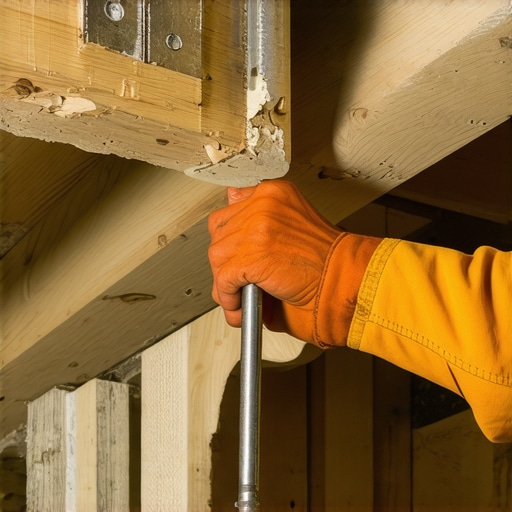
The Screwdriver Test for Finding Rotting Joists Under Your Subfloor
The Screwdriver Test for Finding Rotting Joists Under Your Subfloor
Most guys skip the leveling compound. They think the underlayment will hide the dip. It won’t. I spent three days grinding concrete on a job last month just so the floor wouldn’t click like a castanet. That clicking is the sound of a subfloor that was never prepped. If you are working over wood joists, that click might actually be the groan of a structural failure. I have seen fifteen thousand dollar wide-plank walnut floors turn into potato chips because the installer didn’t bother to check the crawlspace humidity or the integrity of the lumber supporting the weight. You can buy the most expensive flooring in the world, but if your joists are turning into mush, you are just throwing money into a hole in the ground. I smell the oak dust and the WD-40 on my hands as I write this, reminding me of the thousands of hours I have spent on my knees with a moisture meter and a flat-head screwdriver. Flooring is not a decoration. It is a performance surface that relies on the physics of the skeleton beneath it.
The reality of joist decay under your feet
Structural wood rot occurs when moisture levels exceed twenty percent, allowing fungal spores to consume cellulose and lignin. The screwdriver test identifies these compromised areas by measuring resistance during penetration. Detecting rotted joists prevents floor collapse, uneven surfaces, and expensive failures in finished materials like laminate or tile. When you are preparing for a carpet install or laying down new planks, the subfloor is your foundation. If you poke a joist and the metal sinks in like it is hitting butter, you have a problem. This is usually caused by brown rot, a fungus that breaks down the structural components of the wood. It leaves the joist looking like charred wood, brittle and prone to crumbling. The chemistry here is simple. Water enters the wood cells, the fungus moves in, and the wood loses its load-bearing capacity. You cannot level a floor that is sitting on rot. The self-leveling compound will simply add weight, accelerating the collapse of the wood fibers. I have seen homeowners try to pour five hundred pounds of leveler over a soft spot. All they did was create a heavy concrete plug that eventually fell through into the crawlspace.
“A floor is only as good as the subfloor beneath it; deflection is the enemy of every joint.” – Master Flooring Axiom
The physics of the screwdriver test
The screwdriver test is a manual diagnostic method used to evaluate the density and structural integrity of wooden floor joists. By applying consistent pressure with a hardened steel tip, an inspector can differentiate between healthy lignin structures and those compromised by moisture or wood-destroying organisms. You need a heavy-duty, flat-head screwdriver with a shank that goes all the way through the handle. This is not about finesse. You are looking for the modulus of elasticity in that wood. A healthy Douglas fir or yellow pine joist should repel the tip. If you can push the screwdriver more than an eighth of an inch into the wood with hand pressure, the cellular structure has failed. This often happens in areas prone to moisture, like under showers or near exterior doors. When water seeps through failed grout or a bad transition, it hits the plywood and then the joists. The capillary action draws the water deep into the grain. Once the moisture content stays above twenty-eight percent, the decay becomes aggressive. You will feel the wood give way. It feels spongy, not solid. That sponginess means the joist can no longer resist deflection. If your joist moves, your floor moves. If your floor moves, your laminate joints will snap and your tile will crack.
Why your subfloor is lying to you
Subfloors often mask underlying structural issues by bridging over small areas of rot or instability. Plywood and OSB can maintain a deceptive surface tension even when the supporting joists have lost significant mass due to fungal decay or insect damage. Many installers think that if the plywood looks okay, the joists must be fine. This is a dangerous lie. I have pulled up old carpet install jobs where the padding was dry, but the joists underneath were literally sawdust. The carpet hides the bounce. The padding dampens the sound. But once you strip it back, you see the truth. The screwdriver test is the only way to be sure. You have to get into the crawlspace or the basement and look up. You are looking for white, stringy growth or dark, cubical cracking. Take your screwdriver and stab the top and bottom chords of the joists. Pay close attention to the ends where the joist sits on the sill plate. That is where moisture likes to sit. If the screwdriver sinks, the joist is no longer a joist; it is a liability. You cannot fix this with a shim. You need to sister a new joist to the old one, ensuring the new lumber is kiln-dried and properly rated for the span.
| Wood Condition | Resistance Level | Action Required |
|---|---|---|
| Healthy Oak/Pine | High (No penetration) | Proceed with prep |
| Surface Moisture | Moderate (1/16 inch) | Dry and seal |
| Active Brown Rot | Low (1/4 inch+) | Structural replacement |
| Insect Damage | Very Low (Crumbles) | Treatment and sistering |
The structural chemistry of brown rot
Brown rot fungi, such as Serpula lacrymans, specifically target the cellulose and hemicellulose in wood while leaving the lignin mostly intact. This process results in a rapid loss of tensile strength, causing the wood to shrink and crack into cubical pieces that offer zero structural support. This is not just a cosmetic issue. It is a chemical transformation. The fungus uses enzymes to break down the long-chain polymers that give wood its strength. As the cellulose disappears, the joist loses its ability to handle tension. This is why floors start to sag. If you are planning a shower renovation, this is the most common failure point. The high humidity in bathrooms combined with poor waterproofing leads to the perfect environment for these fungi. I always tell my apprentices that a shower is just a box of water trying to escape. If it reaches the joists, the screwdriver will tell the story. You will feel the metal slide through the wood fibers like they are not even there. In these cases, you are not just a floor guy; you are a structural surgeon. You have to cut out the rot and replace it before you even think about thin-set or waterproofing membranes.
Why laminate and LVP fail on soft joists
Laminate and luxury vinyl plank systems require a subfloor deflection limit of L over 360 to maintain the integrity of their mechanical locking joints. When joists are compromised by rot, the resulting vertical movement exceeds these limits, causing the click-lock mechanisms to shear and fail. People think LVP is the solution to everything because it is waterproof. But LVP is a floating floor. It relies on a flat, stable surface. If the joists are soft, the floor will dip every time you walk on it. That dip puts immense pressure on the thin plastic tongues and grooves. Eventually, they snap. Once they snap, the floor starts to separate. You get gaps. You get peaking. You get a mess. No amount of floor leveling will fix a joist that is moving. In fact, if you use a thick underlayment to try and cushion the floor, you are often making it worse. Too much cushion allows for even more movement, which snaps the joints even faster. You need the floor to be dead flat and rock solid. The screwdriver test ensures the foundation is capable of supporting the static and dynamic loads of the room.
“Deflection in a subfloor is the primary cause of ceramic tile fracture and grout line failure.” – TCNA Handbook Standards
The 1/8 inch that ruins everything
Modern flooring standards require a subfloor flatness of no more than one eighth of an inch deviation over a ten foot radius. Structural rot in joists creates localized depressions that exceed these tolerances, leading to immediate product failure and voided warranties. When I am on a job, I carry a ten-foot straight edge. If I see a dip, the first thing I do is grab the screwdriver. I want to know why that dip is there. Is it a crowned joist, or is it a rotted joist? If it is a crown, I can plane it down. If it is rot, I have to stop the job. I have seen guys try to fill a two-inch deep hole with floor leveling compound without checking the wood below. The weight of the leveler alone caused the rotted joist to crack. You have to understand the load paths. The weight of the furniture, the people, and the flooring itself all travels down through those joists. If the wood is compromised, the load path is broken. The screwdriver test is the simplest, most effective way to verify that the path is clear. It is a blunt tool for a blunt reality. Wood is an organic material, and it wants to return to the earth. Your job is to make sure it stays part of the house instead.
The floor leveling checklist for structural integrity
- Inspect the crawlspace for standing water or high humidity levels.
- Check all joists near plumbing penetrations for water staining.
- Perform the screwdriver test every twelve inches along the joist span.
- Verify that the joist hangers are not corroded by moisture.
- Check the moisture content of the subfloor with a pin-style meter.
- Look for signs of sagging or deflection under heavy appliances.
- Ensure all sistered joists are properly bolted and glued.
Final structural verification
Before you even open a box of flooring, you must be certain of what is underneath. The screwdriver test is the veteran’s way of cutting through the noise. It doesn’t matter what the homeowner says or what the house looks like from the top. The wood doesn’t lie. If the screwdriver sinks, you have work to do. Fix the joists, stop the moisture, and only then should you start your installation. I have spent twenty-five years doing this, and I have never regretted taking the extra time to check the skeleton. I have, however, seen plenty of guys regret skipping it when they get the call six months later that their floor is falling apart. Do the work. Check the joists. Protect your reputation and the house you are working on. A solid floor is a silent floor, and a silent floor starts with healthy wood.