How to Fix a Clicking Laminate Plank Without Pulling Baseboards
I spent three days grinding concrete on a job last month just so the floor wouldn’t click like a castanet. Most guys skip the leveling compound because it is messy and it takes time to dry. They think the underlayment will hide the dip. It won’t. I walked into a luxury condo where the homeowner was losing their mind because every step sounded like a dry twig snapping. The installer had ignored a quarter inch valley in the slab. I had to fix it without ripping up the expensive trim they just painted. You smell the oak dust and the WD-40 on my hands, and you know I have been in the trenches. A floor is not a decoration. It is a structural engineering challenge that happens to look like wood. When your laminate clicks, it is screaming that the subfloor is lying to you.
The ghost in the subfloor void
A clicking sound in laminate flooring indicates a vertical movement where the plank bridge hangs over a subfloor depression. When weight is applied, the locking mechanism rub against each other, creating friction. This usually happens because the floor leveling was neglected during the initial installation phase of the project. To understand why your floor is making noise, you have to look at the physics of the HDF core. High Density Fiberboard is the heart of most laminate. It is incredibly stable until it moves. When it flexes over a void, the tongue and groove joints act like tiny hinges. They are not designed to be hinges. They are designed to be static. If the subfloor has a dip greater than 3/16 of an inch over a 10 foot radius, that plank is going to flex. Over time, this flex weakens the locking profile. Eventually, the joint will snap, but before it snaps, it clicks. It is a warning sign. You are hearing the sound of microscopic wood fibers rubbing together under thousands of pounds of pressure per square inch. This is why floor leveling is the most neglected part of the trade. Guys want to get the planks down and get paid. They do not want to wait for self-leveling underlayment to cure. But the subfloor is the foundation. If the foundation is soft, the house shakes. If the subfloor is wavy, the laminate clicks.
“A floor is only as good as the subfloor beneath it; deflection is the enemy of every joint.” – Master Flooring Axiom
Structural physics of the click lock joint
The click lock mechanism relies on tension and geometry to keep planks together without adhesive or nails. When a plank encounters a hollow spot, the geometry is compromised and the tension turns into friction. This friction creates the audible click that resonates through the hard wear layer. Think about the mil thickness of your wear layer. Most residential laminate has a wear layer between 6 and 12 mils. This layer is usually a melamine resin infused with aluminum oxide. It is hard. It is so hard that it acts like a speaker cone. When that HDF core flexes and the joint rubs, the hard surface amplifies the sound. It is not just a little squeak. It is a sharp, mechanical noise. In my 25 years on my knees, I have seen every type of locking system from the old Uniclic to the newer 5G systems with plastic inserts. They all fail the same way if the subfloor is not flat. If you have a clicking plank in the middle of the room, you cannot just pull the baseboards and start over without a massive headache. You have to address the void from above. This is where the chemistry of modern adhesives comes into play. We are looking for a way to fill that 1/8 inch gap without creating a mountain.
The 1/8 inch that ruins everything
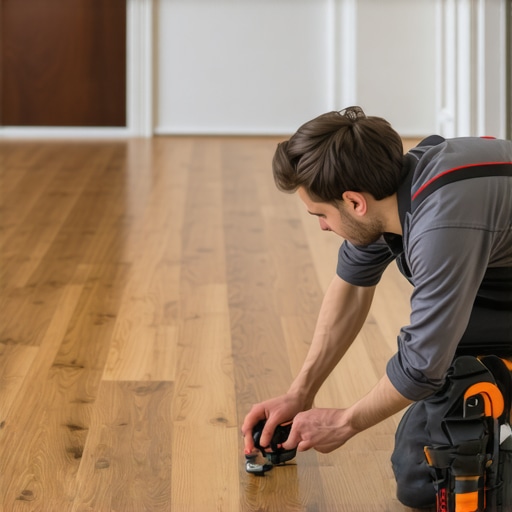
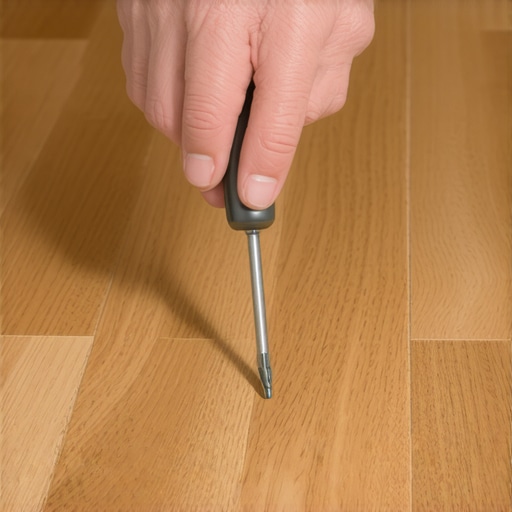
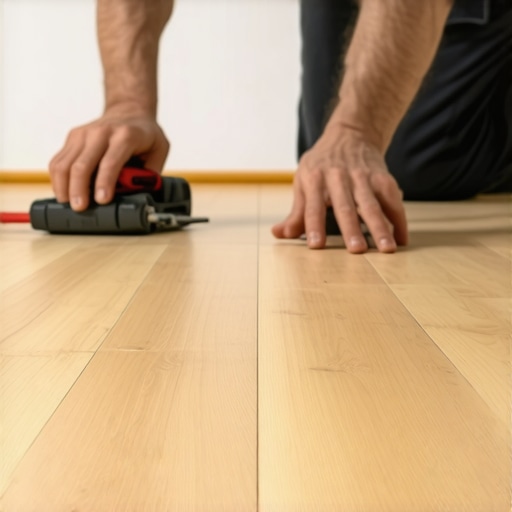
Precision in subfloor preparation is the difference between a silent floor and a structural failure. Even a 1/8 inch deviation can cause the laminate tongue to slide in and out of the groove. This movement is called vertical deflection and it is the primary cause of noise. I often see this in areas near showers or where a carpet install was recently removed. When people pull up carpet, they think the subfloor is ready for laminate. It is not. Carpet hides sins. It hides high spots from old drywall mud and low spots from settling plywood. Laminate reveals everything. If you are fixing a click, you are essentially performing surgery. You have to locate the exact center of the void. You do this by walking the floor and marking the loudest spots with blue painter tape. Do not use masking tape because the adhesive can bond to the aluminum oxide and leave a ghost mark. You are looking for the ‘trough’ of the wave. Once you find it, you have to decide if you are going to use a gravity-fed fix or a pressure-fed fix. Most DIY guys should stick to gravity, but the pros use syringes. [image_placeholder_1]
| Subfloor Condition | Maximum Tolerance | Result of Failure | Primary Repair Method |
|---|---|---|---|
| Concrete Slab | 1/8 inch per 6 feet | Clicking and Cracking | Low Viscosity Injection |
| Plywood Subfloor | 3/16 inch per 10 feet | Joint Separation | Blocking or Shimming |
| Old Tile Surface | 1/8 inch per 10 feet | Hollow Thudding | Patching Compound |
Injections of stability for floating floors
Injecting a specialized floor repair resin through a small hole in the laminate is the most effective way to stop clicking without removing baseboards. The resin fills the void under the plank and creates a solid pedestal that prevents vertical movement. This is a surgical strike. You need a drill bit that is slightly smaller than the head of a finish nail. You drill through the laminate in an inconspicuous spot, usually in the dark grain of the wood pattern. Then, you use a syringe to pump in a low-viscosity, non-expanding adhesive. I use a specific polyurethane or a specialized wood floor repair kit. You do not want to use standard wood glue because it shrinks as it dries. You need something with high solids content that stays put. Once the void is full, you place a heavy weight on the spot for 24 hours. I usually use five-gallon buckets of water or a stack of extra planks. This forces the resin to spread out and thin out into the shape of the void. After it cures, you have a solid mass where there used to be air. The click is gone because the movement is gone.
- Identify the clicking zone with blue tape
- Drill a 1/16 inch hole in a dark grain area
- Vacuum the dust out of the hole thoroughly
- Inject the floor repair resin until resistance is felt
- Weight the area with at least 40 pounds
- Clean excess adhesive with a damp cloth immediately
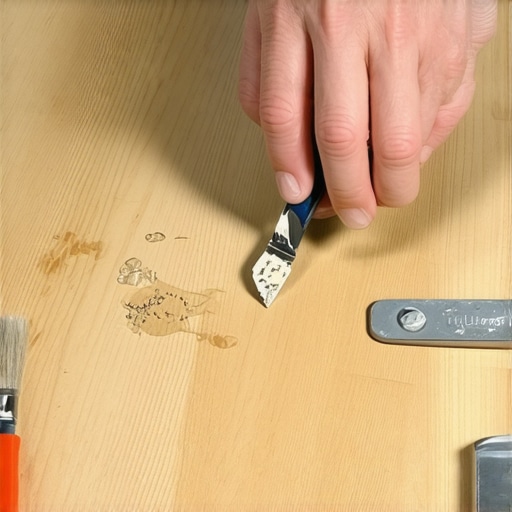
- Fill the hole with matching color putty or wax
Chemistry of the floor repair resin
The success of a laminate injection depends on the chemical properties of the adhesive, specifically its viscosity and its ability to bond to both the underlayment and the HDF core. A non-expanding formula is mandatory to avoid lifting the floor and creating a high spot. If you use an expanding foam, you will ruin the floor. I have seen guys try to use Great Stuff in a floor void. It turns the floor into a mountain range. You need a structural adhesive that is thin enough to travel through a syringe but thick enough to stay in the hole. This is about surface tension. The resin needs to ‘wet’ the surface of the subfloor and the underside of the laminate. If the resin is too thick, it will just sit in a puddle right under the hole. If it is too thin, it will run away into the expansion gaps at the walls. It is a balancing act. You also have to consider the VOCs. Since you are working inside, you want a low-odor product. The smell of floor wax is one thing, but the smell of industrial solvents is another. Most modern resins are water-based or use high-tech polymers that have almost no smell. This is better for the homeowner and better for my lungs.
“Expansion space is the lungs of a floating floor; without it, the system will eventually suffocate and buckle.” – Master Flooring Axiom
The 1/4 inch gap and regional climate logic
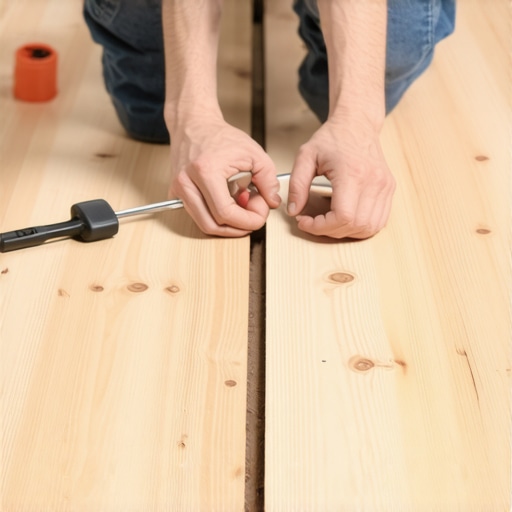
Regional humidity plays a massive role in how much a laminate floor moves and clicks. In high humidity areas like New Orleans, floors expand significantly, while in dry climates like Denver, they shrink. This movement can exacerbate existing subfloor issues. If you are in a swampy area, your laminate is going to be tighter. If you did not leave a full 1/4 inch or 1/2 inch expansion gap at the perimeter, the floor will bind. When a floor binds, it lifts off the subfloor. This creates a massive void that clicks when you walk on it. No amount of injection will fix a floor that is bound at the walls. You have to check the perimeter first. Take off a piece of shoe molding or quarter round. If the laminate is tight against the drywall, you have found your problem. You need to trim that edge. I use a toe-kick saw or an oscillating multi-tool to create that gap. Once the floor can breathe, it might settle back down on its own. If it doesn’t, then you go back to the injection method. Do not let anyone tell you that ‘waterproof’ laminate doesn’t move. The plastic in the core might not swell, but the HDF core in 90 percent of products still reacts to the moisture in the air. The physics of wood fiber do not change just because the marketing says waterproof.
Tools of the trade for surgical fixes
A successful repair requires more than just glue; it requires precision tools including a high-pressure syringe, a micro-drill bit, and a vacuum with a HEPA filter. Removing all debris from the drill hole is the only way to ensure the resin bonds properly. I keep a dedicated kit for this in my truck. It has a variety of colored wax sticks for filling the holes afterward. You can melt the wax with a small butane torch and drip it into the hole. Once it cools, you scrape it flush with a plastic scraper. If you do it right, the hole is invisible from a standing height. I also keep a moisture meter. I want to know if that click is caused by a dip in the floor or if the slab is damp. If the slab is damp, the HDF core is swelling at the bottom, which causes the edges to curl up. This is called cupping. You cannot fix cupped laminate with an injection. You have to fix the moisture problem. Usually, that means the vapor barrier was punctured or never installed. If I see more than 4 percent moisture in a concrete slab, I know I am in for a long day. That is why I always check the slab before I ever open a box of flooring.
When to walk away and start over
Some floor clicking is beyond a simple injection fix, especially if the locking mechanisms have already sheared off or if the subfloor is structurally unsound. If the clicking is accompanied by a crunching sound, the HDF core has likely disintegrated. In those cases, you are wasting your time with glue. You are just putting a band-aid on a broken leg. If you walk across the floor and see the seams opening and closing more than a sixteenth of an inch, the joint is dead. You have to pull the floor. I hate telling homeowners that, but I am not going to take their money for a fix that won’t last six months. It is about integrity. If the subfloor is plywood and it is delaminating, no amount of leveling compound on top will save it. You have to cut out the bad wood and replace it. This often happens near showers where a small leak has been feeding the wood for years. The wood turns to mush, the laminate loses its support, and the clicking begins. Do the job right or do not do it at all. That is the only way to survive in this business for 25 years without getting sued. Your floor is the foundation of your home life. Keep it flat, keep it dry, and it will keep quiet.