Why Your Laminate Planks are Peeling at the Corners and How to Fix It
I have spent twenty-five years on my knees with a moisture meter and a level. My hands smell like WD-40 and oak dust. I have seen the same tragedy repeat itself in thousands of homes. It is the sound of a hollow click and the sight of a lifted corner. Most people think a peeling floor is just a cheap product. They are wrong. A floor is a performance surface. It is a structural engineering challenge. I once spent three days grinding concrete on a job just so the floor would not click like a castanet. Most guys skip the leveling compound. They think the underlayment will hide the dip. It won’t. When that laminate starts peeling at the corners, you are looking at a failure of physics and chemistry. This is not a cosmetic issue. It is a warning sign that your subfloor is lying to you.
The hard truth about peeling laminate corners
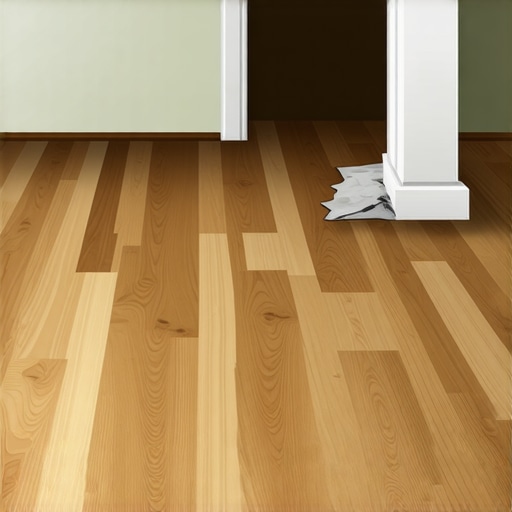
Laminate planks peel at the corners primarily because of moisture intrusion, improper acclimation, or structural subfloor movement that stresses the locking joints. When the high-density fiberboard core absorbs humidity, it expands and pushes against the melamine wear layer, causing the top decorative surface to lift and delaminate from the edge. [IMAGE_PLACEHOLDER] This process is known as thickness swell. When the core of the plank expands beyond its structural limits, the bond between the decorative paper and the HDF core is severed. This typically happens at the corners because the factory seal is most vulnerable at the cross-cut of the tongue and groove system. If you see peeling, the integrity of the locking mechanism is already compromised. You are no longer looking at a floor. You are looking at a collection of individual boards fighting against each other.
The hidden subfloor failure that ruins every plank
Subfloor levelness is the most important factor in preventing laminate corner peeling because uneven surfaces cause vertical movement when walked upon. This movement, often called deflection, creates a pump-like action that forces air and moisture into the joints while simultaneously stressing the brittle melamine top layer until it cracks. I have walked into houses where a fifteen thousand dollar floor was cupping so bad it looked like a potato chip because the installer ignored the crawlspace. Most manufacturers require a subfloor to be level within 3/16 of an inch over a 10 foot radius. If you have a dip, the plank will bridge over it. Every time you step on that plank, it flexes. That flex puts immense pressure on the corner of the adjacent plank. It is a mechanical failure. The melamine layer is hard, but it is also brittle. It cannot handle the constant shear force of a flexing subfloor. This is why floor leveling is not an optional step. It is the foundation of the entire system.
“A floor is only as good as the subfloor beneath it, deflection is the enemy of every joint.” – Master Flooring Axiom
Chemical bonds and the physics of the wear layer
The wear layer of a laminate plank consists of aluminum oxide or melamine resin cured under extreme heat and pressure to create a non-porous shield. Peeling occurs when the wood fibers in the core reach a moisture content that breaks the ionic bond between the resin and the cellulose fibers. Laminate is essentially a high-pressure sandwich. The core is High-Density Fiberboard (HDF), which is wood dust held together by urea-formaldehyde or melamine-urea-formaldehyde resins. These resins are water-resistant but not waterproof. When liquid water sits on a seam, it travels via capillary action into the core. This is where the molecular zooming reveals the disaster. The wood fibers swell. The resin cannot stretch. The bond snaps. This is why the corners peel first. The corner is where the protective layer is thinnest and where the locking profile is most intricate.
Humidity levels that kill your investment
Environmental humidity must be maintained between 35 and 55 percent to prevent laminate planks from expanding or contracting beyond their design tolerances. High humidity causes the HDF core to swell, while low humidity makes the planks brittle and prone to chipping at the edges and corners. Acclimation is not a suggestion. It is a requirement. You cannot take a floor from a cold warehouse and install it in a humid room. The planks need at least 48 to 72 hours to reach equilibrium with the air in the home. In places like Houston, the swampy humidity means solid wood is a risk, and even laminate needs extra care. If the house is too humid, the planks will grow. If they hit a wall because there is no expansion gap, the pressure has to go somewhere. It goes into the joints. The corners take the brunt of that force. They will peak, then they will peel.
“Wood and wood-based products are hygroscopic, they will gain or lose moisture until they reach equilibrium with the surrounding atmosphere.” – NWFA Technical Guidelines
Regional climate factors and the swamp effect
Regional weather patterns dictate the success of a laminate installation because atmospheric pressure and dew point affect how quickly moisture moves through a concrete slab or wooden subfloor. In coastal areas, high vapor pressure pushes moisture up through the floor, while in desert climates, extreme dryness can shrink the plank cores. If you are doing a carpet install or moving to laminate in a humid region, you must use a vapor barrier. I always tell people that a 6-mil poly film is the cheapest insurance policy they will ever buy. In the dry heat of Phoenix, your baseboards will shrink until they show a gap, and your laminate corners will become sharp and brittle. In the humidity of the South, the core will bloat. You have to understand the climate of your specific city before you even open a box of flooring.
Professional repair strategies for damaged edges
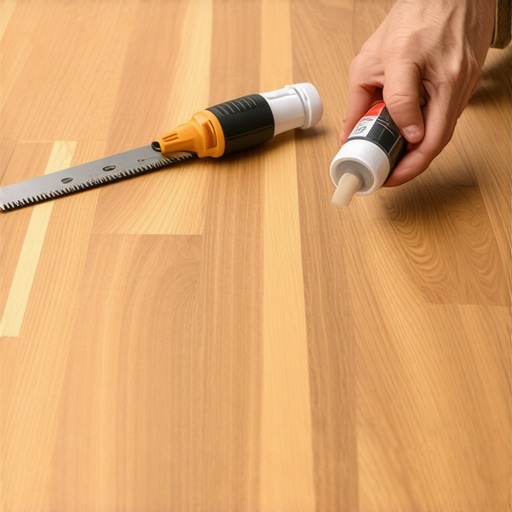
Fixing peeling laminate corners requires assessing the depth of the damage to determine if the plank can be repaired with a specialized wax filler or if the entire board must be replaced. Minor delamination can be stabilized with a cyanoacrylate adhesive, but structural core swelling usually necessitates the removal of the affected planks. If the peel is small, you can sometimes use a floor repair kit. You clean the area, apply a matching color wax, and seal it. But let’s be honest. If the HDF core is blown, that board is done. You have to pull up the baseboards, click out the floor until you reach the damaged area, and replace the board. It is tedious work. It is why we say you should do it right the first time. Use a tapping block. Never hit the plank directly with a hammer. You will micro-fracture the corner, and the peeling will start six months later.
Critical Installation Checklist
- Check subfloor levelness with a 10 foot straight edge.
- Verify moisture content of the subfloor using a pin or pinless meter.
- Maintain a 1/2 inch expansion gap around the entire perimeter of the room.
- Acclimate the flooring in the room of installation for at least 48 hours.
- Use a 6-mil polyethylene vapor barrier over all concrete slabs.
- Avoid heavy fixed objects like kitchen islands on top of floating floors.
Maintenance protocols to prevent future delamination
Proper maintenance of laminate flooring involves avoiding excessive water and using pH-neutral cleaners that do not leave a residue or penetrate the seams. Never use a steam mop on laminate because the high-pressure vapor will force moisture into the HDF core and cause immediate edge peeling. A damp mop is fine. A soaking wet mop is a death sentence. You want a cleaner that evaporates quickly. If water sits on the floor for more than a few minutes, it is finding a way into those corners. This is especially true in bathrooms or near showers. If you are installing laminate near a shower, you better be using a waterproof silicone in the expansion gap to seal the edges. Otherwise, the humidity from your morning scrub will destroy the floor in a year.
| Feature | Specification | Impact on Peeling |
|---|---|---|
| Core Material | High-Density Fiberboard (HDF) | Determines moisture absorption rate |
| Wear Layer | AC3 to AC5 Rating | Resists surface scratches and chips |
| Subfloor Level | Max 3/16 inch per 10 feet | Prevents joint stress and delamination |
| Expansion Gap | 1/4 to 1/2 inch | Allows for natural thermal movement |
| Underlayment | Closed-cell foam or IXPE | Provides moisture protection and sound dampening |
Final inspection of the site
A floor is not just something you walk on. It is a system of layers working in harmony. When the corners of your laminate start to peel, the system has failed. Usually, it is because someone ignored the fundamentals. They ignored the moisture. They ignored the subfloor. They ignored the expansion gaps. I have spent my life fixing these mistakes. Do not treat your floor like a rug. Treat it like the piece of engineering it is. If you respect the physics of the material, it will last for decades. If you don’t, you will be calling someone like me to tear it all out and start over. And trust me, grinding concrete is not how you want to spend your weekend.