Why Your Laminate Floor Planks Are Bowing at the Ends
Homeowners always ask why their waterproof vinyl or high-end laminate is buckling. Usually, it is because they locked it under a heavy kitchen island, killing the floor ability to breathe. I once spent four days in a suburban kitchen ripping up eighteen hundred dollars worth of European laminate because the cabinet installer had bolted the base units directly through the floating floor into the slab. The planks were bowing at every joint. They looked like a series of tiny speed bumps. The homeowner thought it was a product defect. It was not. It was a structural prison. Laminate is a living, moving assembly of wood fibers and resins. When you pin it down, you are essentially asking a tectonic plate to stop moving. It will not stop. It will simply break. This is the reality of the floating floor system. It is a physics problem, not a decor choice.
The ghost in the expansion gap
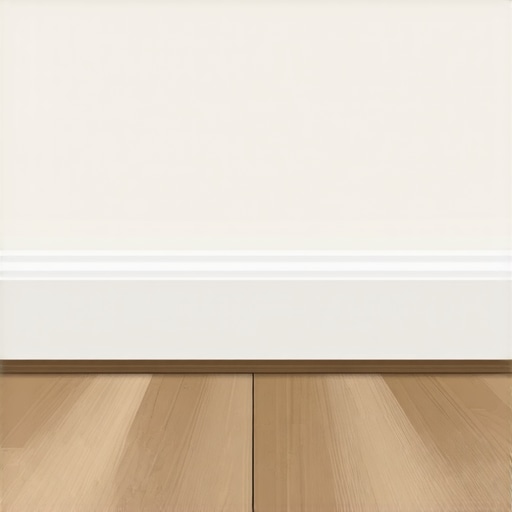
Laminate floor planks bow at the ends because the expansion gap around the perimeter of the room is either non-existent or blocked by heavy objects. This lack of space prevents the floor from expanding as humidity levels change. When the wood fibers in the High-Density Fiberboard core absorb moisture, the planks grow in length and width. If the floor hits a wall or a heavy cabinet, the physical pressure forces the ends of the planks to lift or bow upward at the joints. This is a fundamental failure of the installation geometry. The perimeter must remain entirely free of obstructions. You cannot use caulk in these gaps. You cannot nail baseboards through the floor. You cannot install a fifty pound transition strip that pinches the material against the subfloor. If the floor cannot move as a single monolithic unit, it will fail at its weakest points, which are the click-lock tongue and groove joints at the ends of the boards.
The molecular structure of a laminate core is primarily composed of compressed cellulose fibers. These fibers are hygroscopic. They attract water molecules from the air through a process called adsorption. As those molecules wedge themselves between the cellulose chains, the internal volume of the board increases. In a standard ten foot span, a floor might grow by an eighth of an inch. If that growth is restricted by a single finish nail or a heavy refrigerator, the internal stress within the HDF core reaches a breaking point. The energy has to go somewhere. Since it cannot go out, it goes up. The ends of the planks are where the locking mechanisms reside. These joints are thinner than the main body of the board. They are the structural fuses of the flooring system. They blow when the pressure gets too high.
Why your subfloor is lying to you
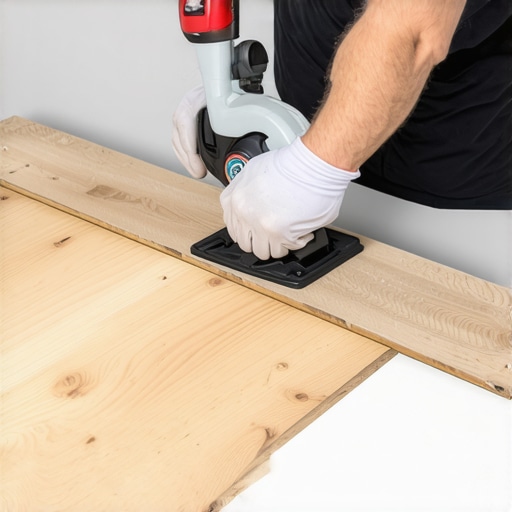
Floor leveling is the most ignored phase of installation, yet it is the primary reason why laminate joints fail and bow. If the subfloor has a dip or a high spot, the laminate planks are forced to bridge that gap or climb that hill. This creates a constant state of tension in the locking mechanism. When you walk over a dip, the floor deflects. This repetitive mechanical stress weakens the joint over time. Eventually, the joint loses its integrity and the board ends begin to peak or bow. A subfloor must be flat within three sixteenths of an inch over a ten foot radius. Most builders consider a floor flat if it does not have a hole big enough to trip over. That is not good enough for laminate. You must use a ten foot straightedge and a bag of high-quality self-leveling underlayment to fix the geography of the room before the first plank touches the ground.
“A floor is only as good as the subfloor beneath it; deflection is the enemy of every joint.” – Master Flooring Axiom
When I talk about floor leveling, I am talking about the chemical bond between the substrate and the leveling compound. You cannot just pour stuff on the floor and hope for the best. You need to identify if you are working with a calcium sulfate screed or a traditional Portland cement slab. Each requires a specific primer to ensure the leveler does not delaminate. If the leveler fails, the floor fails. If the floor fails, the planks bow. I have seen guys try to level a floor with extra layers of foam underlayment. This is a recipe for disaster. Underlayment is designed to dampen sound and provide a vapor barrier. It is not a structural filler. Using too much cushion creates a trampoline effect. The floor bounces. The joints flex. The ends of the planks bow. It is inevitable.
The kitchen island death trap
Installing a heavy kitchen island or permanent cabinetry on top of a floating laminate floor is a guaranteed way to cause bowing and joint separation. Floating floors require the ability to slide underneath the baseboards. When you place a three hundred pound island on top of the planks, you create a permanent anchor point. As the floor tries to expand toward the island, it hits a wall of weight. The planks have no choice but to buckle. If you are planning a kitchen remodel, the cabinets must go in first. The floor must be installed around the cabinets with a proper expansion gap covered by a toe kick or quarter round molding. This allows the floor to move independently of the heavy structure of the house. You are creating a dance floor, not a foundation.
| Metric | Tolerance Requirement | Impact of Failure |
|---|---|---|
| Subfloor Flatness | 3/16 inch per 10 feet | Joint peaking and bowing |
| Perimeter Gap | 3/8 inch to 1/2 inch | Tension buckling and humping |
| Acclimation Time | 48 to 72 hours | Immediate post-install shrinkage |
| Max Run Length | 30 linear feet | Expansion stress at joints |
| Ambient Humidity | 35% to 55% RH | Core swelling or cracking |
The physics of a dead load is relentless. Imagine the floor is a sheet of ice on a pond. If you freeze a metal pole into the center of that ice, when the water level changes or the ice expands, the sheet will crack around that pole. Your kitchen island is that pole. The laminate is the ice. I have walked into jobs where the homeowner complained about a clicking sound. That sound is the tongue of the laminate rubbing against the groove because it is being pulled apart by the weight of a granite-topped island ten feet away. Eventually, the joint gives up. The ends of the boards pop up. No amount of tapping with a rubber mallet will fix it. You have to cut the floor around the island to release the pressure. It is a surgical procedure that most people want to avoid.
The 1/8 inch that ruins everything
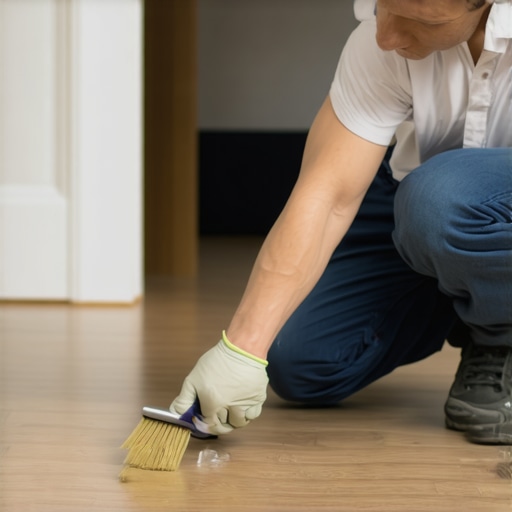
Small debris trapped in the locking mechanism or under the plank will prevent the joint from seating properly, leading to bowing at the ends. Even a single grain of sand or a stray piece of plastic from the packaging can throw off the alignment of a click-lock system. These systems are engineered with tolerances of less than a millimeter. If the joint is not perfectly seated, it sits at a slight angle. Over time, as people walk on it, that angle increases. The ends of the boards start to bow upward. This is why a clean workspace is not a suggestion. It is a requirement. I vacuum the floor three times during an install. Once before the underlayment, once after the underlayment, and once more before I start the next row of planks. Sawdust is the enemy of a flat floor.
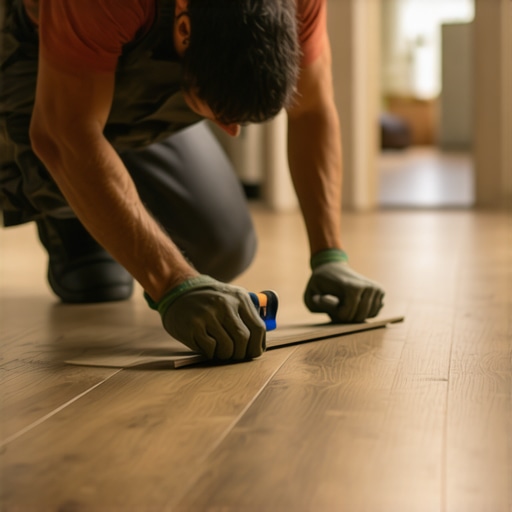
- Check every plank for factory defects or damaged tongues before clicking it in.
- Use a vacuum with a HEPA filter to remove micro-dust from the subfloor surface.
- Ensure the tapping block is hitting the thick part of the board, not the fragile locking edge.
- Maintain a consistent temperature in the room for 48 hours before and after the install.
- Never force a board that does not want to click; something is blocking the path.
The thickness of the wear layer also plays a role in how the ends bow. Cheap laminate often has a thin AC3 rated wear layer that does not provide enough structural rigidity to the surface. When the HDF core swells, the surface layer cannot restrain it. High-end laminate with an AC5 rating and a thicker wear layer provides a bit more resistance, but it is still subject to the laws of moisture. You have to think about the mil-thickness of the protective coating. A thicker coating provides better protection against surface moisture, like a spilled drink, but it does nothing to stop the vapor pressure coming up from a damp concrete slab. That is why a vapor barrier is mandatory over concrete. Without it, the bottom of the board expands faster than the top. This creates a cupping effect where the ends of the boards bow downward or the middle bows upward. It is a mess.
The moisture migration nightmare
Concrete slabs act like sponges, slowly releasing water vapor that can ruin a laminate floor if a 6-mil poly film is not used. Even a slab that looks dry can have high internal relative humidity. This moisture moves through the concrete via capillary action. When it hits the bottom of your laminate floor, it has nowhere to go. It enters the HDF core. This causes the bottom of the board to expand while the top, exposed to the dry air of the room, stays the same size. The result is a bowed board. This is not a product failure. This is an installation failure. You must use a moisture meter. If the slab is reading over 4% on a Tramex scale, you have a problem. You need a calcium chloride test to determine the vapor emission rate. If it is over three pounds per thousand square feet, you are asking for trouble.
“Laminate flooring shall be installed in accordance with the manufacturer’s instructions, including moisture testing and the use of vapor retarders where specified.” – General Industry Standard
I have seen guys skip the vapor barrier because the underlayment they bought has a plastic film on one side. That is not enough. You need to overlap the seams of your poly film by six inches and tape them with moisture-resistant tape. You need to run that film an inch up the wall so it sits behind the baseboard. This creates a sealed envelope for your floor. If you do not do this, the humidity from the earth will eventually find its way into your floor. It might take six months. It might take two years. But eventually, those ends will bow. The chemistry of the glue used to hold the wood fibers together in the core is also a factor. Some cheaper glues use urea-formaldehyde which is less stable when exposed to high moisture than the more modern MDI resins. Know what you are buying. Cheap laminate is cheap for a reason.
Acclimation is not a suggestion
Failing to acclimate laminate planks to the room temperature and humidity for at least 48 hours is the most common cause of post-install bowing. When the flooring arrives from a cold warehouse or a damp truck, it is in a state of thermal and hygroscopic shock. If you install it immediately, it will begin to change size as it adjusts to your home environment. If it expands, it hits the walls and bows. If it shrinks, the joints pull apart and leave gaps. You must stack the boxes in the middle of the room in a log-cabin pattern. Do not lean them against a wall. The air must circulate around every box. This allows the moisture content of the boards to reach equilibrium with the air in the house. This is basic science. You cannot rush it.
If you live in a place like Phoenix, the air is incredibly dry. If the floor was manufactured in a humid climate, it will shrink significantly once it hits that desert air. Conversely, if you are in the swampy humidity of Houston, solid wood or high-wood-content laminate will grow the moment it leaves the box. You have to account for these regional differences. In high-humidity areas, I often leave a larger expansion gap, sometimes up to five-eighths of an inch. I hide it with a beefier baseboard or a custom shoe molding. It is better to have a wide gap than a bowed floor. The 1/8 inch that ruins everything is often the 1/8 inch of space you thought you didn’t need. Respect the gap. Respect the subfloor. Respect the material. If you do that, the floor will stay flat for thirty years. If you don’t, you will be calling someone like me to rip it up in six months. It is your choice.