Why your carpet tack strips are hurting your feet through the rug
The metallic bite of a carpet tack strip against a bare heel is a sensation you never forget. It is sharp, sudden, and entirely avoidable. As a floor installer who has spent twenty five years with a moisture meter in one hand and a knee kicker in the other, I can tell you that this pain is not an act of God. It is a failure of engineering. Most people treat carpet like a blanket they just throw over a room. They think the padding is the mattress and the rug is the sheet. In reality, a carpeted floor is a high tension system held together by architectural strip wood and carbon steel nails. When those nails start poking through, it means someone cut a corner. Usually, they cut that corner right at the subfloor level. I smell like WD-40 and oak dust most days, and I have seen enough blood on transition strips to know that homeowners are being failed by installers who do not understand the physics of a gully. You are feeling those strips because the relationship between the pile height, the padding density, and the tack strip grade is out of balance. If your installer used a C-grade strip meant for heavy plush on a low profile berber, you are walking on a bed of needles.
The sharp reality of a lazy stretch
The primary reason carpet tack strips hurt your feet is a mismatch between the tack nail length and the combined thickness of the carpet backing and padding. When an installer uses a standard architectural strip with nails designed for thick plush carpet on a low-profile or commercial-grade rug, the steel points will inevitably protrude through the primary and secondary backing. This problem is exacerbated by poor stretching techniques that fail to seat the carpet fibers deeply enough into the pins. Most guys skip the leveling compound. They think the underlayment will hide the dip. It won’t. I spent three days grinding concrete on a job last month just so the floor wouldn’t click like a castanet and to ensure the tack strips sat perfectly flush against the transition. If the subfloor is not level, the tack strip can tilt. A tilted strip points those nails directly at your toes instead of angled slightly toward the wall. It is a mechanical failure that starts at the molecular level of the plywood or concrete beneath your feet. We are talking about 1/8 inch of steel that is supposed to be buried in the latex backing. When it is not, you are the one who pays the price. I once walked into a house where a fifteen thousand dollar wide plank walnut floor was cupped so bad it looked like a potato chip because the installer did not check the crawlspace humidity. The same lack of care applies to carpet. People think it is the easy option, but a proper carpet install requires more precision than most realize.
“A floor is only as good as the subfloor beneath it; deflection is the enemy of every joint.” – Master Flooring Axiom
The 1/8 inch that ruins everything
The gully is the space between the tack strip and the baseboard. It should be exactly slightly less than the thickness of the carpet. If that gully is too wide, the carpet will dip into the void and expose the row of pins. If the gully is too narrow, the carpet will bunch up and create a trip hazard. Most installers just hammer the strips down without looking. They do not account for the pile height. We use different strips for different jobs. A thin laminate might require no strips at all, but a heavy frieze needs a triple row of pins. When you move from a bedroom into the tiled area of showers, the transition height is critical. If the tile is higher than the carpet, the installer often tries to ramp the carpet up. This elevates the backing and makes the tack pins much more prominent. You feel the sting because the physics of the transition were ignored. The tension of the carpet stretch also plays a role. A carpet that is not stretched to the manufacturer specifications will eventually loosen. As it loosens, it lifts off the pins. When you step on it, you push the carpet back down onto the pins, resulting in that sharp poke. It is a cycle of poor tension and incorrect hardware selection. You need to understand the Janka hardness of your subfloor too. If you are nailing into a soft pine subfloor, the tack strip can eventually wiggle loose, but on a slab, you are using masonry nails that do not budge. If those pins are high, they stay high.
| Padding Type | Density (lb/ft³) | Compression Set | Recommended Use |
|---|---|---|---|
| Rebond | 6.0 – 8.0 | Moderate | Residential Standard |
| Frothed Foam | 10.0 – 12.0 | Low | High Traffic Areas |
| Memory Foam | 8.0 | High | Luxury Bedrooms |
| Fiber Pad | 12.0+ | Very Low | Commercial or Berber |
The physics of padding and pin penetration
Padding density determines how far your foot sinks into the floor which directly impacts whether you contact the tack strip pins. A low density pad allows the carpet backing to depress too far under the weight of a human step, bringing the foot into direct contact with the steel points of the architectural strip. If you have a 4-pound density pad, it is basically air. You might as well be walking on a sponge. A 6-pound or 8-pound pad provides the structural resistance needed to keep your foot above the pin line. When we talk about floor leveling, we are usually talking about preparing for laminate or tile, but it matters for carpet too. If there is a dip in the subfloor right next to the tack strip, the pad will sink into that dip. This creates a vertical gap that the carpet must bridge. When you step on that bridge, it collapses onto the strip. It is basic structural engineering. You cannot support a load over a void. Most people ignore the chemical bond of the adhesives used in these pads too. Over time, cheap padding breaks down into a powder. When the cells of the foam collapse, you lose that height. The carpet stays where it is, but the floor effectively gets lower. Suddenly, those tack strips that were safe five years ago are now weapons. It is the slow degradation of the installation. If you are doing a renovation near moisture heavy areas like showers, the wood in the tack strips can actually swell. This swelling pushes the pins higher. It is a nightmare for your feet.
- Check the padding density before signing the contract to ensure it is at least 6 pounds.
- Inspect the gully width to make sure it does not exceed 3/8 of an inch.
- Verify that the installer is using a power stretcher rather than just a knee kicker.
- Ensure the tack strip type matches the carpet pile height to avoid pin protrusion.
- Test the transitions between carpet and hard surfaces for height consistency.
The chemistry of a proper grip
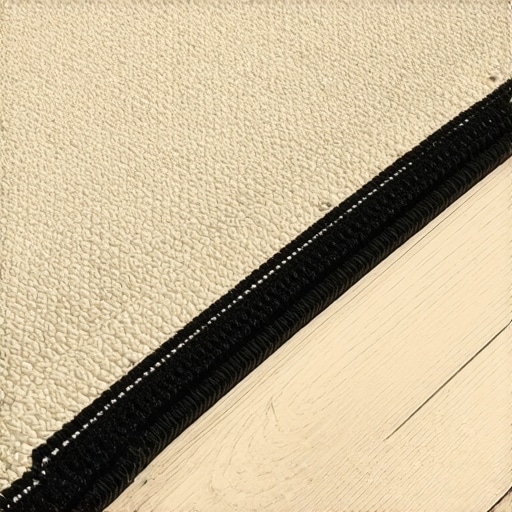
The tack strip itself is usually made of plywood, often poplar or birch, with a series of pins driven through at a 60 degree angle. These pins are designed to catch the weave of the carpet. The angle is intentional. It uses the tension of the stretch to pull the carpet tighter. If an installer hammers the pins down to hide them, they ruin the grip. If they leave them too high, they ruin your morning. There is a specific science to the metallurgy of these pins. They are hardened steel, often zinc-plated to resist the moisture that lives in every subfloor. Even in a dry climate, concrete slabs breathe. They release moisture vapor. If the tack strip is not high quality, those pins can rust. Rusting pins become brittle and can break off, or they can expand and create larger holes in the carpet backing. This reduces the friction that holds the floor in place. When we discuss laminate or other hard surfaces, we talk about expansion gaps. Carpet has no expansion gap. It has a tension requirement. Without the proper tension, the backing moves laterally. Every time you walk, the carpet slides a fraction of a millimeter over those pins. It is like sandpaper on the underside of your rug. Eventually, the backing wears thin. That is when you start feeling the steel. It is not just about the rug. It is about the entire assembly from the concrete up.
“The integrity of a textile installation is found in the tension of the stretch and the quality of the fastener.” – NWFA Flooring Standards Manual
Why your subfloor is lying to you
The subfloor is the foundation of the home, but it is rarely flat. I have seen slabs that look like the rolling hills of Kentucky. When you install a tack strip on a hump, the pins at the peak of that hump are much higher than the rest of the floor. This is where the floor leveling keyword becomes a reality. You have to use a self-leveling underlayment or a patch compound to feather out those high spots. If you don’t, the carpet will stretch over the hump like a drum skin. The pressure on those specific pins will be enormous. They will eventually poke through the fibers. It is a common mistake in quick flips. The contractor wants the carpet down in a day. They don’t want to wait twenty four hours for a leveling compound to cure. They nail the strips, kick the carpet, and leave. Six months later, the homeowner is calling me because their hallway feels like a minefield. The same applies to the areas around bathroom showers. The moisture from the steam can affect the subfloor near the transition. If that plywood gets damp, it expands. The tack strip, being nailed into that wood, moves with it. You might find that your feet only hurt in the summer when the humidity is high. That is the wood moving. It is a living, breathing system. If you treat it like a static object, you lose. You have to respect the materials. Use a high-quality moisture barrier even under carpet padding if you are on a slab. It keeps the tack strips dry and the pins stable. It is the difference between a floor that lasts thirty years and one that you hate within three.