4 Telltale Signs Your Carpet Installer Skipped the Seam Sealer
I once walked into a luxury penthouse where the owner had spent twenty thousand dollars on a custom wool Axminster. Six months later, the seams were fraying so badly they looked like a cheap sweater that had been through a blender. The installer, a guy who probably learned his trade watching three minute videos on his phone, had skipped the seam sealer. He thought the hot melt tape was enough. It never is. I spent the next four hours explaining to a very angry homeowner why his expensive investment was now essentially a pile of high end rags. I have spent twenty five years on my knees with a moisture meter and a power stretcher, and if there is one thing I have learned, it is that a floor is a performance surface, not a decoration. Most guys in this trade are looking for the exit before the glue is even dry. They ignore the physics of the subfloor and the chemistry of the adhesives. They skip the seam sealer because it takes an extra ten minutes and costs a few extra bucks. But that missing bead of polymer is the difference between a floor that lasts thirty years and one that fails before the first steam cleaning. When you smell the metallic tang of a hot seam iron and the earthy scent of a fresh roll of carpet, you should also be smelling the sharp, chemical odor of edge sealer. If you do not, you are looking at a ticking time bomb. This is not about aesthetics. It is about the structural engineering of your living space. Carpet installation is a craft of tension and friction. Without sealer, you are just laying fabric on the floor and hoping for the best.
The unmistakable sight of fraying edges and fiber loss
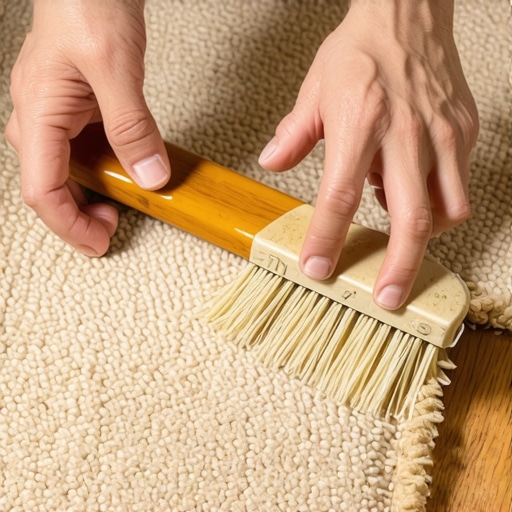
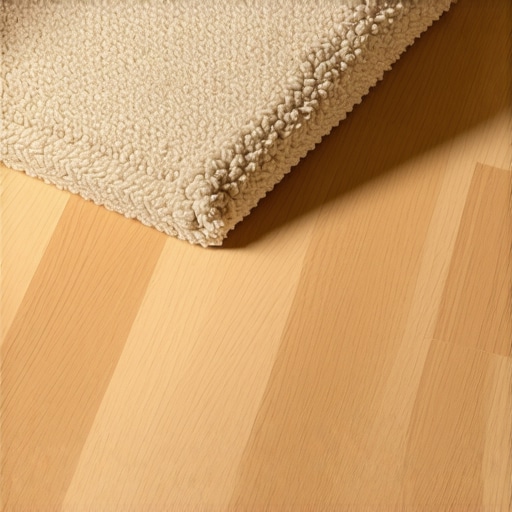
Fraying edges and fiber loss occur when unsealed carpet yarns are pulled from the primary backing during normal foot traffic or vacuuming. Without a liquid seam sealer or thermoplastic bond, the tufts at the edge of the carpet install have no mechanical or chemical anchor. When we talk about the chemistry of a carpet, we are looking at the interaction between the primary backing, the secondary backing, and the SBR latex that holds them together. The primary backing is where the yarn is tufted. When an installer cuts a piece of carpet, they are slicing through those structural loops. This leaves the yarn vulnerable. A proper seam sealer encapsulates those cut ends, creating a new, artificial edge that is as strong as the original weave. If that step is skipped, the simple act of walking across the room creates micro-friction. This friction tugs at the loose fibers. Over time, you see what we call the hairy seam. It starts as a few stray threads and ends with a visible gap where the backing is exposed. Unlike laminate, which relies on a mechanical click-lock, carpet relies on the integrity of its edges to maintain a continuous surface. If the edges are raw, the floor is failing at a molecular level every time you step on it.
The shadow of a peaking carpet joint
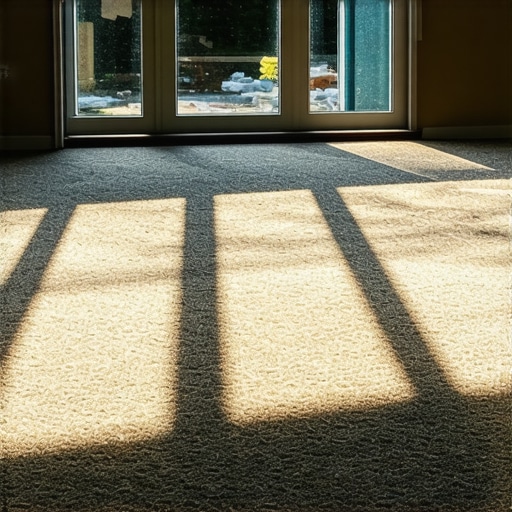
Peaking carpet joints are elevated ridges at the seam line caused by improper tensioning and a lack of edge reinforcement. When an installer uses a power stretcher without seaming the edges, the lateral force pulls the backing apart, forcing the seam to rise into a V-shape. Think about the physics of tension. When we use a power stretcher, we are putting hundreds of pounds of force on that carpet to ensure it stays tight and does not wrinkle. If the seam is not properly sealed and bonded, that tension is not distributed evenly. The seam becomes the weakest link in the chain. Instead of the two pieces of carpet acting as one continuous sheet, they act as two separate entities fighting against each other. The hot melt tape underneath can only do so much. It is designed to hold the bottoms of the carpet together, not the edges. Without sealer, the edges of the backing rub against each other and have nowhere to go but up. This creates a peak that catches the light and creates a permanent shadow. It also creates a high point that wears out twice as fast as the rest of the floor. This is why floor leveling is so critical. If there is a dip in the subfloor, the tension is uneven, and the peak becomes even more pronounced. A level floor and a sealed seam are the two pillars of a professional job.
“A floor is only as good as the subfloor beneath it; deflection is the enemy of every joint.” – Master Flooring Axiom
Visible gaps and the slow migration of carpet pieces
Visible gaps between carpet sections indicate a complete failure of the seam bond due to missing edge sealer. In a professional carpet install, the seam sealer acts as a chemical weld that prevents delamination and ensures the backing remains dimensionally stable despite humidity changes. When the air gets dry in the winter, everything shrinks. When the humidity hits in the summer, especially near showers or in damp basements, everything expands. If your carpet edges are not sealed, they do not have the structural integrity to withstand this cycle. The edges start to curl and pull away from the seam tape. This is where you see the gap. It might start as a hairline fracture, but it will grow. This is a common issue in regions with extreme weather. The expansion and contraction of the subfloor, especially if it is plywood or OSB, puts even more stress on the seam. If you did not use a moisture barrier or if the subfloor leveling was ignored, the movement is even more violent. I have seen gaps wide enough to drop a nickel through. At that point, there is no fix. You cannot just squirt some glue in there and hope it stays. The integrity of the entire room is compromised because the carpet is no longer under the correct tension.
The yarn migration and the bald spot phenomenon
Yarn migration is the physical movement of individual carpet tufts away from the seam line, resulting in a bald appearance. This occurs because the latex transition between the primary and secondary backing was not reinforced with sealer, allowing the yarn to slide out of its matrix. When we zoom into the structure of a carpet, we see a complex web of polypropylene and nylon. These fibers are held in place by a thin layer of latex. When the installer cuts the carpet to create a seam, they are essentially performing surgery on that web. If they do not use a sealer to close the wound, the yarn is free to move. This is exacerbated by the use of thick underlayments. Many people think a thicker pad is better, but too much cushion actually causes the locking mechanisms on laminate to snap and carpet seams to buckle. The extra vertical movement as you walk on the floor acts like a pump, slowly pushing the unsealed yarns out of the backing. Eventually, you are left with a seam that looks bald. It is a structural failure disguised as a wear issue. You can clean it, you can groom it, but you cannot fix the fact that the yarn is no longer attached to the floor.
| Feature | Sealed Seam (Standard) | Unsealed Seam (Skipped) |
|---|---|---|
| Fiber Retention | High (Locked edges) | Low (Constant shedding) |
| Tension Resistance | Resists 400+ lbs of stretch | Fails under standard tension |
| Moisture Protection | Prevents liquid penetration | Allows subfloor rot |
| Expected Lifespan | 20 to 30 years | 2 to 5 years |
| Visual Result | Invisible transition | Visible peaking and gaps |
Professional Carpet Installation Checklist
- Verify subfloor moisture levels with a calcium chloride test before starting.
- Ensure floor leveling compound is used on all transitions and dips.
- Apply a continuous bead of seam sealer to both edges of the carpet.
- Use a power stretcher rather than a knee kicker for all main areas.
- Allow the seam sealer to cure for at least 20 minutes before final stretching.
- Check that the seam iron temperature matches the carpet backing type.
“Failure to seal edges of carpet at the seams is a violation of industry standard and will lead to premature failure of the installation.” – CRI 104 Standard for Installation
The chemistry of the bond and the subfloor connection
Subfloor preparation and adhesive chemistry are the foundation of any carpet install. A level subfloor ensures that the seam sealer can cure evenly without being distorted by gravity or structural dips. The seam sealer itself is usually a specialized SBR latex or a thermoplastic polymer. It is designed to bite into the backing and create a permanent bridge. If the subfloor is dusty or uneven, the sealer cannot do its job. I always tell my crews that they should spend sixty percent of their time on the subfloor and forty percent on the carpet. If you have a dip near a transition to a bathroom or shower, the moisture will migrate under the carpet and attack the unsealed edge from the bottom up. This leads to a bacterial breakdown of the latex, and that is when you get that musty, old carpet smell. It is not the fibers smelling. It is the rotting backing. By sealing the edges, you create a barrier that keeps moisture out of the internal structure of the carpet. This is why we are so obsessive about the details. Every 1/8 inch of a dip in the floor is a potential failure point for a seam. If you skip the floor leveling, you are essentially asking the carpet to act as a bridge over a canyon. It will eventually collapse, and the seam will be the first thing to go. Professionalism is not about how fast you can lay the goods. It is about how well you prepare the surface. When you are looking for a contractor, do not ask about the price per square foot. Ask about their seam sealing process and what kind of leveler they use. That is how you spot a pro who knows that a floor is a structural engineering challenge, not just a cosmetic choice.