Why Your Laminate Planks Are Gapping at the Ends
You smell the oak dust and the sharp tang of floor wax when you walk onto a job site that is failing. It is a specific scent of frustration. I have spent twenty-five years on my knees with a moisture meter and a level. I have seen every way a floor can fail. Most homeowners think laminate is a set-it-and-forget-it product. They treat it like a rug. It is not a rug. It is a complex assembly of wood fibers and resins that is constantly reacting to the environment around it. If your laminate planks are gapping at the ends, you are witnessing a structural failure of the floating system. It is not just an eyesore. It is a warning that the physics of your home are winning a war against your flooring choices.
Homeowners always ask why their waterproof vinyl or laminate is buckling or gapping. Usually, it is because they locked it under a heavy kitchen island, killing the floor ability to breathe. I once walked into a kitchen where a beautiful wide-plank install had separated so violently you could see the underlayment. The culprit was a thousand-pound marble island sitting right on top of the floating floor. The floor tried to shrink as the humidity dropped in winter, but the island acted like an anchor. Something had to give, so the joints just ripped apart. This is the reality of flooring. It is about movement, friction, and the relentless pull of moisture.
The ghost in the expansion gap
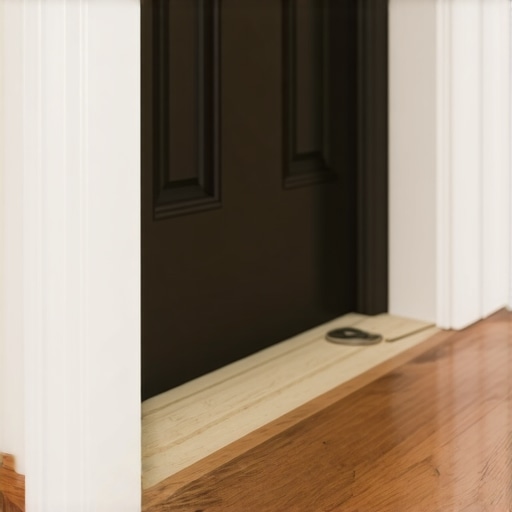
Laminate gapping occurs primarily due to thermal expansion, relative humidity fluctuations, and improper perimeter spacing. When the core material, usually High-Density Fiberboard (HDF), absorbs moisture, it expands. Without a 1/4-inch expansion gap at every vertical obstruction, the floor hits walls, buckles, or pulls joints apart at the weakest points during contraction. This movement is not optional. It is a law of thermodynamics. If you do not give the floor a place to go, it will make its own space by destroying its locking mechanisms. I have seen guys try to caulk the gap between the floor and the baseboard. That is a death sentence for the floor. The caulk hardens, the floor moves, and the planks separate.
“A floor is only as good as the subfloor beneath it; deflection is the enemy of every joint.” – Master Flooring Axiom
Why your subfloor is lying to you
A subfloor that is not level or flat causes vertical deflection, which leads to joint separation and locking mechanism failure. If your concrete slab or plywood subfloor has a deviation greater than 3/16 inch over 10 feet, the planks will bounce when walked upon. This constant flexing stresses the click-lock system, eventually causing the HDF tongues to shear off or slide out of the grooves. Most installers skip the self-leveling compound because it takes time to dry. They think the underlayment will hide the dip. It won’t. I spent three days grinding concrete on a job last month just so the floor wouldn’t click like a castanet. If you hear a clicking sound when you walk, your floor is already failing.
| Humidity (%) | Temperature (F) | Acclimation (Hours) | Expected Expansion (%) |
|---|---|---|---|
| 35 | 70 | 48 | 0.12 |
| 50 | 70 | 72 | 0.25 |
| 65 | 75 | 96 | 0.40 |
The 1/8 inch that ruins everything
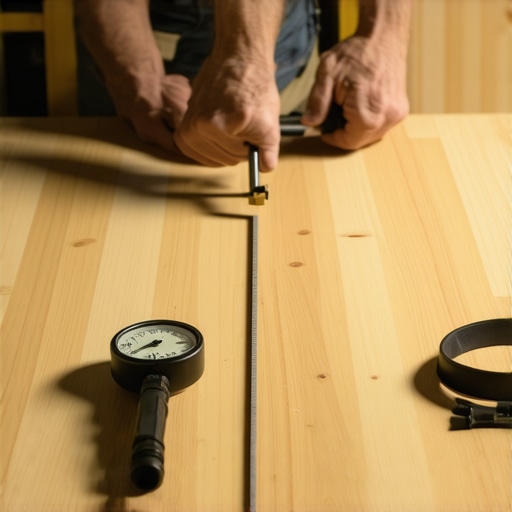
The acclimation process is the most ignored step in laminate installation, leading to gaps as the boards reach equilibrium moisture content (EMC). Planks must sit in the room where they will be installed for at least 48 to 72 hours to adjust to the indoor climate. If you pull boards from a cold, damp warehouse and install them immediately in a climate-controlled home, they will shrink. Even a 1/8 inch shrinkage across a twenty-foot run results in massive gaps at the butt-ends. While most people want the thickest underlayment, too much cushion actually causes the locking mechanisms on laminate to snap under pressure. You want a high-density underlayment that limits vertical travel.
- Check subfloor moisture levels with a pinless meter before starting.
- Ensure the subfloor is flat within 1/8 inch over 6 feet.
- Maintain a consistent expansion gap around the entire perimeter.
- Never install heavy cabinets or islands on top of a floating floor.
- Use a tapping block and pull bar to ensure every joint is fully seated.
Heavy furniture and the death of floating floors
Floating floors must be allowed to move as a single monolithic unit, but heavy furniture or fixed objects create pinch points that cause gapping. When you place a heavy pool table or a library-full of bookshelves on a floating laminate floor, you are effectively pinning it to the subfloor. As the rest of the floor expands or contracts with the seasons, the pinned section stays put. This creates massive tension on the surrounding joints. Eventually, the tension exceeds the shear strength of the HDF tongue, and the floor pulls apart. If you have heavy furniture, you must consider using an engineered wood floor that is glued down rather than a floating laminate.
“Wood and wood-based products are hygroscopic; they will always seek a balance with the surrounding atmosphere.” – NWFA Technical Guidelines
The friction problem behind your baseboards
Baseboards and shoe moldings that are nailed too tightly against the floor prevent lateral movement, resulting in gapping and peaking. The molding should float just a fraction of a millimeter above the floor surface. If you drive a finish nail through the molding and into the laminate, you have created a permanent anchor. This is a common mistake for DIYers who want a tight look. They hammer the baseboard down hard, trapping the floor. When the air dries out and the planks try to pull together, they are stuck. The weakest joint in the middle of the room will be the one that gives up and opens a gap.
Microscopic failure in the locking profile
The locking profile of a laminate plank is a marvel of precision engineering, often milled to tolerances of less than 0.01 inches. When dirt or construction debris gets into these grooves during installation, the joint cannot close completely. Over time, the micro-gap allows the plank to wiggle. This wiggle creates friction, which grinds the HDF fibers into a fine dust. As the fibers disappear, the locking strength vanishes. This is why a clean job site is not just about aesthetics; it is about the structural integrity of the chemical and mechanical bonds. Always vacuum the subfloor and the grooves of the planks before clicking them together. One grain of sand can ruin a thousand-dollar floor install.