Why You Should Never Skip the Seam Sealer on High-Traffic Carpet Areas
Why You Should Never Skip the Seam Sealer on High-Traffic Carpet Areas
I spent three days grinding concrete on a job last month just so the floor would not click like a castanet. Most guys skip the leveling compound and they think the underlayment will hide the dip. It will not. Carpet installation follows the same brutal logic of physics. I once walked into a luxury hotel lobby where a six month old commercial grade carpet was literally unzipping at the seams. The installer saved ten minutes by skipping the sealer. The client lost forty thousand dollars. If you think carpet is just a soft blanket for your subfloor, you are already failing the engineering test. A carpet is a structural system held together by tension, friction, and chemical bonds. When you cut a piece of carpet, you are breaking the factory seal of the primary and secondary backings. Without a seam sealer, those edges are vulnerable to every footfall, every vacuum pass, and every spill. This is not about aesthetics. This is about the molecular integrity of the textile.
The invisible failure of a naked seam
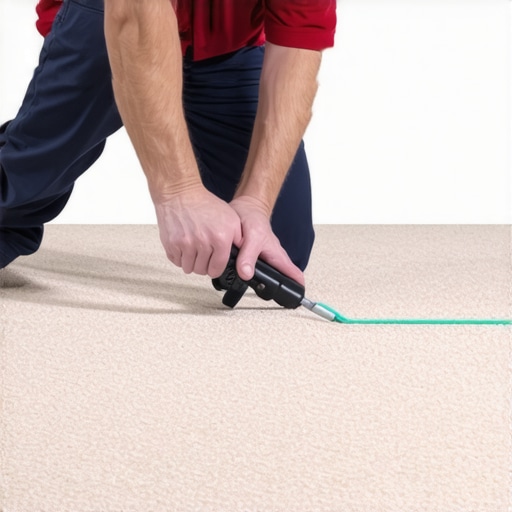
Seam sealer creates a chemical weld between the cut edges of the carpet backing to prevent yarn loss and delamination. By applying a bead of thermoplastic or latex based sealer to the base of the carpet pile, the installer ensures that the individual tufts remain anchored to the primary backing. This process is mandatory for maintaining the structural rating of the material in areas subject to heavy rolling loads or constant foot traffic. Most people do not realize that the primary backing of a carpet is essentially a woven grid. When you cut that grid, the cross weaves are left flapping in the breeze. If you do not lock them back together, the mechanical energy of someone walking over the seam will slowly pull those threads out. We call it zippering. Once it starts, you cannot stop it. You have to patch it, and a patch in a high traffic area is a giant red flag that the job was botched from the start. I have seen guys try to use duct tape or hot melt tape alone. Tape only handles the horizontal tension. It does nothing for the vertical integrity of the cut edge. You need the sealer to penetrate the backing fibers and create a singular, unified mass. This is the difference between a floor that lasts twenty years and one that fails before the first year is up.
The chemical physics of latex bonding
Latex based seam sealers function by penetrating the interstitial spaces of the carpet secondary backing to create a flexible but permanent bridge. The chemistry involves a suspension of synthetic rubber particles in a water or solvent base that evaporates to leave a solid polymer chain behind. This chain must be compatible with the factory applied latex used during the manufacturing of the carpet. If the chemistries clash, the sealer will simply peel away like old skin. In high traffic zones, the sheer force of a human heel striking the floor creates a momentary localized pressure of hundreds of pounds per square inch. This pressure causes the carpet to compress and shift. If the seam is not sealed, the two edges will rub against each other like sandpaper. This abrasion destroys the backing from the inside out. I always tell my apprentices that they are not just laying carpet, they are managing friction. You have to understand how the polymer chains interact with the nylon or polyester fibers. A good sealer will have a high solids content. Low quality sealers are mostly water and will shrink too much during the curing process, leaving the edge brittle and prone to cracking under the weight of furniture or heavy foot traffic.
“A floor is only as good as the subfloor beneath it; deflection is the enemy of every joint.” – Master Flooring Axiom
Why the vacuum becomes a predator
High powered commercial vacuums generate enough suction and mechanical agitation to rip unsealed tufts directly out of the carpet backing. When the rotating brush of a vacuum passes over an unsealed seam, the bristles can catch on the loose edges of the primary backing. Because there is no chemical bond holding those edges together, the vacuum pulls the yarn upward. Over time, this creates a visible line of missing tufts known as a bald seam. This is especially problematic in offices or retail spaces where cleaning crews use heavy duty uprights every single night. In these environments, the lack of sealer is a death sentence for the carpet. I have seen seams that looked perfect on day one become unrecognizable by day ninety. The vacuum does not just take the dirt, it takes the floor. You also have to consider the moisture factor during cleaning. Steam cleaners and hot water extraction units inject liquid into the fibers. If that moisture hits an unsealed edge, it can wick into the secondary backing and cause the factory latex to break down. This leads to delamination, where the carpet literally falls apart into two separate layers. A sealed seam acts as a waterproof barrier that protects the core of the carpet from the very machines meant to maintain it.
Comparing seam strength across materials
| Material Type | Backing Type | Sealing Requirement | Failure Risk |
|---|---|---|---|
| Residential Nylon | ActionBac | Mandatory | High Zippering |
| Commercial Polypropylene | Unitary | Mandatory | Edge Ravel |
| LVP Flooring | Rigid Core | None (Click) | Joint Separation |
| Laminate | HDF Core | Glue (Optional) | Peaking |
The friction reality of heavy footsteps
Human locomotion creates multidirectional stress on carpet seams that only a liquid sealer can effectively mitigate. When a person turns a corner on a carpeted surface, their foot exerts a rotational force. This torque is concentrated on the nearest seam. If that seam is only held together by hot melt tape, the tape may hold while the carpet fibers themselves shear away from the backing. This is why the sealer must be applied to the actual edge of the carpet, not just the floor beneath it. You are looking for a edge to edge bond. I think about the physics of a bridge. A bridge is not just sitting there, it is moving. A floor is the same. It expands and contracts with the humidity in the air. In a humid place like Florida, the fibers swell. In a dry place like Arizona, they shrink. If your seam is not sealed, these micro movements will eventually cause the edges to fray. I have been in the business for twenty five years and I have never seen a failed seam that was properly sealed. It just does not happen. The failure is always human error, usually a guy trying to save five dollars on a bottle of sealer.
Why your subfloor is lying to you
Irregularities in the subfloor like dips or high spots create uneven tension on carpet seams that lead to premature failure if sealing is skipped. If the floor leveling is not perfect, the carpet will bridge over the low spots. When someone steps on that bridge, the carpet is forced down, pulling at the seam from both sides. This creates a trampoline effect. If the seam is not chemically welded, the tension will eventually snap the mechanical bond of the tape. I always check the levelness of the concrete or plywood before I even bring the carpet into the house. If there is a dip of more than an eighth of an inch over ten feet, I am pulling out the floor leveling compound. You cannot expect a soft textile to fix a hard structural problem. The same goes for the transitions near showers or kitchens. Moisture from those areas will find its way under the carpet. If the seam is sealed, the water stays on the surface where it can be dried. If it is not, the water gets into the backing and starts the rot process. I have seen subfloors ruined because a carpet seam allowed water to penetrate down to the wood below. It is a chain reaction of failure that starts with a single skipped step.
A checklist for a permanent carpet bond
- Inspect the subfloor for moisture and use floor leveling compound on any dips.
- Trim the factory edges of the carpet using a row cutter to ensure a clean mating surface.
- Apply a consistent bead of seam sealer to the base of the pile on one side of the cut.
- Ensure the sealer does not get onto the top of the carpet fibers to avoid permanent staining.
- Seal the transition points where the carpet meets other surfaces like laminate or tile.
- Check the heat setting on the seaming iron to prevent scorching the backing.
- Allow the sealer to cure completely before allowing heavy traffic or furniture placement.
The 1/8 inch that ruins everything
Precision in the application of seam sealer is the difference between an invisible joint and a structural disaster. If the bead is too thin, it will not provide enough surface area for a bond. If it is too thick, it will bleed through to the surface and create a hard, crusty line that will attract dirt and eventually break off, taking fibers with it. You are aiming for a micron thin layer that coats the primary backing perfectly. This is an art form. You have to move the bottle at the exact same speed as your hand. Most homeowners think they can do a carpet install themselves after watching a ten minute video. They do not understand the chemistry of the adhesives or the physics of the stretch. You have to power stretch a carpet to get the wrinkles out. That puts huge amounts of pressure on the seams. If you did not seal them, the power stretcher will literally pull the seam apart before you even finish the job. I have seen it happen. A loud pop, and suddenly you have a two inch gap in the middle of a living room. That is a bad day for everyone involved.
Beyond carpet to showers and laminate
Understanding the perimeter requirements for materials like laminate and the moisture barriers for showers helps contextualize why carpet seam sealing is so vital. While laminate floors require expansion gaps at the walls, carpet requires a permanent anchor. In bathrooms, the transition from the wet area of the showers to the carpeted bedroom is a high risk zone. If the carpet seam at that doorway is not sealed, the humidity from the shower will cause the carpet to ripple and the seam to fail. I treat every doorway like a battlefield. It is the place where different forces meet. You have the moisture from the bathroom, the high traffic of the doorway, and the tension of the carpet stretch. If you do not seal that seam, you are giving the elements a way in. I always use a synthetic sealer in these areas because it resists mold and mildew better than traditional latex. It is about choosing the right tool for the environment. You would not use a hammer to do a surgeons job, so do not use cheap sealer for a high stakes area.
Lessons from the shop floor
Experience proves that the cost of seam sealer is negligible compared to the cost of a warranty claim or a ruined reputation. I have my own inventory of sealers that I trust, and I do not let my guys use anything else. I have seen the big box stores sell cheap versions that are basically colored water. You need a product with high polymer density. When you look at a floor I installed twenty years ago, the seams are still tight. That is not luck. That is the result of following the NWFA and TCNA principles even when no one is looking. A floor is a performance surface. It should be able to handle the chaos of a busy household or a crowded office without flinching. If you skip the sealer, you are admitting that you do not care about the long term health of the floor. You are just a carpet flipper, not an installer. I take pride in the physics of my work. I want to know that when I walk away from a job, that floor is a single, unified structure that can withstand the test of time and the weight of the world.
“Every cut in a carpet is a potential point of failure; chemical integration is the only remedy.” – Master Flooring Axiom