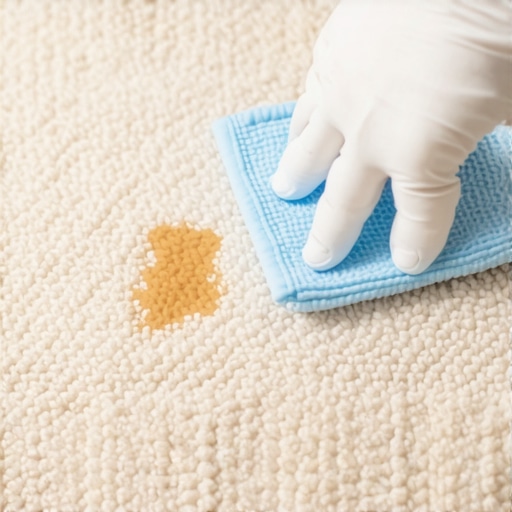
How to Remove Grease Stains from Brand New Carpet Without Ruining the Fibers
Mastering Grease Removal on Brand New Carpet Without Compromising Fiber Integrity
The smell of fresh oak dust and WD-40 usually fills my lungs on a job site, but today it is the chemical scent of a brand new carpet that has been violated by a grease spill. You just spent thousands on a premium install, and now there is a dark, oily footprint staring back at you. Most people panic and reach for the dish soap or a scrub brush, but as a guy who has spent twenty-five years staring at subfloors and fiber structures, I am telling you to stop. A carpet is not just a rug, it is a complex mechanical assembly of face fibers, primary backing, a latex bonding layer, and a secondary backing, all sitting on a pad that relies on the structural integrity of the subfloor. I once spent three days grinding concrete on a job last month just so the floor wouldn’t click like a castanet, and I approach carpet stains with that same level of structural obsession. If you treat this stain like a simple mess, you will ruin the twist of the fiber, cause delamination of the backing, and end up with a permanent fuzzy spot that looks like a bad toupee. We are going to treat this like an engineering problem, zooming into the molecular level of those fibers to extract the contaminant without destroying the architecture of the floor.
The molecular reality of grease and synthetic fibers
Grease consists of long chain hydrocarbons that are non polar and possess a high affinity for synthetic carpet fibers like polyester or triexta because they are also non polar. This chemical attraction, often referred to as a Van der Waals force, means the grease is literally trying to become part of the plastic fiber. When grease hits a brand new carpet, it does not just sit on top. It begins a process of wetting the fiber, where it migrates down the shaft toward the primary backing. Because a new carpet install involves high tension across the room, the fibers are standing at their maximum verticality, which actually creates a highway for the grease to travel downward via gravity and capillary action. Unlike a laminate floor where the spill sits on a wear layer, carpet is a porous 3D matrix. If you do not interrupt this migration immediately, the grease will hit the latex bonding agent that holds the tufts in place. Grease is a solvent for some low-grade latex, meaning it can actually begin to dissolve the very glue holding your floor together. This is why quick, technically accurate intervention is the only way to save the investment. We are looking at a battle between the surface energy of the fiber and the viscosity of the grease. If the grease has a lower surface tension than the fiber’s protective coating, it will wrap around the fiber in a microscopic film that water alone cannot touch.
“A floor is only as good as the subfloor beneath it; deflection is the enemy of every joint.” – Master Flooring Axiom
The subfloor secret that impacts cleaning success
Most installers and homeowners ignore the fact that the subfloor determines how a carpet reacts to liquid spills and heavy cleaning pressure. A subfloor that has not undergone proper floor leveling will have microscopic dips where moisture and grease can pool underneath the padding, leading to recurring stains. If your subfloor was not prepped correctly, you might have localized areas where the carpet pad does not sit flush. When you apply a cleaning solution to a grease stain in one of these low spots, the liquid collects and creates a reservoir of diluted grease. This is the primary cause of wicking, where a stain seems to disappear but then reappears three days later as the floor dries. The liquid travels back up the fiber like a straw. If you are near showers or other high-humidity areas, the moisture in the air can keep the subfloor damp, exacerbating this wicking effect. You have to understand that the carpet is the filter for the air in your home, and any grease trapped in the backing will eventually attract dust and dander, turning a small oil spot into a permanent black patch of grime. [IMAGE_PLACEHOLDER]
The extraction protocol for brand new fibers
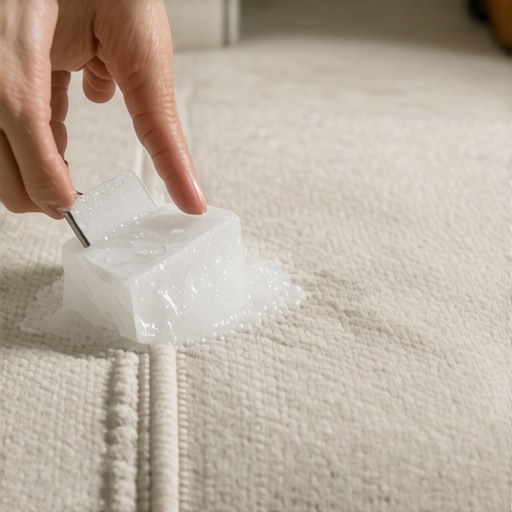
The primary rule for removing grease from a brand new floor is to avoid heat and mechanical friction that would cause the fiber to bloom or lose its factory twist. You must use a dry solvent or a high quality surfactant that can emulsify the non polar grease molecules into a state that can be lifted. You need to start by blotting, not rubbing. Rubbing a grease stain is like sanding a piece of wood against the grain; you are just destroying the surface. Take a clean white cotton towel and press it firmly into the spot. We want to use the physics of absorption to pull the bulk of the grease out before we even think about a cleaning agent. If you have a shop vac, use the hose without any attachments to pull air through the fibers. This airflow can sometimes lift the grease before it sets. If the grease has already begun to cool and thicken, you may need a specialized solvent. However, you must test this in a closet first. Some solvents can melt the backing of the carpet, especially if it is a cheaper residential grade. I have seen guys melt a hole straight through to the pad because they used a heavy duty degreaser meant for an engine block. We are looking for a surgical strike, not carpet bombing.
Fiber Performance Metrics
| Fiber Type | Oil Resistance | Melt Point | Recommended Solvent |
|---|---|---|---|
| Nylon 6,6 | Moderate | 490 F | Dry Solvent or Isopropyl |
| Polyester (PET) | Low | 480 F | High pH Surfactant |
| Triexta (PTT) | High | 440 F | Mild Detergent |
| Olefin | Very Low | 325 F | Enzymatic Cleaner |
Why floor leveling and tensioning change the game
The way your carpet was installed determines how deep a grease stain can go and how easy it is to remove without causing structural damage to the weave. A properly tensioned carpet with a level subfloor allows for uniform cleaning pressure and better suction during the extraction process. If the installer skipped the floor leveling step, the carpet will have subtle waves. When you try to clean a stain on a wave, you are applying uneven pressure. This can snap the secondary backing or cause the tufts to pull loose. Furthermore, if the carpet is not stretched tight enough with a power stretcher, the fibers will lean. Leaning fibers trap grease more easily than vertical ones. Think of it like a dense forest versus a field of fallen logs. In a dense, vertical forest, you can drop something and find it. In the fallen logs, it gets lost in the gaps. This is why the quality of the carpet install is actually a factor in stain maintenance. A loose carpet will also move under your feet, and that movement acts like a pestle in a mortar, grinding the grease deeper into the fiber with every step you take. If you are comparing this to a hard surface like laminate, remember that laminate is a floating system that handles grease easily because of its aluminum oxide wear layer, but carpet is a living, breathing textile that requires a stable foundation.
“Every floor is a system. If the subfloor is not level within 3/16 inch over 10 feet, the carpet will experience premature wear and localized fiber failure.” – Master Flooring Axiom
The step by step grease extraction checklist
- Identify the fiber type by checking the remnant or the invoice from the install.
- Blot the area with a dry, white cloth to remove the excess grease load.
- Apply a small amount of 99 percent isopropyl alcohol or a dedicated dry solvent to a clean cloth.
- Dab the solvent onto the stain, working from the outside edges toward the center.
- Wait sixty seconds for the solvent to break the molecular bonds of the grease.
- Use a clean section of the towel to lift the emulsified grease.
- Rinse the area with a small amount of distilled water to remove any chemical residue.
- Place a heavy weight on a stack of paper towels over the spot for twelve hours to draw out deep moisture.
Maintaining the structural integrity of the weave
Preserving the factory finish of a carpet requires you to avoid the most common mistake in flooring which is the use of high heat steam on an oil based stain. Heat can permanently set a grease stain by melting the grease into the polymer structure of the fiber itself. If you use a steam cleaner on a grease spot, you are essentially dyeing the carpet with the grease. The heat increases the molecular motion of the plastic, allowing the grease to penetrate the crystalline regions of the fiber. Once it is in there, it is not coming out without a pair of scissors. You also run the risk of causing the carpet to shrink or ripple if you over wet it. This is especially true if the subfloor has high moisture content from nearby showers. Always check the humidity in the room before performing a deep clean. If the air is too damp, the carpet will not dry fast enough, and you will end up with a mold problem in the pad. I have pulled up carpets where the top looked clean but the subfloor was a black, slimy mess because someone got too aggressive with a steam cleaner on a grease spot. Treat your new floor with respect. It is a structural component of your home, not just something to walk on. By using chemistry and physics instead of brute force, you can keep that brand new carpet looking like it was just unrolled yesterday. Final assessment of the situation dictates that patience and the right solvent are your only true allies in the fight against oil and grease. Do not let a single accident ruin a five thousand dollar investment because you were in a hurry to scrub.