Why Your Shower Floor Is Stained Near the Drain
Why Your Shower Floor Is Stained Near the Drain
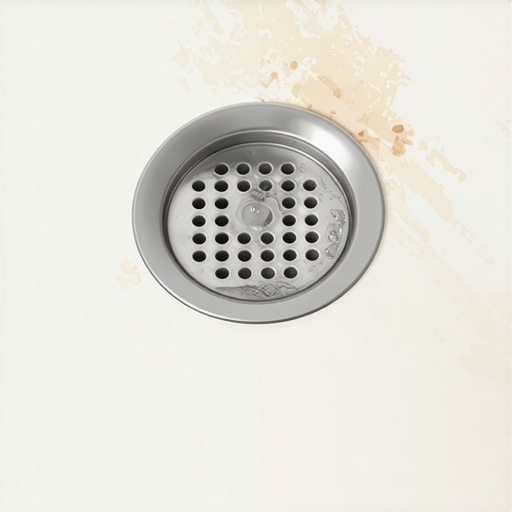
Most guys skip the leveling compound. They think the underlayment will hide the dip. It won’t. I spent three days grinding concrete on a job last month just so the floor wouldn’t click like a castanet. That same philosophy of cutting corners is exactly why you are seeing that nasty dark stain around your shower drain. It is not just a cleaning issue. It is a structural engineering failure occurring beneath your feet. I have spent twenty five years with my hands in the mud and my eyes on a moisture meter. When a homeowner calls me about a brown or orange ring around their drain, I already know the subfloor or the pan liner was installed by someone who was in a hurry to get to lunch. Flooring is a performance surface. If the performance fails, the aesthetics die shortly after. [image_placeholder_1]
The physics of trapped moisture and capillary action
A stained shower floor near the drain typically indicates trapped moisture within the mortar bed or a failure of the weep holes to evacuate water. This results in mineral deposits, bacterial growth, or efflorescence that migrates to the surface through capillary action within the grout joints and tile. Water does not just sit still. It moves through the most path of least resistance. In a shower system, the grout is the first line of defense, but it is never truly waterproof. Water permeates the grout and the thin-set. It then travels down to the waterproof liner or the sloped mortar bed. If the installer did not create a proper pre-pitch, the water pools around the drain assembly. It has nowhere to go. This standing water becomes a stagnant pond under your tile. Over time, it saturates the entire system. The minerals in the water begin to concentrate. This is the molecular reality of a wet bed system. When the water eventually tries to evaporate back through the surface, it carries those minerals and bacteria with it. That is the stain you see. It is the ghost of water that should have been long gone.
Why your subfloor is lying to you
Subfloor levelness and slope are the most overlooked aspects of any flooring installation whether it is a wet shower or a dry laminate living room. A subfloor that appears flat may still have micro-dips that trap water or cause mechanical stress on the locking systems of floating floors. In a shower, the subfloor must be rigid. If there is any deflection, the bond between the tile and the substrate will snap. I have seen guys try to install tile over a bouncy plywood subfloor without a proper cement board or uncoupling membrane. It is a disaster. The same goes for floor leveling in a basement. If you are putting down laminate or carpet, you think the padding will save you. It will not. If the concrete has a half inch dip over ten feet, your laminate will feel like a trampoline. In a shower, that same dip creates a low point where water sits and rots the wooden framing. This is why grinding the concrete or using a high-quality self-leveling underlayment is the only way to start a job. You cannot build a skyscraper on a swamp. You cannot build a shower on a wavy subfloor.
“A floor is only as good as the subfloor beneath it; deflection is the enemy of every joint.” – Master Flooring Axiom
The chemistry of efflorescence and mineral migration
Efflorescence is the migration of soluble salts to the surface of a porous material where it forms a white or brownish coating. In showers, this happens when the mortar bed remains saturated for extended periods due to poor drainage or a lack of waterproofing. When we talk about the chemistry of a shower, we are talking about Portland cement and water. Cement is alkaline. When water stays in contact with the cement bed for too long, it dissolves the salts within the mixture. As that water moves upward through the grout, the salts are deposited on the surface. This is not something you can just scrub away with a brush. If you do not fix the drainage issue, the salts will return within a week. It is a cycle of saturation and evaporation. I have seen people try to seal their grout to stop it, but that often makes it worse. It traps the moisture even deeper, leading to mold growth that smells like a damp basement. You have to let the system breathe or, better yet, ensure the water exits through the weep holes as intended.
The failure of the weep holes
Weep holes are small openings in the drain flange designed to allow moisture that has reached the pan liner to escape into the drain pipe. If these holes are clogged with mortar or hair, the entire shower system becomes waterlogged and stained. This is the most common mistake I see. An installer throws a bucket of mud over the drain and covers the weep holes. Now the water is trapped on top of the liner. It cannot get out. It sits there and grows dark, smelly bacteria. This bacteria eventually travels up the drain pipe and around the grout lines. It looks like a stain, but it is actually a biological colony living under your tile. When I do a shower, I put a layer of pea gravel or a dedicated plastic spacer around the weep holes. This ensures that no matter how much mortar I pack in, the water has a clear path to the exit. It is a five-minute step that saves a ten-thousand-dollar floor. Most guys are too lazy to do it. They think if they cannot see it, it does not matter. It matters.
| Feature | Traditional Mud Bed | Pre-fabricated Foam Tray | Liquid Membrane System |
|---|---|---|---|
| Water Management | Slow drainage via liner | Rapid slope to drain | Surface-level shedding |
| Risk of Staining | High if weep holes clog | Low due to non-porous core | Very Low |
| Install Difficulty | Expert level required | Moderate DIY possible | Professional recommended |
| Acclimation Needs | 24-72 hours cure time | Immediate tile application | Cure time for membrane |
The regional impact of hard water and humidity
Regional water chemistry plays a massive role in shower staining because high mineral content accelerates the buildup of deposits around the drain area. In areas like the Southwest with high calcium or the Midwest with iron-heavy water, these stains appear faster. If you live in a place like Phoenix, the dry air pulls moisture out of the grout quickly. This sounds good, but it actually accelerates the