Why Your Shower Bench Is Leaking Into the Subfloor Despite the Membrane
The ghost in the expansion gap
Most guys skip the leveling compound. They think the underlayment will hide the dip. It won’t. I spent three days grinding concrete on a job last month just so the floor wouldn’t click like a castanet. That same negligence kills shower benches. When a shower bench leaks into the subfloor despite a membrane, the culprit is usually capillary action or structural deflection. Water finds the path of least resistance through microscopic voids in the mortar bed or pinholes at the transition points. If your subfloor is not level, the weight of the water and tile creates a pivot point that tears the membrane at the wall-to-bench junction. This is a structural engineering failure masquerading as a plumbing problem. It is the result of gravity and physics winning against a poorly executed chemical barrier. You can spend thousands on the finest Italian marble, but if your subfloor lacks the rigidity to support three hundred pounds of wet tile and mortar, that membrane will snap like a dry twig. I have seen solid oak floors ruined and carpet install projects delayed for months because a shower bench three rooms away was wicking water into the joists.
The 1/8 inch that ruins everything
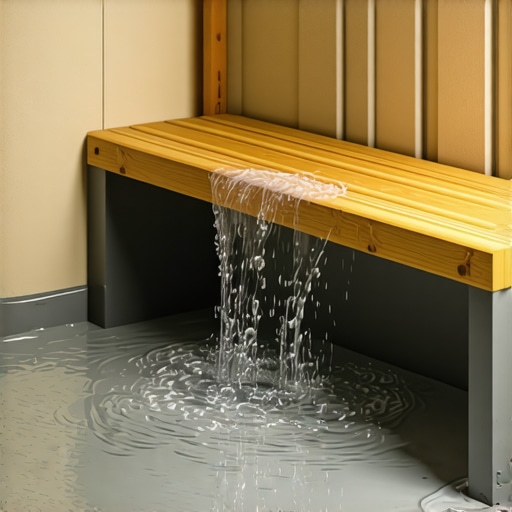
A shower bench must have a positive pitch toward the drain to prevent standing water from saturating the grout lines and finding membrane flaws. If the bench is level or, heaven forbid, pitched toward the wall, you are effectively creating a reservoir. Standing water creates hydrostatic pressure. This pressure forces moisture through the microscopic pores of the grout and into the thin-set layer. Once the thin-set is saturated, it acts like a wick. It pulls water toward the fasteners used to secure the bench to the wall studs. If those fasteners were not properly sealed with a high-grade polyurethane sealant, you have a direct pipeline to your 2×4 framing. I have pulled apart benches where the wood was so soft you could stick a finger through it, all because the installer missed a single screw head with the waterproofing. This is why floor leveling is just as important in the shower as it is in the living room. Without a consistent slope, gravity works against you instead of for you.
“A floor is only as good as the subfloor beneath it; deflection is the enemy of every joint.” – Master Flooring Axiom
Why your subfloor is lying to you
The subfloor might look solid when you walk on it, but under the concentrated load of a tiled bench, it can flex. This movement is the silent killer of waterproofing systems. Standard 3/4 inch plywood has a deflection rating that might be fine for a laminate floor, but it is often insufficient for a heavy mortar bed bench. When the subfloor bows, the rigid tile stays still while the bench moves. This creates a shearing force at the base of the bench. Liquid-applied membranes are popular because they are easy, but they have limited elongation properties. They can only stretch so far before they tear. If you have 1/360th of an inch of movement, your membrane might survive. Anything more and you are looking at a hairline fracture. This is why I always insist on a double layer of subfloor or a structural foam bench system that decouples the bench from the floor movement.
The capillary path of least resistance
Water does not just fall; it climbs through a process called wicking. Most installers apply the membrane to the bench and the floor but fail to address the mortar bed. If you use a traditional mud bed, that sand and cement mixture is highly porous. If the membrane is only on the top surface, water can enter through the grout, travel down into the mud, and then migrate sideways. It travels under the door threshold or into the adjacent wall. This is a common cause of carpet install failures in bedrooms that share a wall with a master bath. The moisture travels through the subfloor and rots the tack strip. You think you have a roof leak, but really, you have a bench that is acting like a sponge. You need to understand the chemistry of your thin-set. Modified thin-set contains polymers that resist water, but they are not waterproof. They still absorb moisture over time.
The chemistry of the bond failure
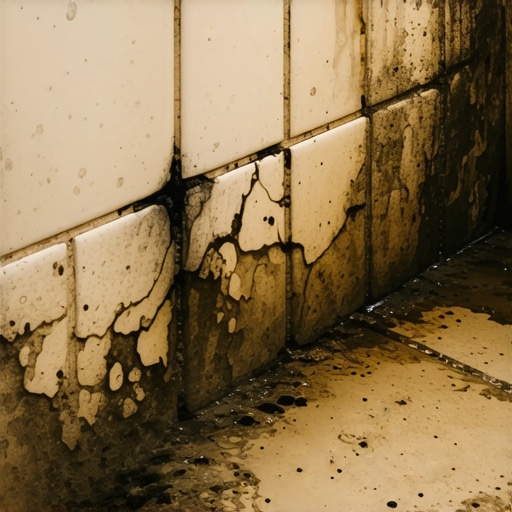
The bond between your membrane and the thin-set is a chemical and mechanical marriage. If the membrane is not cured properly or if the thin-set is mixed with too much water, the bond is weak. I have seen jobs where the tile literally peeled off the bench because the installer used a cheap, non-modified thin-set over a high-performance liquid membrane. The TCNA (Tile Council of North America) has very specific rules about which adhesives work with which membranes. If you ignore these, you are building a house of cards. The moisture trapped between the tile and the membrane creates a localized high-humidity environment. This can lead to the growth of black mold long before you see a single drop of water on your basement ceiling.
“Waterproofing is not a suggestion; it is a structural mandate for the longevity of the building envelope.” – Master Flooring Axiom
The structural weight of a waterlogged bench
A standard two-foot shower bench can weigh upwards of 150 pounds before you even add the water and the person sitting on it. If that bench is built out of wood framing, it is susceptible to expansion and contraction. Wood is a living material. It breathes. When the humidity in the bathroom rises, the wood expands. When it dries out, it shrinks. This constant movement is hell on a rigid tile installation. This is why I despise wooden shower benches. I prefer solid foam blocks or folded metal benches that do not react to moisture. If you must use wood, it needs to be wrapped in a sheet-bonded membrane that allows for some movement. You cannot just slap some paint-on rubber over a piece of plywood and call it a day. That is a recipe for disaster.
The 1/8 inch that ruins everything
I have seen guys use laminate techniques on tile, trying to leave gaps that they then fill with caulk. Caulk is a maintenance item, not a structural waterproof barrier. If your entire waterproofing strategy relies on a bead of silicone in the corner, you have already lost the war. The membrane must be continuous. Every corner, every transition, and every fastener must be part of a unified system. If there is a break in the system even as small as a pinhole, the vapor pressure will push moisture through it. This is why a flood test is mandatory. You plug the drain and fill the pan with two inches of water. You mark the level and wait twenty-four hours. If that water level drops, you have a leak. Most guys skip this because it takes time. They want to get in, tile, and get out. But I would rather spend a day testing than a week tearing out a failed subfloor.
| Waterproofing Method | Vapor Permeance | Complexity | Failure Risk |
|---|---|---|---|
| Liquid Membrane | Low to Moderate | Simple | Moderate (Pinholes) |
| Sheet Membrane | Very Low | High | Low (Joints) |
| Foam Board Systems | Extremely Low | Moderate | Very Low |
| Traditional Mud Bed | High (Porous) | High | High |
The ghost in the expansion gap
Every shower needs an expansion gap where the walls meet the floor and where the bench meets the walls. If you grout these corners, the grout will crack. It is a mathematical certainty. When the grout cracks, it creates a funnel for water to go directly behind the tile. This is where your membrane has to be perfect. Most leaks happen at these change-of-plane joints. I use a high-quality 100 percent silicone sealant in all corners. It stays flexible. It moves with the house. It does not crack. But remember, the silicone is the secondary defense. The membrane is the primary. If you do not have a pre-pitched mortar bed under that membrane, water will sit in that corner forever. It will eventually find a way through.
- Always verify subfloor stiffness (L/360 for ceramic, L/720 for stone).
- Ensure a minimum 1/4 inch per foot slope on the bench top.
- Use pre-formed corner pieces for membranes rather than trying to fold them.
- Perform a 24-hour flood test before any tile is laid.
- Seal all fastener penetrations with a manufacturer-approved sealant.
The final word on bench integrity
A shower is a wet environment, not a damp one. It is a high-stress area that requires precision. If you treat your shower bench like a piece of furniture, it will fail. Treat it like a dam. Treat it like a structural component of the foundation. I have spent my career fixing the mistakes of people who thought they could cut corners. They thought they could save fifty bucks on a cheaper membrane or an hour on floor leveling. Now they are paying me five thousand to rip it all out and start over. Don’t be that guy. Do the work. Test the results. Sleep soundly knowing your subfloor is bone dry.