The ‘Screwdriver’ Test for Identifying Subfloor Rot
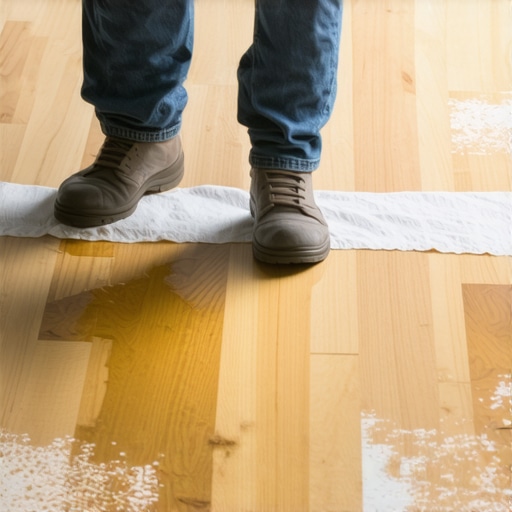
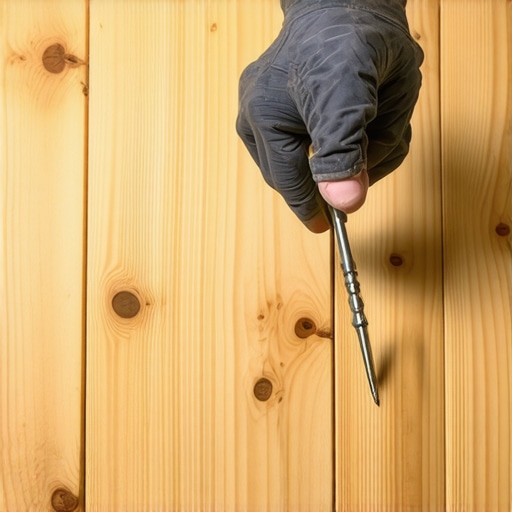
I spent three days grinding concrete on a job last month just so the floor wouldn’t click like a castanet. Most guys skip the leveling compound. They think the underlayment will hide the dip. It won’t. I was in a 1920s bungalow with the smell of WD-40 and fresh oak dust hanging in the air. The homeowner wanted a high-end laminate, but the subfloor felt like walking on a sponge. I pulled back a corner of the old carpet and saw it. The plywood was dark, almost black. I took my favorite flathead screwdriver out of my pouch and gave it a shove. The metal vanished into the wood. That is the moment a cosmetic floor install turns into a structural engineering rescue mission. You can buy the most expensive planks in the world, but if your subfloor is rotting, you are just building a very expensive raft on a sinking ship.
The screwdriver test protocol
The screwdriver test protocol involves applying vertical pressure to a suspicious subfloor area with a flathead screwdriver to gauge structural resistance. If the metal tip sinks into the wood fibers with minimal effort, the cellulose bond has failed due to moisture infiltration or fungal rot, requiring immediate replacement. This test is the most basic tool in a master installer’s kit. You are looking for the integrity of the lignin. When wood is healthy, the screwdriver should bounce off or only leave a tiny indentation. When the wood is compromised by moisture, the screwdriver will slide in like a knife into warm butter. You do not just poke the middle. You poke the seams. You poke the areas around the toilet flange. You poke the perimeter where the exterior walls meet the floor. This is where the physics of water tension works against you. Capillary action pulls moisture up into the subfloor and keeps it there until the wood cells literally explode from the internal pressure of fungal growth. I have seen guys try to ignore this. They throw some 1/8 inch foam over it and call it a day. Three months later, the flooring joints are snapping because the subfloor has no more pull-through resistance for the fasteners. The floor moves. The floor squeaks. The floor fails.
Structural integrity of the wood fiber
Structural integrity in flooring depends on the molecular bond between cellulose fibers and the resins used to hold plywood or OSB together. Once moisture enters the equation, these bonds undergo hydrolytic degradation, causing the material to swell and lose its ability to hold nails or support weight. You have to understand what happens to a sheet of CDX plywood when it gets wet. It is a sandwich of wood veneers. The glue is strong, but the wood itself is a series of microscopic tubes designed to move water. In a tree, that is great. In a subfloor, it is a disaster. When those tubes fill with water, the wood expands. This expansion is not uniform. It causes the layers to delaminate. Once a subfloor delaminates, it has the structural strength of a wet cardboard box. If you are installing laminate or LVP over this, you are asking for trouble. Those click-lock systems are engineered to very tight tolerances. They need a flat surface. Not just a level surface, but a flat one. The industry standard is 1/8 inch of deviation over a 10 foot radius. If your subfloor is rotting and swelling, you are likely looking at 1/2 inch or more of movement. The tongue of that laminate plank is maybe 2 millimeters thick. It will snap the first time a 200 pound man walks across it. I tell my clients that the subfloor is the foundation of their interior life. If the foundation is soft, the house feels broken.
“A floor is only as good as the subfloor beneath it; deflection is the enemy of every joint.” – Master Flooring Axiom
Chemical reactions in moisture damaged OSB
Chemical reactions in moisture damaged OSB occur when the phenolic resins are exposed to prolonged saturation, leading to thickness swell that does not reverse even after the wood dries. This permanent distortion creates high spots that must be sanded down or replaced to prevent floor failure. Oriented Strand Board, or OSB, is a different animal than plywood. It is made of wood chips and wax. It is great for staying flat in dry conditions, but once the edges get wet, they swell and stay swelled. We call it mushrooming. I have walked onto jobs where the seams of the OSB were sticking up a quarter inch above the rest of the floor. You cannot just sand that down easily because the wax in the OSB clogs your 24-grit sandpaper in seconds. You end up burning through fifty dollars worth of paper just to flatten one room. And even then, the core of that board is now porous. It is full of air pockets where the chips have separated. If you try to glue a floor down to that, the glue will stick to the top layer of chips, and those chips will just pull away from the board. It is a false bond. I have seen entire commercial floors peel up like a scab because the installer didn’t check the integrity of the OSB subfloor. In high humidity areas like Houston or New Orleans, OSB is a risky choice for subfloors. The vapor drive from the crawlspace pushes moisture through the board, and the resins eventually give up the ghost.
| Subfloor Material | Fastener Retention | Moisture Resistance | Typical Use |
|---|---|---|---|
| CDX Plywood | High | Moderate | Residential Hardwood |
| OSB (Standard) | Medium | Low | Production Housing |
| Advantech | Very High | High | Premium New Builds |
| Particle Board | Very Low | Zero | Cheap Carpet Underlay |
The 1/8 inch that ruins everything
The 1/8 inch limit represents the maximum allowable vertical deviation in a subfloor over a ten foot span according to NWFA and TCNA standards. Exceeding this tolerance causes excessive vertical movement in the finished floor, leading to premature wear of the locking mechanisms and unsightly gaps. Precision is not a suggestion in this trade. It is a requirement. I carry a 10 foot straight edge on every job. I lay it down and I look for the light coming through underneath. If I can slide a couple of nickels under that bar, I have work to do. This is where the floor leveling compound comes in. But you cannot just pour leveling compound over rot. The compound is heavy. A bag of self-leveler weighs 50 pounds. If you pour five bags of that onto a rotting subfloor, you are just adding 250 pounds of weight to a structure that is already failing. I have seen floors collapse into crawlspaces because an amateur tried to level a rotting floor with concrete. You have to cut out the rot first. You have to find the joists. You have to make sure those joists are not shimmying. Only then can you start the leveling process. It is about the physics of load distribution. A floor is a system, not a layer.
Why showers ruin your floor joists
Showers ruin floor joists through capillary action and vapor drive when waterproofing membranes fail at the drain assembly or wall transitions. This persistent moisture creates a localized high-humidity microclimate that encourages dry rot and compromises the load-bearing capacity of the dimensional lumber supporting the entire bathroom structure. I hate shower installs done by