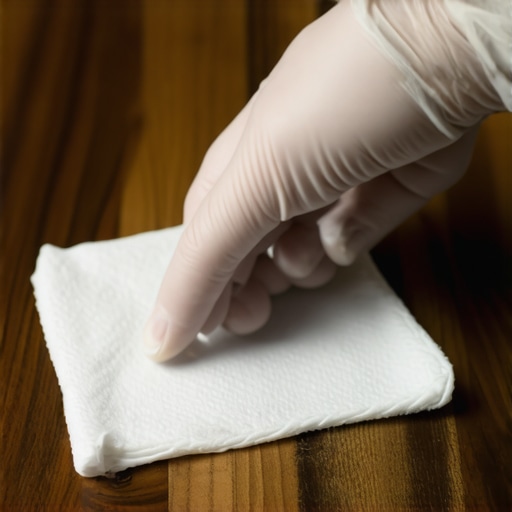
Why Your New Hardwood Floor Looks Clouded After Cleaning
I once walked into a house where a $15,000 wide-plank walnut floor was cupping so bad it looked like a potato chip because the installer didn’t check the crawlspace humidity. It was a tragedy of engineering. But just as painful is when a homeowner spends a fortune on a select grade white oak only to see a milky, ghostly haze settle over the grain within three months. This cloudiness is not just an aesthetic annoyance. It is a chemical warning sign. Most people think they are cleaning their floors when they are actually performing a slow motion chemistry experiment that ruins the refractive index of the polyurethane finish.
The phantom haze on your expensive oak
Cloudy hardwood floors are typically caused by a buildup of surfactants, wax, or high pH cleaning residues that have bonded to the top layer of the finish. This haze occurs when the light cannot pass through the clear coat and bounce off the wood grain because it is blocked by a microscopic layer of solids left behind by improper cleaning solutions. If the surface was not properly prepared or if the moisture content of the wood was high during the application of the finish, the clouding can also indicate a deeper failure known as blushing. Most often, the culprit is the very bottle of cleaner you bought at the big box store.
The mechanics of a floor are unforgiving. When you walk across a surface, you are applying hundreds of pounds of pressure per square inch. If there is a thin film of soap residue on that surface, your footsteps are essentially grinding that residue into the pores of the finish. Over time, this creates a buffed-in layer of grime that resists standard mopping. It is the same reason why a botched carpet install leaves a room smelling like glue for weeks. If the materials are not compatible with the environment, the results are catastrophic. Wood is a biological material. It reacts to chemicals, light, and moisture with predictable physics.
“A floor is only as good as the subfloor beneath it; deflection is the enemy of every joint.” – Master Flooring Axiom
Chemistry of the cleaning solution failure
Cleaning solution failure occurs when homeowners use oil-based soaps or high-concentration surfactants on a modern water-based polyurethane finish. These soaps are designed for 19th-century wax finishes, not for the high-performance polymers used today. When the water in the cleaning solution evaporates, the soap molecules do not disappear. They stay on the floor, attracting dust and pet dander like a magnet. This creates a sticky, dull film that looks like a cloud. The more you clean it with the same product, the thicker that cloud becomes.
We have to talk about the molecular level of the surfactants. A surfactant is a molecule with a hydrophilic head and a hydrophobic tail. In theory, it lifts dirt so it can be wiped away. However, on a non-porous finish like a factory-applied aluminum oxide coating, these molecules have nowhere to go. They sit on the surface. If you use a product containing wax or oils on top of a laminate or hardwood floor, you are effectively creating a secondary, inferior finish on top of the professional one. This layer is soft and prone to scuffing. It lacks the Janka scale hardness of the wood beneath it. It is a structural mismatch that leads to visual failure.
Why your mop is a weapon against the finish
The mechanical action of a wet mop often redistributes dissolved solids into the grain rather than removing them from the floor. Using too much water is the primary mistake. When you saturate a hardwood floor, you are pushing liquid into the tongue and groove joints. This can cause the wood to expand, but it also creates a reservoir of dirty water that slowly leaches back onto the surface as it dries, leaving a ring of mineral deposits and soap scum. This is the cloud you see. It is a ghost of the dirty water you used to clean the floor.
I have seen guys skip the floor leveling process on a job and then wonder why the finish looks blotchy. It is because the liquid cleaner pools in the low spots. In those micro-depressions, the solids in your cleaning solution settle and harden. A perfectly flat subfloor is not just about the structural integrity of the boards. It is about how light hits the surface. When a floor is uneven, the finish wears unevenly. The high spots get polished by foot traffic while the low spots collect the cloudy residue. It is a cycle of degradation that starts with the subfloor and ends with a ruined aesthetic.
The physics of light refraction and surface oils
Light refraction on a hardwood floor depends on a smooth, clean interface between the air and the polyurethane. When you introduce oils from skin, pet fur, or