Why Your New Hardwood Floor looks Cloudy After the First Mop
Why Your New Hardwood Floor looks Cloudy After the First Mop
The sight of a high-end hardwood floor losing its luster after a single cleaning is enough to make any installer grit their teeth. I once walked into a house where a $15,000 wide-plank walnut floor was cupping so bad it looked like a potato chip because the installer didn’t check the crawlspace humidity, but even worse than the warp was the milky white haze covering the surface. The homeowner had used a cheap grocery store spray mop on a fresh site-finished oil-based polyurethane. It was a disaster. The finish was still off-gassing, the chemicals in the cleaner reacted with the resins, and what should have been a mirror finish looked like a foggy windshield in a rainstorm. This is the reality of modern flooring. It is not just wood; it is a complex chemical system that demands respect for the physics of adhesion and the chemistry of maintenance.
The chemical haze of the first cleaning
Cloudy hardwood floors after the first mop are usually caused by a chemical reaction between the cleaning agent and the uncured finish or the accumulation of surfactant residues. When you apply a liquid cleaner to a floor that has not fully polymerized, the solvents can trap moisture or microscopic particles in the upper layer of the finish. This creates a refractive barrier that scatters light instead of reflecting it. Most homeowners assume the floor is dirty, so they mop more. This only compounds the problem by adding more layers of non-volatile solids to the surface. You must understand the difference between a water-based finish and an oil-based finish before you ever touch a mop to the grain. Water-based polyurethanes might feel dry to the touch in hours, but they take up to 14 days to reach full chemical resistance. If you hit them with a high-pH cleaner during this window, you are essentially etching the surface at a molecular level.
“A floor is only as good as the subfloor beneath it; deflection is the enemy of every joint.” – Master Flooring Axiom
The physics of the polyurethane bond
Wood is hygroscopic. It breathes. When you apply a finish, you are attempting to create a plastic-like barrier that still allows the wood to move. The cloudiness you see is often the result of moisture trapped under the topcoat or within the surfactants of the cleaner. If the air humidity is too high during the mopping process, the evaporation rate of the water in your cleaning bucket slows down. This allows the liquid to sit on the wood for too long. If there are any micro-fissures in the finish, the water migrates into the wood fibers. This causes the wood to swell, which puts pressure on the finish from underneath. This pressure can cause the finish to delaminate or appear cloudy as the bond between the wood and the polyurethane is strained. It is a structural engineering failure on a microscopic scale.
The 1/8 inch that ruins everything
Precision is the difference between a floor that lasts 50 years and one that fails in five. If your subfloor has a dip of more than 1/8 inch over a 10-foot span, the planks will flex. This constant movement creates friction at the tongue and groove. Over time, this friction generates heat and fine wood dust that can migrate through the gaps. When you mop, you are turning that dust into a slurry that settles into the grain and the finish. This is why floor leveling is not an optional step. It is the foundation of the entire installation. I spent three days grinding concrete on a job last month just so the floor wouldn’t click like a castanet. If the floor is clicking, the finish is cracking. If the finish is cracking, the moisture from your mop is going to turn that floor cloudy and gray faster than you can call the contractor back.
| Finish Type | Cure Time | Recommended Cleaner | Janka Rating (Oak) |
|---|---|---|---|
| Water-Based Poly | 7-14 Days | pH Neutral / No Wax | 1290 lbf |
| Oil-Based Poly | 30 Days | Mineral Spirits (Rarely) | 1290 lbf |
| Hardwax Oil | 24 Hours | Manufacturer Specific | 1360 lbf (White Oak) |
The ghost in the expansion gap
Every floor needs room to breathe. When an installer skips the expansion gap at the perimeter, the wood has nowhere to go when it expands. This pressure can cause the finish to cloud as the stress changes the way light passes through the polyurethane molecules. It is a phenomenon known as stress whitening. It happens in plastics all the time. If you bend a piece of clear plastic, the bend turns white. Your floor is doing the same thing. If the planks are crushed against the baseboards, the internal tension is massive. You think you have a cleaning problem, but you actually have a structural problem. The cloudiness is just the symptom of a floor that is literally strangling itself. Check your baseboards. If there is no gap, your finish is the least of your worries.
The trap of the microfiber pad
Microfiber is the industry standard, but it is often misused. A dirty microfiber pad is just a piece of sandpaper. As you drag it across the floor, you are creating millions of microscopic scratches. These scratches catch the light and make the floor look dull and cloudy. Furthermore, many people use too much water. A damp mop should be just that: damp. If you can squeeze a single drop of water out of the pad, it is too wet. You are not washing a car; you are hydrating a living material. Excessive water leads to mineral deposits. If you have hard water, the calcium and magnesium stay behind after the water evaporates. This creates a white film that is nearly impossible to remove with standard cleaners. You are basically lime-scaling your living room floor.
- Use only distilled water for the first 90 days of maintenance.
- Avoid any cleaner that contains citrus oils or silicone.
- Ensure the room temperature is between 60 and 80 degrees Fahrenheit.
- Verify that the indoor relative humidity stays between 30 and 50 percent.
- Never use a steam mop on any wood or laminate surface.
How to save a finish without sanding
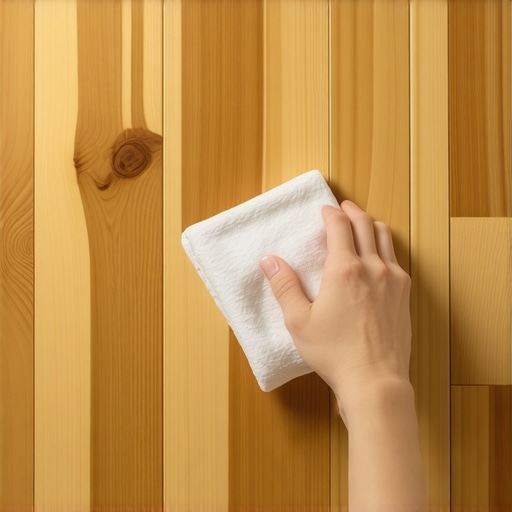
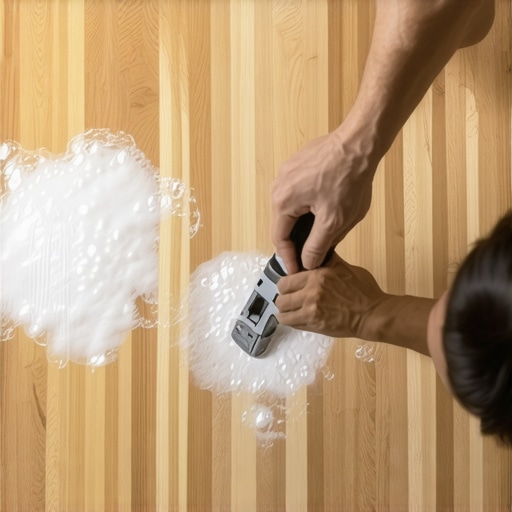
If the haze is on top of the finish and not trapped underneath, you can often save it without a full sand and finish. You need a deep cleaning with a specialized wood floor prep solution that can break down surfactants. Most big-box store cleaners leave a waxy buildup that attracts dust. You have to strip that layer off. Use a white polishing pad and a neutral pH cleaner. Work in small sections. Dry each section immediately with a clean towel. If the cloudiness persists, it might be an issue with the finish itself, such as ‘blushing’ which occurs when the finish is applied in high humidity. In that case, you are looking at a screen and recoat. It is a painful lesson, but the chemistry of wood finishes does not care about your schedule.
“Moisture is the primary catalyst for finish failure; the meter never lies.” – NWFA Technical Guidelines