Why Your New Floor Is Creaking Every Time You Step
The physics of the invisible dip
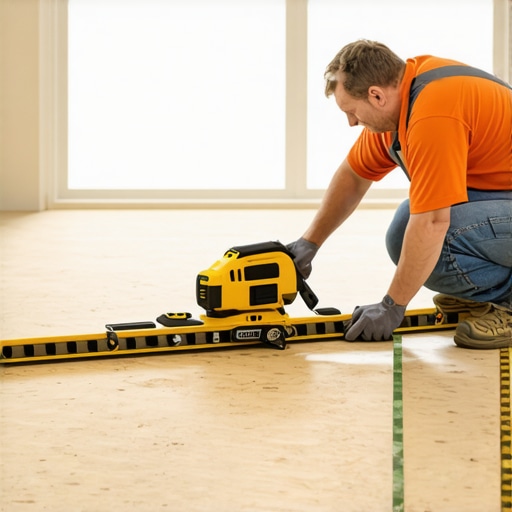
The creaking sound in a new floor usually originates from subfloor deflection or improper floor leveling. When a subfloor is not flat within 3/16 inch, the laminate or hardwood planks move vertically, creating friction between the locking mechanisms and the joists below. Most guys skip the leveling compound. They think the underlayment will hide the dip. It won’t. I spent three days grinding concrete on a job last month just so the floor wouldn’t click like a castanet. That high-rise slab looked like the surface of the moon. If I hadn’t taken the time to fix the base, the homeowner would have been calling me every week about the popping sounds under their feet. I smell like WD-40 and oak dust because I do things right. You can’t hide a structural failure with a foam pad. It will buckle. The floor fails. You lose money.
The ghost in the expansion gap
The expansion gap is a vital perimeter space required for laminate and hardwood to breathe. Without a quarter-inch gap, the floor hits the wall and buckles, causing stress creaks and joint failure. I’ve seen $20,000 floors ruined because an installer pinned the baseboard directly into the flooring. You have to understand the molecular reality of wood and polymer. Wood is hygroscopic. It drinks moisture from the air. When the humidity hits sixty percent, those tracheid cells in the oak expand. If there is no room to move, the planks fight each other. That fight sounds like a gunshot in the middle of the night. You need to leave the gap. Cover it with a shoe mold, but never, ever nail through the floor. It needs to float like a ship in a harbor.
“A floor is only as good as the subfloor beneath it; deflection is the enemy of every joint.” – Master Flooring Axiom
Why your subfloor is lying to you
A subfloor may look solid but deflection limits dictate if a hard surface will creak or pop. Most residential codes allow for L/360 deflection, which is often too much movement for modern click-lock laminate or large format tile. You have to look at the joists. If you have 16-inch centers with 5/8-inch OSB, you are asking for trouble. I always recommend adding a second layer of plywood or bracing the joists from below. A floor that bends is a floor that squeaks. It is simple physics. When the wood fibers rub against a nail head that has pulled loose from the joist, you get that high-pitched chirp. I spent years chasing those nails with 3-inch deck screws. Glue and screw the subfloor. No exceptions.
The chemistry of silent adhesives
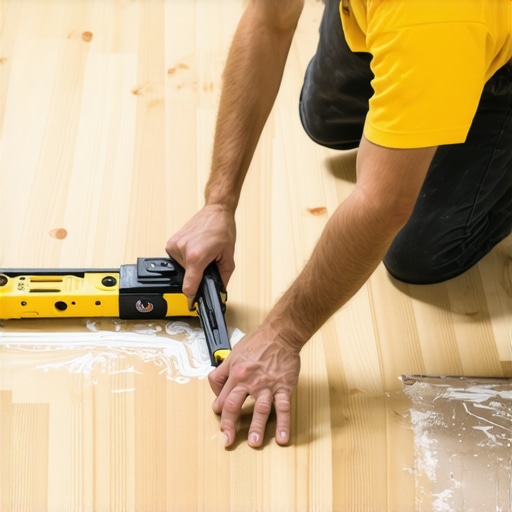
Using the correct adhesive determines if a glue-down floor stays silent or delaminates. Modern urethane adhesives offer a moisture barrier and elasticity that prevents the snap and pop of dried-out glues. Old water-based glues are brittle. They crack. When they crack, the bond breaks and the plank starts to move. This is especially true near showers where steam and heat attack the bond. I only use high-solid urethane. It stays flexible for decades. It acts like a shock absorber for your feet. When you walk, the glue gives just enough to prevent the friction that causes noise. Cheap glue is a homeowner’s nightmare. It smells like chemicals and fails within two seasons.
Comparison of Flooring Material Stability
| Material Type | Acclimation Time | Tolerance Limit | Noise Potential |
|---|---|---|---|
| Solid White Oak | 7 to 14 Days | 1/8 inch | High |
| Engineered Maple | 3 to 5 Days | 3/16 inch | Medium |
| Laminate Planks | 48 Hours | 3/16 inch | High |
| Luxury Vinyl Plank | 24 Hours | 1/4 inch | Low |
The 1/8 inch that ruins everything
The flatness tolerance for hardwood installation is strictly 1/8 inch over 6 feet to ensure structural integrity. If you ignore a low spot, the locking mechanism will eventually shear off under the weight of foot traffic. I’ve walked into houses where the floor felt like a trampoline. That isn’t comfort, it is impending failure. You can’t just throw down a carpet install mindset on a hard surface job. Carpet is forgiving. It hides the sins of the builder. Hardwood is a snitch. It tells everyone exactly how crooked your house is. You have to use self-leveling underlayment. Mix it thin. Let it find the gravity. If you don’t, you’ll hear the floor clicking every time you go to the kitchen for a glass of water.
“Deflection is not just a measurement; it is the death knell of a stable walking surface.” – NWFA Technical Manual
The moisture trap near showers and baths
High moisture content near showers causes subfloor swelling which leads to persistent creaking and mold growth. You need a silicone transition and a proper membrane to protect the structural wood. I’ve seen guys put laminate right up to a tub. That is a crime. The steam gets into the core of the plank. It swells like a sponge. Then the tongue and groove rub together until the floor sounds like a haunted house. In wet areas, you need to be an engineer. Check the Calcium Chloride levels in the concrete. Check the wood moisture with a pin meter. If it is over 12 percent, do not install. Wait. Dehumidify. The floor will thank you by staying quiet.
Pre-Installation Audit Checklist
- Verify joist spacing and subfloor thickness.
- Measure moisture content in at least twenty locations.
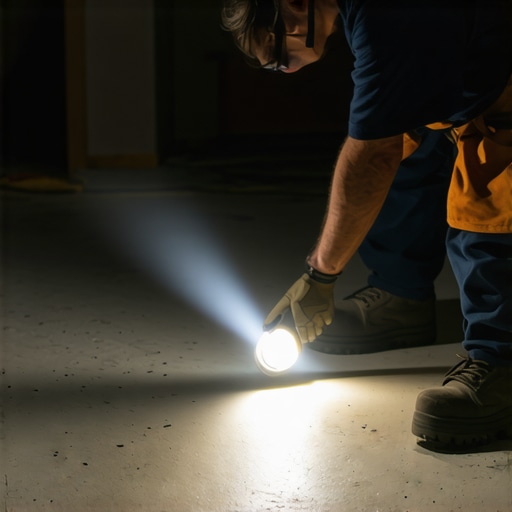
- Check flatness with a 10-foot straight edge.
- Allow for 48-hour minimum acclimation in a climate-controlled room.
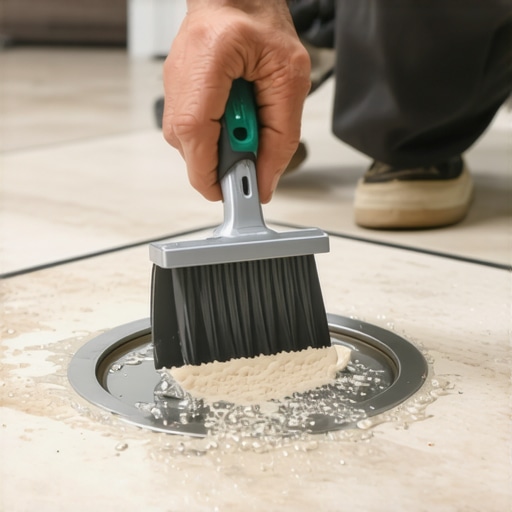
- Vacuum every grain of dust before the underlayment goes down.
- Ensure a 1/4-inch expansion gap at all vertical obstructions.
The molecular reality of underlayment
Choosing the wrong underlayment will void your warranty and cause noise due to excessive compression. You want a high-density pad that limits vertical movement while providing thermal resistance. Some people think the thickest, softest pad is the best. They are wrong. A soft pad allows the floor to sink too far. That stress snaps the plastic locking systems on modern laminate. You want a pad with a high PSI rating. It should feel firm, not like a sponge. This supports the joints and keeps the floor silent. It is the hidden layer that does all the heavy lifting. Don’t go cheap on the one thing you can’t see once the job is done.
[IMAGE_PLACEHOLDER]