Why Your Laminate Floor Sounds Like a Drum When the Dog Walks on It
The physics of the hollow click
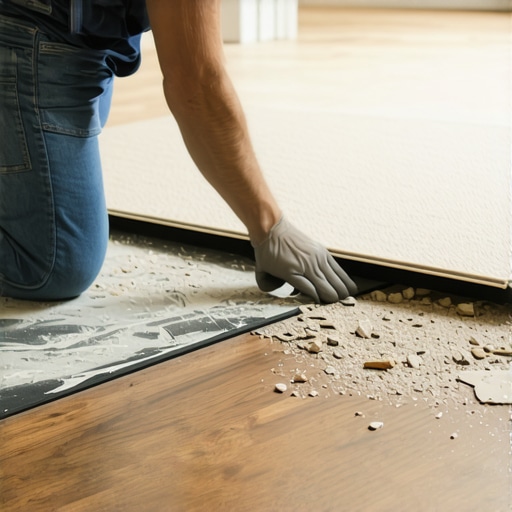
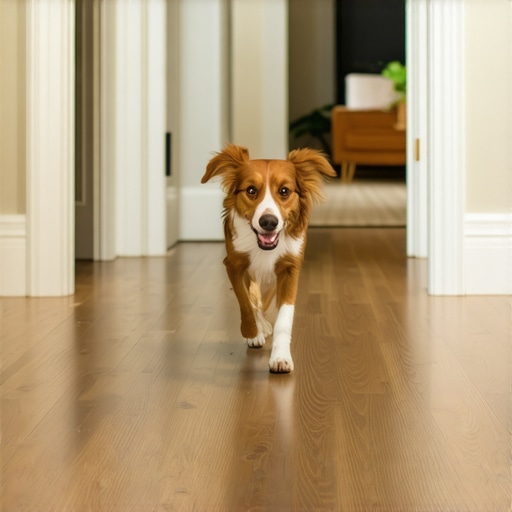
Laminate flooring sounds like a drum because the floating installation method creates an air pocket between the rigid floor plank and the subfloor. This gap acts as a resonance chamber where every footfall or dog nail click is amplified. To fix this, you must eliminate the void through floor leveling and proper underlayment selection. Most guys skip the leveling compound. They think the underlayment will hide the dip. It won’t. I spent three days grinding concrete on a job last month just so the floor wouldn’t click like a castanet. If your subfloor isn’t flat to within 3/16 of an inch over a 10-foot radius, you are building a percussion instrument, not a floor. When a dog walks across a laminate surface, the impact of the claw hits a high-density fiberboard (HDF) core. This core is dense but thin. Without a solid connection to the earth below it, that energy has nowhere to go but out. It vibrates the air trapped in the low spots of your plywood or concrete. You can hear it from the next room. It sounds cheap. It sounds like plastic. But the reality is that the material is rarely the culprit. The fault lies in the prep work that happened, or didn’t happen, before the first plank was clicked into place.
Why the subfloor flatness is your only hope
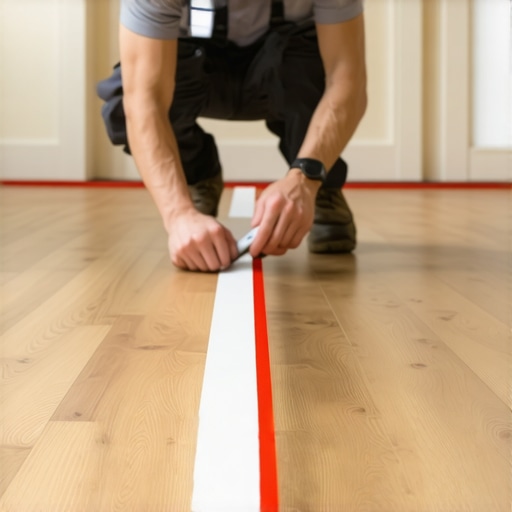
Subfloor flatness determines the success of a floating floor because any deviation creates a trampoline effect when stepped upon. Unlike a carpet install, where the pad and pile can swallow up small humps and dips, laminate is unforgiving. If there is a 1/8 inch dip in the concrete, the laminate will bridge that gap. When you walk over it, the tongue and groove locking mechanism flexes. This is why you hear that specific ‘slap’ sound. I have seen guys try to fill these holes with extra layers of foam. That is a recipe for disaster. Too much soft material under a floating floor allows for too much vertical movement. Eventually, the click-lock joint will fatigue and snap. You end up with gaps between your boards that no amount of tapping will close. I always carry a 10-foot straightedge to every site. If I see light under that bar, out comes the self-leveling underlayment. We mix it until it has the consistency of a milkshake and pour it into the low spots. It is messy and it takes time to dry, but it is the only way to ensure the floor stays quiet. If you are installing near showers or wet areas, you also have to worry about the subfloor absorbing moisture and swelling, which creates even more unevenness. A flat floor is a quiet floor. There is no shortcut around the grinder and the leveler.
“A floor is only as good as the subfloor beneath it; deflection is the enemy of every joint.” – Master Flooring Axiom
The dangerous lie of the thick underlayment
Underlayment thickness does not equate to sound dampening and often leads to structural failure of the locking system. Many homeowners go to the big-box store and buy the thickest, squishiest foam they can find, thinking it will make the floor feel like carpet install comfort. This is a lie. A thick, soft pad allows the laminate to bounce. That bounce puts immense pressure on the thin plastic or wood-fiber ridges that hold the planks together. I prefer a high-density rubber or felt underlayment. These materials are thin, maybe 2mm to 3mm, but they are heavy. They have a high IIC (Impact Insulation Class) rating. This rating tells you how much noise is blocked from traveling to the room below. For the room you are actually standing in, you want a high STC (Sound Transmission Class) rating. Felt is excellent because it is dense enough to support the joint but soft enough to kill the vibration of the HDF core. If you use the cheap blue foam that looks like packing material, you are going to hear that drum sound every time the dog gets the zoomies. You want something that mimics the density of the subfloor itself. This bridges the acoustic gap and turns the floor and subfloor into one solid-sounding mass.
Acclimation and the molecular expansion of fiberboard
Laminate acclimation is the process of letting the flooring material reach equilibrium with the humidity of the home to prevent warping. Laminate is basically sawdust and resin squeezed together under extreme pressure. It is incredibly thirsty. If you bring it from a cold, damp warehouse into a climate-controlled house and install it immediately, it will move. I have seen floors grow by half an inch across a room in 48 hours. When the floor expands and hits a wall, it has nowhere to go but up. It buckles. This creates a massive air pocket. Now, instead of a small drum, you have a giant bass drum. The floor feels spongy. You can actually see the baseboards being pushed. You need to stack the boxes in the room where they will be installed for at least 48 to 72 hours. Cross-stack them so air can circulate around every box. Do not just lean them against a wall. This allows the HDF core to expand or contract before it is locked into its neighbors. If you skip this, your 1/4 inch expansion gap will disappear, and the floor will start to scream. I’ve walked into jobs where the floor was so tight against the drywall that I had to use a toe-kick saw to cut a gap just to get the floor to lay flat again. It is a preventable nightmare.
| Material Type | Density (kg/m3) | Typical IIC Rating | Sound Profile |
|---|---|---|---|
| Cheap PE Foam | 25-30 | 50-55 | High Pitched / Hollow |
| High-Density Felt | 800-900 | 65-70 | Solid / Muted |
| Acoustic Rubber | 1000+ | 72+ | Heavy / Deadened |
| Cork Underlay | 200-250 | 60-65 | Natural / Warm |
Perimeter gaps and the tension of a floating system
Expansion gaps are the breathing room required for every floating floor to move without binding or lifting. You need at least a 3/8 inch gap around the entire perimeter. This includes doorways, cabinets, and those heavy stone fireplaces. If the floor is pinned at any point, it cannot move as a single unit. Think of a floating floor like a giant sheet of ice on a pond. If the ice grows but the pond doesn’t, the ice cracks or mounds up. I see installers skip the gap under door jambs because they are too lazy to undercut the wood. They just butt the laminate tight against the casing. That is a pivot point. The floor will hinge on that spot and lift in the center of the hall. That lift creates the hollow sound. Every time you step, you are pushing that mound back down against the subfloor. It makes a ‘clunk’ sound. To do it right, you use a jamb saw to cut the bottom of the trim so the floor can slide underneath it freely. Use spacers during the install to keep your gaps consistent. When you are done, the baseboard and shoe molding cover the gap. The floor is ‘floating’ because it isn’t attached to anything. It just sits there, held down by gravity and its own weight. If you pin it down with a heavy kitchen island, you’ve just turned your floating floor into a fixed floor, and it will eventually fail at the weakest joint.
“Floating floors move as a single diaphragm; any restriction at the edge results in vertical deflection in the field.” – TCNA Installation Guide
The checklist for a silent installation
- Check subfloor for flatness using a 10-foot straightedge.
- Grind down high spots and fill low spots with portland-based leveler.
- Verify moisture content is below 4 percent in concrete or 12 percent in wood.
- Select a high-density felt or rubber underlayment with an IIC over 60.
- Acclimate planks for 72 hours in the room of installation.
- Maintain a 3/8 inch expansion gap around all vertical obstructions.
- Undercut all door jambs and casings to allow for free movement.
- Avoid installing heavy cabinetry or islands on top of the floating planks.
The 1/8 inch that ruins everything
Deflection tolerances are the specific measurements that determine if a floor will be noisy or silent. Most manufacturers state that a floor must be flat within 1/8 inch over 6 feet. That sounds like a small amount, but in the world of flooring, it is a canyon. If you have a dip that deep, the laminate is essentially a bridge. A bridge with no support underneath it. When your dog walks across it, the weight of the animal causes the plank to bow. The friction of the locking tongues rubbing against each other creates a squeak or a clicking sound. This is common in older homes where the floor joists have settled. Sometimes, the problem isn’t the subfloor surface but the joists themselves. If the joists are undersized, the whole floor deflects when you walk. This is harder to fix. You might have to sister the joists or add a center beam in the crawlspace. But most of the time, it is just poor prep. People want the job done fast. They want to see the pretty wood. They don’t want to spend three days on their knees with a diamond cup wheel on a grinder, sucking up dust and checking for level. But that is the difference between a floor that lasts 30 years and a floor that sounds like a drum in 30 days. Don’t let a 1/8 inch dip ruin a five thousand dollar investment. Take the time to prep the stage before the actors arrive. Your ears, and your dog’s paws, will thank you. The science of the click is really just the science of the gap. Close the gap and you kill the noise. It is as simple and as difficult as that.