Why Your Laminate Floor Clicks When You Walk Near the Fridge
The sound of a sharp click or a dull pop when you step near the refrigerator is more than a nuisance. It is a structural warning. Most homeowners believe the floor is defective, but the reality usually lies beneath the surface or in the physics of the installation itself. Laminate is a floating floor system, meaning it relies on a delicate balance of tension and movement. When that movement is restricted or the subfloor is uneven, the locking mechanisms protest. This guide breaks down the structural engineering of your floor and why your kitchen is the most common site for failure.
The subfloor secret that contractors hide
The clicking sound near your refrigerator is usually caused by subfloor deflection or a lack of expansion space. When you walk, the weight of your body plus the static weight of the appliance creates a pivot point that forces the locking mechanisms to rub together. Most guys skip the leveling compound. They think the underlayment will hide the dip. It won’t. I spent three days grinding concrete on a job last month just so the floor wouldn’t click like a castanet. The slab was out of level by nearly half an inch over an eight foot span. If I had laid the laminate over that, the joints would have snapped within six months. Contractors often rush this phase because floor leveling requires patience and expensive self-leveling underlayment. Without a perfectly flat surface, the boards span across low spots like a bridge. When you step on that bridge, it flexes. That flex is what you hear.
“A floor is only as good as the subfloor beneath it; deflection is the enemy of every joint.” – Master Flooring Axiom
The ghost in the expansion gap
Laminate floors are floating systems that must move as one unit. If the floor is pinned by a heavy fridge or a kitchen island, it cannot expand or contract naturally. This creates tension that manifests as a sharp clicking or popping sound underfoot. Wood and laminate are hygroscopic materials. They react to the relative humidity in your home. In the summer, the boards swell. In the winter, they shrink. If you installed your laminate tight against the kitchen cabinets or used the refrigerator as an anchor, the floor has nowhere to go. This leads to “peaking” where the boards push against each other. When you walk near the fridge, your weight momentarily flattens that peak, causing the locking profile to click against its neighbor. You must maintain a quarter-inch gap around the entire perimeter, including where the floor meets the appliance legs or the cabinetry.
The refrigerator as a structural anchor
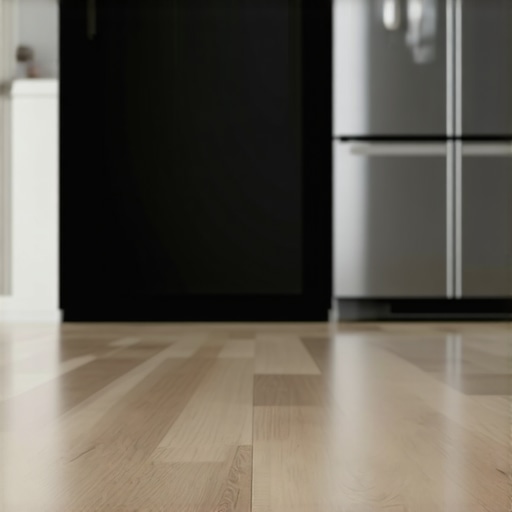
A standard refrigerator can weigh between 200 and 400 pounds. This static load acts as a clamp on a floating floor system. When the floor tries to expand, the weight of the fridge holds it still while the rest of the room moves. This creates a tension point right at the edge of the appliance. Imagine a sheet of paper. If you pin one corner and pull the other, the paper ripples. Your floor is doing the same thing. To prevent this, professional installers sometimes suggest using a separate piece of flooring under the fridge or ensuring the subfloor is exceptionally rigid in that zone. If the clicking is localized strictly to the path you walk in front of the fridge, the boards are likely rubbing against the tongue and groove because the fridge has effectively locked them in place, preventing the natural shift of the floating assembly.
The 1/8 inch rule for flat surfaces
Flatness and levelness are not the same thing. A floor can be sloped but flat. Industry standards require a subfloor to be flat within 1/8 of an inch over a ten-foot radius. Any deviation larger than this will cause clicks. When you walk, your weight pushes the laminate down into the void. This causes the vertical movement of the joint. In the world of high-density fiberboard (HDF) cores, this movement is the primary cause of clicking. The friction between the wax-coated locking profiles produces that distinctive sound. If you are dealing with a concrete slab, you must use a straightedge to find these dips. On a wood subfloor, you might need to sand down high spots or add layers of plywood to build up low areas. Ignoring the 1/8 inch rule is the most common reason for post-installation complaints in the flooring industry.
“Laminate flooring installation requires a subfloor that is flat to within 3/16 inch in 10 feet or 1/8 inch in 6 feet.” – National Wood Flooring Association Standard
Moisture cycles and the chemistry of clicking
Relative humidity should remain between 35 and 55 percent for a laminate floor to remain stable. If the humidity drops, the fiberboard core shrinks, loosening the grip of the locking mechanism and allowing for movement. This is why floors click more in the winter when the heater is running. The air becomes dry, the boards shrink, and the joints that were once tight now have microscopic gaps. This allows the boards to move independently. If your kitchen has a dishwasher or a sink nearby, the localized humidity might be higher than the rest of the house. This creates an uneven expansion rate. The boards near the fridge might be dry while the boards near the sink are swollen. This internal war of physics puts immense pressure on the joints, leading to the clicking sound as they struggle to find an equilibrium.
The danger of thick underlayment
While most people want the thickest underlayment for comfort, too much cushion actually causes the locking mechanisms on laminate to snap under pressure. This is a common mistake that leads to perpetual clicking. High-quality underlayment should be dense and relatively thin, usually around 2mm to 3mm. If you use a 6mm foam underlayment, it acts like a sponge. Every time you step, the floor sinks too far. This over-flexes the plastic or fiberboard tongue. Over time, the locking mechanism will weaken or break entirely. Once the lock is broken, the clicking will never stop because the boards are no longer physically joined. You want an underlayment with a high compression strength to support the joints while providing a moisture barrier. Excessive padding is the enemy of a long-lasting laminate floor.
| Underlayment Type | Compression Strength | Sound Dampening | Best Use Case |
|---|---|---|---|
| Closed-Cell Foam | Low | Moderate | Budget installations |
| High-Density Rubber | High | Excellent | Heavy traffic areas |
| Cork Underlayment | Moderate | High | Eco-friendly / Thermal |
| Fiberboard Pads | High | Good | Subfloor leveling aid |
How to diagnose and fix the sound
Before you tear up the floor, you need to identify the exact cause. Use a suction cup tool to shift the boards or check the perimeter for expansion gaps that have been closed by debris. Start by removing the baseboards near the fridge. If the laminate is tight against the wall, use a pull bar or a specialized floor cutter to create a gap. Sometimes, a single grain of sand or a small pebble trapped in the locking joint will cause a click. If the issue is a subfloor dip, you can sometimes inject a specialized floor repair resin through a small hole to fill the void. This supports the board from beneath and stops the deflection. However, if the clicking is widespread, it usually indicates a failure to follow the acclimation or leveling protocols during the initial install. Never skip the 48-hour acclimation period. The boards need to reach the temperature and humidity of the kitchen before they are locked together.
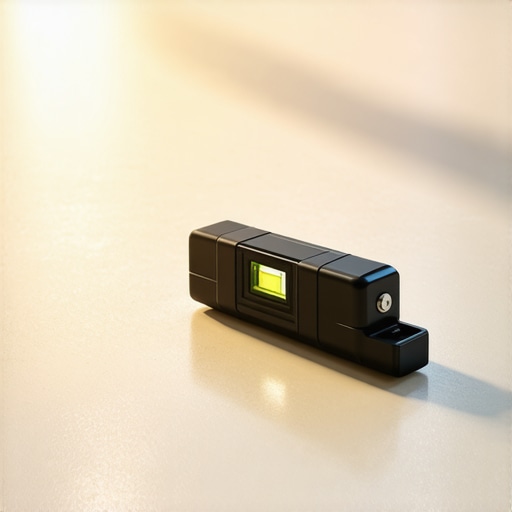
- Check subfloor flatness with a 6-foot level.
- Verify a 1/4 inch expansion gap at all vertical obstructions.
- Ensure the refrigerator is not pinning the floor against a wall.
- Monitor indoor humidity with a hygrometer.
- Check for debris in the locking joints of the clicking boards.
- Confirm the underlayment is not exceeding 3mm in thickness.
The chemistry of the HDF core is designed for stability, but it is not invincible. If your kitchen floor was laid over an old carpet install or a poorly prepared shower transition, the structural integrity is compromised. Professional flooring is a matter of millimeters. If you ignore the physics of the subfloor, the floor will eventually find a way to tell you. Usually, it starts with a click near the fridge. Take the time to prep the surface correctly. Use a moisture barrier on concrete. Ensure your transitions are not nailed through the laminate. Respect the floating nature of the material, and the floor will remain silent for decades. If you treat it like a permanent fixture rather than a moving system, you will always be haunted by the ghost in the expansion gap.