Why Your Carpet Is Pulling Away from the Metal Transition Strip
The mechanical failure of the carpet transition
I spent three days grinding concrete on a job last month just so the floor wouldn’t click like a castanet. Most guys skip the leveling compound. They think the underlayment will hide the dip. It won’t. I have seen it a thousand times where a guy thinks he can just slap down a metal transition strip and call it a day. Then, six months later, the homeowner is calling because the carpet has pulled out and is fraying like a cheap suit. My hands are scarred from years of pulling up poorly installed tack strips, and my nose is permanently attuned to the smell of damp concrete and floor wax. If you think a transition is just a piece of decorative trim, you have already lost the battle against physics. A floor is a machine. It moves, it breathes, and it reacts to the weight of everyone walking on it. When that machine is not calibrated correctly at the joints, the whole system breaks down. This is not about aesthetics. This is about structural engineering at the ground level.
The physics of the failing threshold
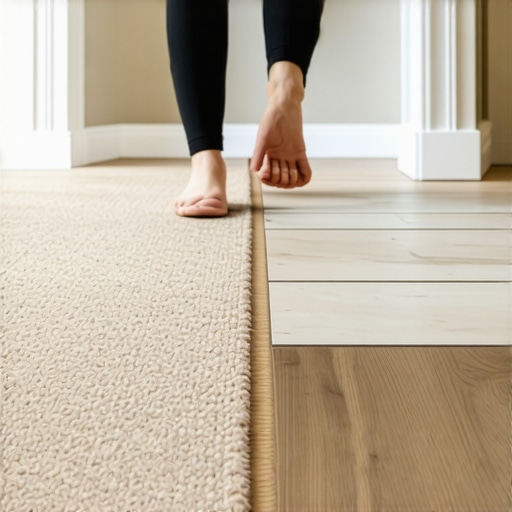
Mechanical stress and improper tucking are the primary reasons a carpet pulls away from a metal transition strip. When the power stretcher is not used correctly, the tension across the subfloor is uneven, causing the latex backing to slip from the metal teeth over time. The metal transition strip, often called a binder bar or a Z-bar, relies on a series of small, sharp protrusions to bite into the primary backing of the carpet. If the carpet was not stretched to the appropriate poundage of pressure, every footstep creates a micro-tug on those teeth. Over thousands of cycles, the synthetic fibers of the carpet backing begin to shear. Eventually, the grip fails. This is especially common in high-traffic areas where the lateral force of a footstep is at its peak. You cannot just kick a carpet into place with a knee kicker and expect it to stay. You need a power stretcher that anchors against the opposite wall to ensure the tension is distributed across the entire room. Without that tension, the carpet is basically a loose fabric waiting to be dragged away by the first heavy pair of boots that walks over the threshold.
“A floor is only as good as the subfloor beneath it; deflection is the enemy of every joint.” – Master Flooring Axiom
Why your subfloor is lying to you
Subfloor levelness and structural deflection dictate the long-term stability of carpet transitions and laminate flooring. Most installers assume that a padded underlayment or carpet cushion will mask a 1/8 inch dip in the concrete slab or plywood deck, but this is a technical fallacy. I spent three days grinding concrete on a job last month just so the floor wouldn’t click like a castanet. When the subfloor is uneven, the transition strip is forced to bridge a gap. As you walk over that strip, the metal flexes. This flexing action acts like a crowbar, slowly prying the nails or screws out of the subfloor. If you are dealing with a concrete slab, the moisture in that slab can also weaken the chemical bond of any adhesives used. If the subfloor is not flat to within 3/16 of an inch over a 10-foot radius, your transition is doomed. You must use a self-leveling compound or a grinder to create a true plane before the first inch of carpet is ever laid down.
The chemistry of the primary backing
Carpet construction involves a primary backing usually made of woven polypropylene and a secondary backing held together by SBR latex. The chemical stability of this latex bond is what allows the transition strip teeth to hold the carpet in place under extreme tension. Over time, particularly in areas near showers or kitchens, humidity can cause the latex to undergo hydrolysis. This is the chemical breakdown of the bond due to water molecules. When the latex becomes brittle, the carpet backing loses its structural integrity. The teeth of the metal strip no longer have a solid substrate to bite into. They simply tear through the brittle backing. This is why you see carpet pulling away in damp environments. If you are installing carpet near a bathroom or in a region like the humid Gulf Coast, you must ensure that the moisture vapor emission rate of the slab is below 3 pounds per 1,000 square feet. Otherwise, the chemistry of your floor will fail long before the mechanics do.
| Transition Type | Material Grade | Typical Failure Point | Mechanical Grip Rating |
|---|---|---|---|
| Z-Bar | Aluminum | Teeth Shearing | High |
| Binder Bar | Anodized Steel | Fastener Backout | Medium |
| Nap Lock | Heavy Gauge Alum | Improper Tucking | Very High |
| Slim Trim | PVC/Composite | Adhesive Failure | Low |
The 1/8 inch that ruins everything
Dimensional stability and expansion gaps are often overlooked when installing laminate or hardwood adjacent to carpet transitions. If you do not leave a 1/4 inch expansion gap between the laminate planks and the transition track, the entire floor will buckle when the relative humidity rises. While most people want the thickest underlayment, too much cushion actually causes the locking mechanisms on LVP to snap under pressure. This same logic applies to the carpet side. If the carpet is cut even 1/8 of an inch too short before it is tucked into the metal strip, there is not enough material for the teeth to grab. You need that extra bit of fabric to fold over and create a wedge. That wedge is what creates the mechanical lock. If your installer is lazy with his blade, you will be looking at the subfloor within a year. Accuracy in cutting is not about being neat; it is about providing the raw material for a mechanical bond.
- Ensure the subfloor is ground flat to 3/16 inch over 10 feet.
- Use a power stretcher to achieve 1-2 percent stretch in both directions.
- Verify that the metal strip teeth are angled toward the wall.
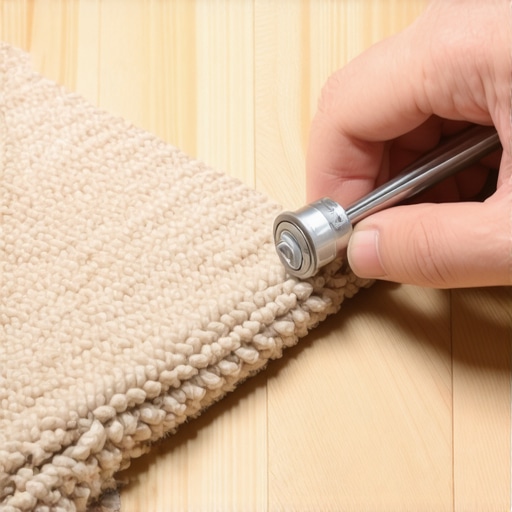
- Tuck the carpet with a specialized stair tool to create a compressed wedge.
- Secure the transition track with masonry screws if working on concrete.
The ghost in the expansion gap
Acoustics and vibration transfer play a significant role in why carpet pulls away from metal thresholds in multi-family housing. In many high-rise buildings, the subfloor is a gypsum-based underlayment that is prone to cracking. When the floor vibrates from foot traffic, these cracks expand and contract. This movement is transferred directly to the transition strip. If the strip is not decoupled from the structural slab, the vibration will eventually loosen the fasteners. This is what I call the ghost in the gap. You cannot see the movement, but you can see the results when the carpet starts to creep away from the metal. Using a high-quality silicone-based adhesive in conjunction with mechanical fasteners can help dampen these vibrations and keep the transition secure. Never rely on just one method of attachment. A professional uses a belt-and-suspenders approach to every threshold.
“Moisture vapor emission rate is the silent killer of any adhesive bond in a transition zone.” – Flooring Science Institute
Proper remediation techniques
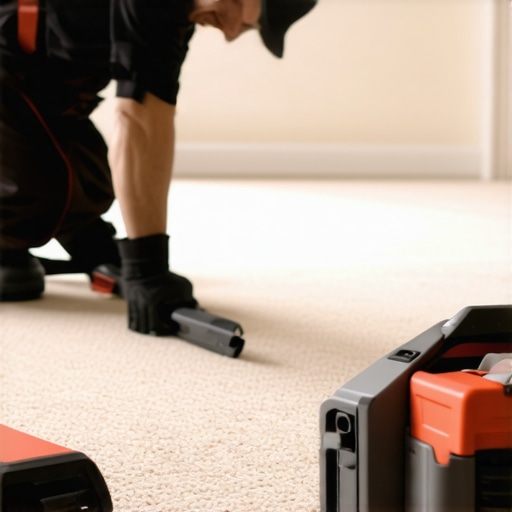
Repairing a pulled carpet requires a row-runner, a stay-tacker, and a refitted transition. You cannot simply pull the carpet back with your fingers and hope it stays. You must first inspect the metal strip for bent teeth. If the teeth are flat, the strip is garbage and must be replaced. Once a new strip is anchored, the carpet must be re-stretched using a power stretcher to move the slack toward the transition. This is a delicate process because you risk tearing the carpet if it has already begun to fray. If the edge is too damaged, you may need to install a wider transition bar to cover the gap. This is the hallmark of a master. We don’t just fix the symptom; we analyze the failure of the previous installation and over-engineer the solution so it never happens again. Proper flooring is not a DIY weekend project. It is a commitment to the physics of the home.