Why Your Carpet Seam is Peeling Up and How to Fix It Fast
I spent three days grinding concrete on a job last month just so the floor wouldn’t click like a castanet. The homeowner thought I was crazy, but a month later, they understood. Most guys skip the floor leveling compound because they think the padding and the carpet will hide the dip. It won’t. When the subfloor has a valley, every time you step on that carpet, the backing flexes. This creates a trampoline effect that puts massive mechanical stress on your carpet install. Eventually, that stress finds the weakest point, which is always the seam. I have seen fifteen thousand dollar installs ruined because the installer was too lazy to check the slab for flatness. If your seam is peeling, you are not just looking at a cosmetic failure; you are looking at a structural breakdown of the adhesive bond caused by movement, moisture, or poor heat execution.
The chemistry of the failed bond
Carpet seam failure happens when the thermoplastic adhesive on the seaming tape fails to achieve a molecular bond with the secondary backing of the carpet. This is often caused by a seaming iron that was too cold or moved too quickly, preventing the glue from liquefying enough to penetrate the polypropylene fibers. I have walked onto jobs where the seam looks okay at first, but if you look at the glue under a magnifying glass, it is sitting on top of the fibers like a bead of water on a waxed car. It never bit into the material. You need that glue to flow. If the installer didn’t wait for the adhesive to reach its crystalline transition temperature, the bond is purely superficial. It will fail the moment the humidity changes or the kids start running down the hall. We are talking about a chemical reaction that requires specific heat levels to turn a solid resin into a liquid that can encapsulate the carpet tufts.
“A floor is only as good as the subfloor beneath it; deflection is the enemy of every joint.” – Master Flooring Axiom
The 1/8 inch that ruins everything
A professional carpet install requires a row cutter to ensure that the edges of the carpet are perfectly parallel and clean. If the installer used a standard utility knife and cut through the face yarns, they created a frayed edge. When those frayed edges are pushed together, they don’t meet flush. Instead, they overlap or leave a microscopic gap that allows the latex backing to be exposed to the air. This exposure leads to oxidation of the latex, making it brittle and prone to crumbling. When the latex crumbles, the seam loses its anchor. It does not matter how much tape you use if the carpet itself is falling apart at the edge. You have to understand that carpet is a woven system. If you compromise the integrity of the weave by cutting it wrong, the whole system starts to unzip. I see this all the time in hallways where traffic is high. The constant shuffling of feet acts like a serrated blade on a weak seam.
How floor leveling prevents seam separation
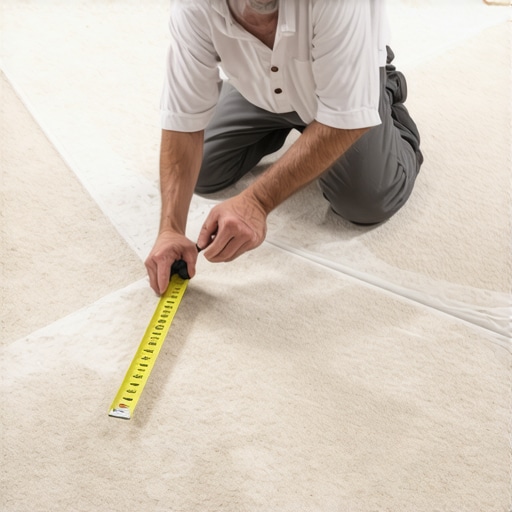
Proper floor leveling is the silent hero of a long lasting carpet seam. When the subfloor is uneven, the carpet pad compresses at different rates, which creates a shearing force at the seam line. If one side of the seam is over a hump and the other is over a dip, the tension is never equal. This is why I always tell people that even if they are not doing laminate or hardwood, they still need a level floor. Laminate floors will snap at the tongues if the floor is not flat, but carpet seams will simply pull apart as the tape is stretched beyond its elastic limit. You can use the most expensive seaming tape in the world, but physics will win every time. If that subfloor has more than a 3/16 inch deviation over ten feet, you are asking for trouble. I have spent decades with a straightedge and a bag of self-leveler, and I have never regretted the time spent on prep.
| Seam Tape Type | Best Use Case | Melting Point | Adhesive Strength |
|---|---|---|---|
| Low-Melt Tape | Residential Plush | 150 Degrees | Standard |
| High-Melt Tape | Commercial Loop | 190 Degrees | Extreme |
| Pressure Sensitive | Repair Work | Ambient | Moderate |
| Silicon Backed | Moisture Areas | 170 Degrees | High |
The ghost in the expansion gap
Humidity is the invisible enemy of every carpet install. In places like Houston or South Carolina, the air is thick enough to drink. If you don’t let your carpet acclimate to the home environment for at least 48 hours, it will expand after it is tacked down. This expansion creates buckling. When a buckle forms near a seam, it creates a peak that catches the light and the vacuum cleaner. Conversely, in dry climates like Phoenix, the carpet can shrink, pulling the seam apart with enough force to rip the tape right off the floor. This is even more critical if the carpet is near showers or bathrooms where the local humidity spikes every morning. Moisture from the shower can migrate through the wall or under the door, saturating the carpet pad and weakening the water-based adhesives used in many modern carpets. You have to think about the micro-climate of every room before you even open the roll.
“The integrity of a carpet installation is defined by the strength of its secondary backing bond to the seaming media.” – NWFA Technical Guidelines
The solution for failing carpet seams
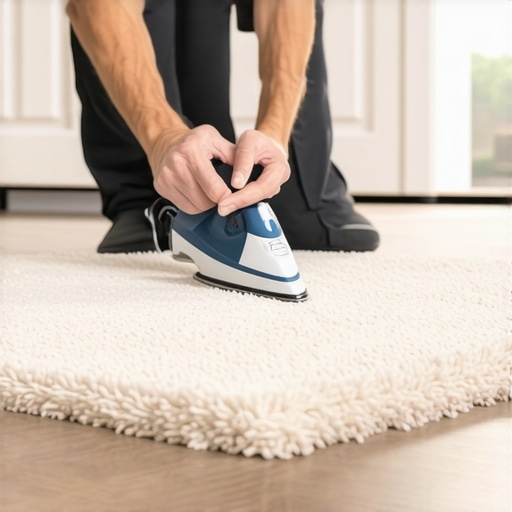
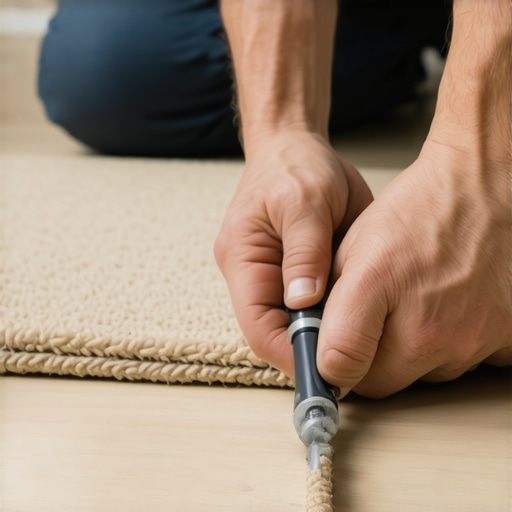
Fixing a peeling carpet seam requires a re-activation of the adhesive or a complete re-seaming process using a specialized seam sealer. Do not just squirt some wood glue in there and hope for the best. You need a cool-top seaming iron and a seam roller to do it right. First, you have to clean out the old, brittle glue. If you don’t, the new glue will just sit on top of the old junk and fail. It is like trying to paint over a peeling wall; the new layer is only as strong as the one beneath it. I use a specialized solvent to soften the old thermoplastic, then I scrape it away before applying a fresh strip of high-grade tape. You want to see that glue squeeze up just enough to grab the base of the yarns without coming through to the surface. It is a delicate balance that separates the masters from the hacks.
- Inspect the seam for frayed yarns and trim them with sharp shears.
- Vacuum the subfloor beneath the seam to remove all dust and grit.
- Apply a bead of seam sealer to both edges of the carpet backing.
- Use a seaming iron set to the manufacturer’s recommended temperature.
- Follow the iron with a seam weight to hold the carpet in the glue as it cools.
- Avoid walking on the area for at least four hours to allow full crystallization.
Why your subfloor is lying to you
Many homeowners think their subfloor is fine because it looks okay to the naked eye. But once you pull that old carpet back, you see the plywood seams peaking or the concrete slab cracking. These imperfections are mirrored in your carpet. If your subfloor is moving, your seam is moving. I always check for deflection in the joists. If the floor bounces when you walk, that movement is death for a carpet seam. You might need to add screws to the subfloor or even sister the joists from below to get the rigidity required for a high-end finish. Most people think about carpet as a soft, forgiving surface, but it is actually quite demanding. It needs a rigid, flat, and dry foundation just as much as a laminate or tile floor does. Do not believe the lie that carpet hides everything. It actually highlights poor craftsmanship over time as the shadows fall into the dips and the seams begin to pull.
The final word on performance
The mil-thickness of your carpet backing and the density of your pad are the final factors in seam longevity. A cheap, thin pad will bottom out, allowing the carpet to hit the subfloor and creating a grinding action on the seam tape. I always recommend a high-density rubber pad or a heavy frothed foam. These materials support the seam and prevent it from flexing into the void. If you want a floor that lasts twenty years, you have to treat it like an engineering project. From the floor leveling at the start to the chemical bond of the tape at the end, every step is a link in a chain. If one link fails, the whole floor fails. Don’t be the person who spends ten thousand dollars on carpet and then tries to save two hundred dollars by skipping the subfloor prep. Do it right, or do it twice.