Why Your Carpet Is Fraying at the Doorway Transitions
The hidden physics of frayed doorway carpet
Carpet fraying at doorway transitions occurs because of excessive lateral tension, improper tack strip placement, or a failure to address subfloor height variances. Most installers treat a transition as a decorative strip, but it is actually a mechanical anchor that must withstand thousands of pounds of shear force over its lifetime. When the carpet is not properly tucked or when the transition strip is loose, the fibers rub against the metal or wood edge, leading to rapid delamination and the eventual disintegration of the primary and secondary backings.
Most guys skip the leveling compound. They think the underlayment will hide the dip. It won’t. I spent three days grinding concrete on a job last month just so the floor wouldn’t click like a castanet. That job taught the homeowner a hard lesson. If the subfloor is not dead flat, the carpet spans the gap like a bridge. Every time you step on that doorway, the carpet flexes down and then snaps back up. This constant movement acts like a saw against the edge of the transition strip. Within six months, you see the white strings of the backing. Within a year, the carpet is bald at the door. I have seen fifteen thousand dollar installs ruined because the installer was too lazy to mix a bag of self-leveling underlayment. It is a structural failure, not a cosmetic one.
The ghost in the expansion gap
An expansion gap is a mandatory void left between different flooring materials to allow for the natural movement caused by temperature and humidity changes. If you jam carpet tight against a laminate floor or a tile shower threshold without a proper transition, you create a pressure point. Carpet needs to be stretched and hooked, while laminate needs to float. When these two opposing forces meet without a mechanical break, the carpet loses the battle. The laminate expands during a humid summer, pushes against the carpet edge, and force-feeds the fibers into the gap where they are crushed and eventually frayed by foot traffic.
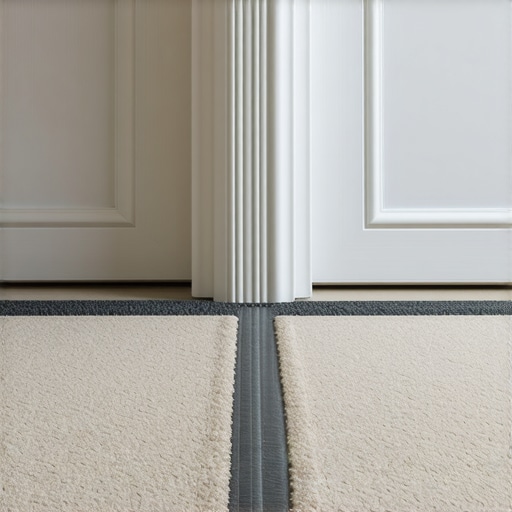
The mechanics of this are simple but often ignored. Carpet is a woven product. Think of it like a sweater. If you pull one thread at the edge, the whole thing starts to come apart. In the flooring world, we call this unraveling the ‘serge’ or the ‘edge bond.’ When we do a carpet install, we have to ensure the transition is the highest point of the assembly. If the carpet sits lower than the adjacent floor, every toe that kicks the edge of the doorway acts like a chisel. You need a transition that protects the raw edge of the carpet while allowing the other floor to move independently. This is where most DIY projects fail. They buy a cheap transition strip at a big box store and screw it directly through the laminate, which locks the floor and causes the carpet to pull away as the building shifts.
“A floor is only as good as the subfloor beneath it; deflection is the enemy of every joint.” – Master Flooring Axiom
Why your subfloor is lying to you
Subfloor levelness is the most misrepresented aspect of flooring because it is hidden beneath the surface and requires labor intensive correction. A subfloor might look flat to the naked eye, but a 10 foot straightedge will reveal dips and humps that ruin a carpet install. If there is a dip at the doorway, the tack strip cannot grab the carpet backing securely. Instead of the pins biting into the mesh, the carpet floats above them. When you walk through the door, your weight pushes the carpet down, the pins scratch the backing, and eventually, the carpet detaches. This is how the fraying starts. It is the sound of a thousand tiny rips every time you enter the room.
Floor leveling is a science. You cannot just dump some patch in a hole and hope for the best. You have to understand the moisture content of the slab. I use a calcium chloride test on every concrete job. If the slab is pumping out moisture, the leveling compound will pop off like a scab. On wood subfloors, you have to look at the joist spacing. If the house has 24 inch centers and only 5/8 inch plywood, that floor is going to bounce. That bounce is what kills doorway transitions. You can install the most expensive carpet in the world, but if that subfloor is moving, the carpet will fray at the point of most resistance, which is always the doorway. I tell people all the time that they should spend half their budget on the subfloor and the other half on the finish. Most people do the opposite and then wonder why their house looks like a wreck after two years.
The chemistry of latex breakdown at the edge
The secondary backing of a carpet is held to the primary backing by a layer of synthetic latex adhesive which breaks down when exposed to friction and moisture. This is the molecular reality of a frayed transition. When the carpet edge is not properly sealed or tucked, the latex bond is exposed to the air. Oxygen and household cleaners begin to degrade the polymer. Once the latex becomes brittle, it turns into a fine white powder. At this point, the face fibers have nothing to hold onto. They fall out, leaving behind the mesh. This is why you see those long strings at the doorway. It is not just the carpet wearing out. It is the chemical bond of the floor failing because it was not protected from the elements.
| Transition Type | Material | Typical Failure Mode | Expected Lifespan |
|---|---|---|---|
| Z-Bar | Steel/Aluminum | Metal fatigue | 15+ Years |
| Glue-down | Adhesive | Bond failure | 5 Years |
| T-Molding | Laminate/Wood | Snap-track breakage | 3-7 Years |
| Nap-Lock | Aluminum | Teeth flattening | 10 Years |
The type of fiber matters here as well. Nylon is incredibly resilient, but it is also abrasive. If a nylon carpet is rubbing against a wood transition, it will actually sand the finish off the wood. Polyester is softer but has less ‘memory,’ meaning once it is crushed at a transition, it stays crushed. This creates a valley where dirt and grit accumulate. That grit acts like sandpaper, grinding away at the latex bond every time you step on the doorway. I have seen transitions in high-traffic hallways where the grit has actually cut through the carpet backing from the bottom up. This is why a clean subfloor is non negotiable. If you leave sawdust or drywall mud under the carpet, you are essentially putting a grinder under your feet.
Why power stretching is a non negotiable step
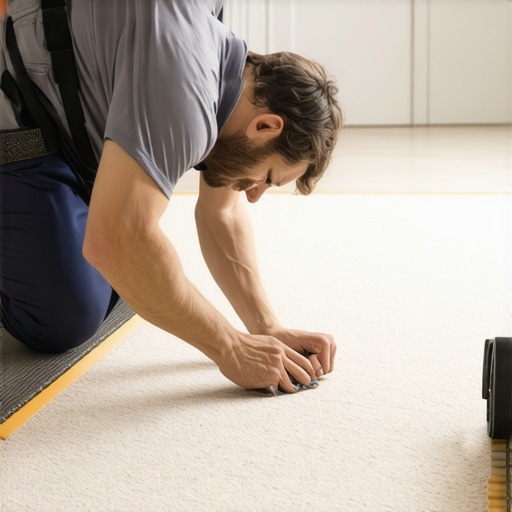
Power stretching is the process of using a mechanical lever to tension the carpet across the entire room, which is the only way to prevent ripples and fraying at the edges. A lot of new installers use a knee kicker for the whole room. That is a recipe for disaster. A knee kicker is for positioning, not for stretching. If the carpet is not stretched to at least 1 percent of its length, it will eventually relax. When it relaxes, it moves. When it moves, it rubs against the transition. That friction is the primary cause of fraying. A properly stretched carpet is under thousands of pounds of tension. It is drum tight. It cannot move, so it cannot fray.
- Verify subfloor levelness with a 10-foot straightedge.
- Apply floor leveling compound to dips exceeding 3/16 inch.
- Seal all concrete pores if moisture exceeds 4 percent.
- Use a power stretcher to achieve 1 to 1.5 percent tension.
- Ensure tack strips are 1/4 inch from the transition edge.
- Seal the cut edge of the carpet with a latex seam sealer.
- Tuck the carpet firmly into the gully of the transition strip.
While most people want the thickest underlayment, too much cushion actually causes the locking mechanisms on laminate to snap and carpet transitions to fail. If the padding is too soft, the transition strip acts like a cliff. The carpet dives off the edge of the strip into the soft pad. This creates a massive amount of vertical movement right at the most vulnerable spot. You want a high-density pad, something in the 8-lb range, to provide a firm foundation for the transition. A firm pad supports the backing and prevents the ‘hinge effect’ that snaps the fibers at the doorway. I have seen people buy 10-lb memory foam padding thinking it would be like walking on a cloud, but it ruined their transitions in three months because the carpet was moving two inches up and down every time they walked through the door.
Transitions between moisture and fiber
Transitions in areas like bathrooms or showers require specialized moisture barriers to prevent the carpet from absorbing humidity and rot. When you have carpet meeting a tile floor in a bathroom, you are dealing with two different climates. The bathroom is humid and wet. The bedroom is dry. If you do not use a moisture-resistant transition, the carpet will act like a wick. It will pull moisture out of the bathroom and into the backing. This softens the latex bond we talked about earlier and leads to immediate fraying. You need a solid surface transition, like a marble sill or a high-quality metal cap, that creates a physical wall between the wet and dry zones.
I once worked a job where the homeowner wanted carpet right up to the edge of a walk-in shower. I told them it was a bad idea. They did it anyway with another guy. Six months later, I was back to fix it. The carpet was black with mold and the edges were shredded. The moisture had rotted the tack strip, which was just a piece of plywood with nails in it. Once the tack strip rotted, the carpet lost its tension and started to fray. We had to tear out the first three feet of carpet, install a proper stone threshold, and use a stainless steel transition strip. It cost them three times what it would have if they had listened to me the first time. Wood and water do not mix, and carpet and water are even worse. You have to respect the physics of the environment.
“A floor is only as good as the subfloor beneath it; deflection is the enemy of every joint.” – Master Flooring Axiom
The reality of flooring is that it is an engineering challenge. It is about managing forces. You have the force of the house settling, the force of the wood expanding, and the force of people walking. The doorway transition is the intersection of all those forces. If you do not use the right materials and the right techniques, that intersection will collapse. Use the right tools. Use a power stretcher. Spend the money on a good transition strip. And for the love of everything holy, make sure your subfloor is level. If you do those things, your carpet will stay beautiful for twenty years. If you don’t, you will be looking at those frayed strings every morning when you wake up. It is your choice.