The ‘Paper Clip’ Trick for Measuring Carpet Pile Height
The simple geometry of a paper clip measurement
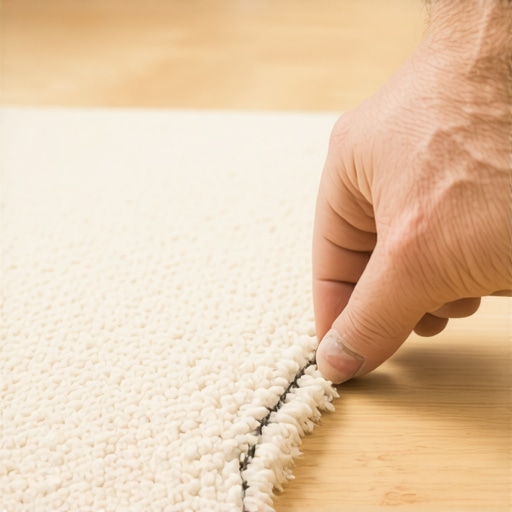
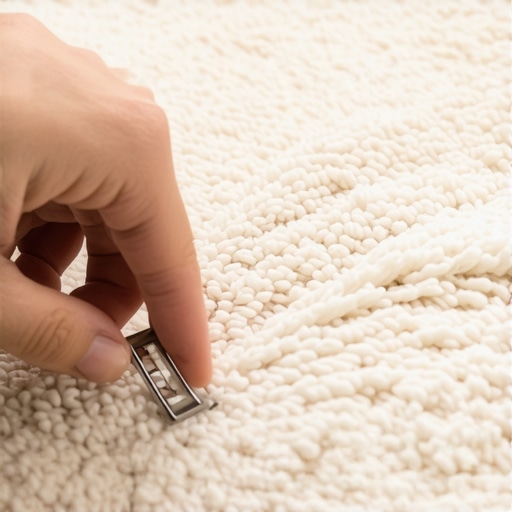
Measuring carpet pile height with a paper clip requires straightening the wire and inserting it into the fibers until it touches the backing. You mark the point where the fibers end and measure that distance with a ruler. This provides an accurate reading for matching replacements or determining wear. This technique is a staple for those of us who have spent decades on our knees on a job site. You do not need a laser or a digital caliper. A standard paper clip is roughly 0.03 to 0.04 inches thick. It is rigid enough to penetrate the dense face weight of a high-end saxony or a rugged frieze without bending. When you push that wire down, you are feeling for the primary backing. That is the grid where the yarn is tufted. If you stop at the top of the padding, your measurement is wrong. You are measuring the yarn length alone. This matters because pile height dictates how a carpet will perform under the crushing weight of furniture and foot traffic. A height of half an inch behaves differently than a three quarter inch plush. The taller the pile, the more leverage the foot has to bend the fiber. This leads to matting. Understanding the physical height of your carpet is the first step in diagnosing why your floor looks like a matted dog after only two years.
The subfloor secret that ruins every installation
Subfloor levelness is the foundation of every successful flooring project including carpet and laminate. Most guys skip the leveling compound because they think the underlayment will hide the dip. It won’t. I spent three days grinding concrete on a job last month just so the floor wouldn’t click like a castanet. I walked onto that site and the GC told me the slab was fine. I pulled out my ten foot straightedge and found a half inch dip over six feet. If I had laid that laminate, the locking mechanisms would have snapped within a month. Most homeowners do not realize that carpet hides a multitude of sins, but it does not fix them. A dip in the plywood or concrete creates a pocket of air. Every time you step there, the carpet stretches. Over time, this creates those ugly ripples that you see in old living rooms. It is not always a bad kick on the carpet stretch. Often, it is the subfloor lying to you. Grinding concrete is a miserable, dusty job that smells like burnt rocks and old pennies. But if you do not do it, the floor fails. There is no middle ground in structural integrity.
“A floor is only as good as the subfloor beneath it; deflection is the enemy of every joint.” – Master Flooring Axiom
Why pile height dictates your padding choice
Selecting the right padding depends entirely on the measured pile height and the fiber density of the carpet. A common mistake is using a thick, soft pad under a high pile carpet, which creates a trampoline effect that ruins the carpet backing. Firmness is better than thickness. When you use the paper clip trick and find you have a 1/2 inch pile, you need a high-density 7/16 inch pad. If you go to a 1/2 inch pad with a high pile carpet, you exceed the mechanical limits of the tack strip. The carpet will literally pull off the pins because there is too much vertical movement. Think about the physics. The yarn is the shock absorber. The pad is the stabilizer. If both are too soft, the primary and secondary backings of the carpet undergo shear stress every time you walk. This leads to delamination. That is when the fuzzy part of the carpet separates from the scratchy part underneath. Once that happens, the carpet is garbage. You can’t glue it back. You can’t fix it. You just replace it and regret your choices. I always tell people to smell the pad. Good virgin polyurethane foam has a distinct, clean chemical scent. Cheap re-bond pad smells like a basement. Your nose knows quality better than a sales brochure does.
The physics of floor leveling and laminate failure
Floor leveling requires a chemical bond between the substrate and the compound to ensure a flat surface for laminate or vinyl plank. Laminate floors fail when the subfloor exceeds 3/16 of an inch of deviation over a ten foot radius. This causes the tongue and groove to fatigue. Laminate is essentially a photograph glued to a high-density fiberboard core. That core is stiff. It does not like to bend. If you have a hummock or a valley in your subfloor, the laminate has to bridge that gap. Every step applies hundreds of pounds of pressure per square inch to that tiny plastic joint. Eventually, the joint develops micro-fissures. Then it starts to squeak. Then it separates. Once a laminate floor starts to gape, the game is over. Moisture from your mop gets into the HDF core and it swells like a sponge. You can’t sand laminate. You can’t refinish it. You can only rip it out and start over. This is why I am a stickler for the 1/8 inch rule. I want that floor so flat you could play billiards on it. I use a self-leveling underlayment with a high compressive strength, usually around 4,000 PSI. It flows like water and settles like stone. It is the only way to sleep at night knowing the floor won’t fail.
When showers and carpet transitions collide
Transitions between wet areas like showers and carpeted bedrooms require a moisture-proof barrier and a mechanical fastening system. The carpet must be tucked tightly against a marble or tile threshold to prevent fraying and water wicking into the pad. I have seen too many bathrooms where the carpet is damp three feet away from the shower door. This is usually because the installer didn’t use a proper transition strip or the subfloor is sloped toward the carpet. Water is a traveler. It finds the path of least resistance. If your shower tile ends and the carpet begins without a slight elevation change or a waterproof silicone bead at the tack strip, the carpet pad acts like a wick. It will suck water out of the bathroom and hold it against the subfloor. If that subfloor is plywood, it will rot. If it is concrete, it will grow mold. I always suggest a wide marble threshold. It gives the carpet a solid