Why Your Carpet Transitions Are Pulling Away from the Floor
I am standing here with sawdust under my nails and the smell of WD-40 on my shirt. My knees ache from thirty years of crawling over plywood and concrete. I have seen every way a floor can fail. Most guys in this business are obsessed with the color of the wood or the pile of the carpet. They forget that a floor is an engineered system of tension and compression. Last month, I spent three days grinding concrete on a job. The homeowner thought the underlayment would hide the dip in the slab. It won’t. I had to level that surface because the carpet transition would have failed within a week. That is the reality of floor leveling. Most guys skip the leveling compound. They think they can hide the gap. They are wrong. If your carpet transitions are pulling away, it is usually because the installer ignored the physics of the subfloor and the chemistry of the adhesive.
The physics of a failing transition
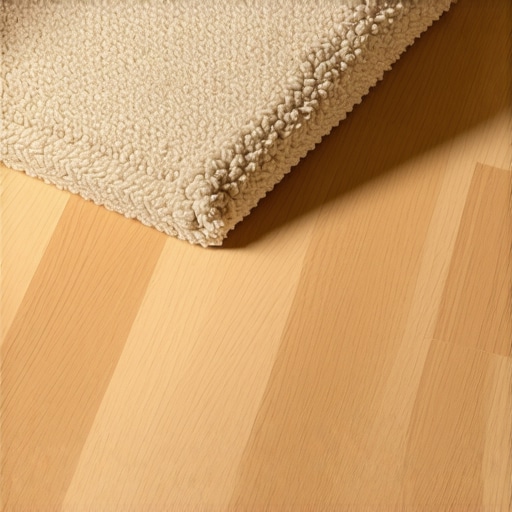
Carpet transitions pull away because of mechanical tension and subfloor irregularities. When a carpet is properly installed using a power stretcher, it is under a massive amount of internal stress. If the transition strip or tack strip is not anchored into a perfectly flat and stable subfloor, the lateral force of the carpet will eventually rip the fasteners right out of the ground. Most failures happen at the interface where the carpet meets a hard surface like laminate or tile.
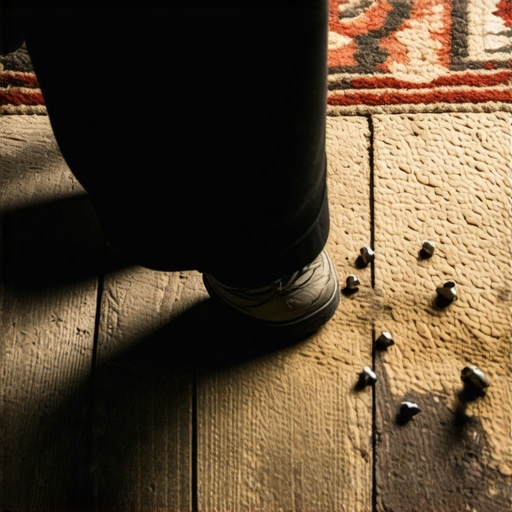
The carpet is not just sitting there. It is a membrane under tension. When you walk on it, you create a localized increase in that tension. If the transition strip is a cheap, thin-gauge aluminum, it will flex. Over hundreds of footfalls, that flexing work-hardens the metal and widens the nail holes. This is why you see the strip start to wiggle. Once there is movement, the game is over. The friction will eventually widen the hole in the wood or concrete subfloor until the nail has nothing to grab onto. I have seen transitions pull up so hard they actually curl the edge of the carpet, leaving a dangerous trip hazard that looks like a wave ready to break.
Why your subfloor is lying to you
Subfloor leveling is the most ignored aspect of a successful carpet install. Many installers believe that carpet is forgiving because it is soft. This is a lie. While the carpet hides the visual dip, the transition strip must sit on a flat plane to remain secure. If there is a 1/8 inch dip under the transition, the strip will bridge that gap like a tiny, unstable bridge. Every time you step on it, the bridge collapses and then rebounds.
This constant vertical movement is a fastener killer. Whether you are using ring-shank nails or screws, they are not designed to handle constant upward and downward cycles. On concrete slabs, the problem is even worse. If the installer didn’t use a high-quality floor leveling compound to flatten the area near the transition, the concrete will likely be crumbly or uneven. I always tell my apprentices that if the floor isn’t flat within 3/16 of an inch over 10 feet, the transitions will fail. It is a matter of geometry. You cannot secure a rigid strip to a curved surface without creating internal stress that wants to tear the whole thing apart.
| Transition Component | Common Failure Point | Engineering Solution |
|---|---|---|
| Tack Strip | Nail pull-out in concrete | Use epoxy-anchored strips |
| T-Molding | Laminate expansion pressure | Maintain 1/2 inch gap |
| Z-Bar | Improper tuck tension | Increase staple frequency |
| Reducer | Adhesive shear failure | Use urethane-based glue |
The ghost in the expansion gap
Laminate flooring and other floating floors move constantly due to thermal and hygroscopic changes. If your carpet meets a laminate floor, the transition is caught between two opposing forces. The carpet is pulling away with constant tension, while the laminate is pushing and pulling as it expands and contracts. If you do not leave a proper expansion gap, the laminate will literally shove the transition strip right off the floor. This is especially common in areas near showers or kitchens where humidity fluctuates.
When moisture from a nearby shower gets into the air, the laminate core absorbs that humidity and grows. If that growth has nowhere to go, it hits the transition strip. A 20-foot run of laminate can expand by nearly a quarter of an inch. That is a lot of force. If the installer pinned the transition through the laminate, you are going to see buckling. The carpet transition will be the first thing to go. It will pop up like a spring because it is the weakest link in the chain. You need a dedicated T-molding that allows the laminate to slide underneath it while the carpet side remains anchored to the subfloor.
The chemistry of the bond
Adhesive failure at the transition point is often caused by chemical incompatibility or moisture vapor. Many installers use cheap construction adhesive to help hold transition strips down, especially on concrete. However, if the concrete has a high moisture emission rate, it will saponify the adhesive. This turns the glue into a useless, soapy film. In my twenty five years, I have seen more floors ruined by moisture coming up through the slab than by water spilled on top of it.
If you are installing near high-moisture areas like bathrooms or showers, you must use a moisture barrier. The concrete might look dry, but it is breathing. That breath carries minerals and alkaline salts that eat away at the bond of the transition glue. For a permanent fix, you need a two-part epoxy or a high-solids urethane adhesive that can withstand the high pH levels found in concrete slabs. Most guys won’t spend the thirty dollars on a good tube of glue. They use the five-dollar stuff and wonder why the floor is falling apart six months later. It is a chemical battle you are losing because you didn’t check the moisture levels with a calcium chloride test.
“A floor is only as good as the subfloor beneath it; deflection is the enemy of every joint.” – Master Flooring Axiom
The 1/8 inch that ruins everything
Precision at the transition point is the difference between a professional job and a DIY disaster. When you tuck the carpet into a transition, you need exactly enough material to create a firm wedge. If the installer trims the carpet too short, there is not enough grab. The carpet will slowly pull out of the tuck, leaving a gap where you can see the subfloor. If they leave too much, the transition will be bulky and will eventually catch on a vacuum or a toe, pulling the whole strip loose.
I use a specific technique for the tuck. I trim the carpet so it is exactly 1/8 of an inch longer than the space provided by the Z-bar or transition strip. This creates a high-pressure fit. When you kick that carpet in, it should feel like it’s locked. If it slides in easily, it will slide out easily. I also make sure the subfloor is perfectly clean. Any dust or debris left under the transition will act like a dry lubricant, helping the strip to slide and eventually fail. You have to be a stickler for the small details. The difference between a floor that lasts thirty years and one that lasts three is measured in eighths of an inch.
- Check subfloor levelness with a 10-foot straight edge.
- Apply floor leveling compound to any dips exceeding 3/16 inch.
- Use a power stretcher to ensure uniform carpet tension.
- Maintain a 1/2 inch expansion gap for all laminate or wood products.
- Seal concrete subfloors to prevent adhesive saponification.
- Use heavy-duty transition strips with a higher gauge of aluminum or solid brass.
Environmental impact on transition integrity
Local climate and indoor humidity levels play a massive role in how carpet transitions behave. In humid regions, the wood subfloor and the carpet backing will swell. This change in volume creates internal stresses. The secondary backing of most carpets is a synthetic latex. While it is stable, the fibers themselves can hold moisture. If you are in a place where the AC is constantly fighting the humidity from showers and outside air, the constant cycle of swelling and shrinking will loosen the mechanical fasteners.
I have worked on jobs where the transitions were tight in the summer but loose in the winter. This is a sign of a subfloor that wasn’t acclimated. You cannot just bring material from a cold warehouse and install it in a warm house. It needs at least 72 hours to reach equilibrium. If you skip this step, the transition will pull away as the materials reach their final dimensions. It is not magic. It is basic thermodynamics. If the material shrinks, the fastener holes get bigger. If the material expands, it pushes against the anchors. You have to account for the environment of the room before you ever open a bag of leveling compound or a roll of carpet.
“Standard subfloor tolerances require no more than 3/16 inch deviation over 10 feet to maintain structural integrity of the finish floor.” – NWFA Installation Guidelines
The final word on structural integrity
You can buy the most expensive carpet in the world, but if the guy installing it doesn’t understand subfloor leveling or the mechanics of a transition, you are wasting your money. A floor is a structural engineering challenge. It requires a flat surface, the right chemistry in the adhesives, and a deep respect for the tension of the carpet. If your transitions are pulling away, don’t just hammer a new nail into the old hole. That is a band-aid on a broken leg. You need to address the root cause, whether it is a dip in the floor, a moisture issue from nearby showers, or a lack of expansion space. Do it right once, or do it over three times. I know which one I prefer. I’d rather spend my time on my knees doing a perfect job than coming back to fix someone else’s mistake. Respect the floor, and it will respect your feet for decades.