The ‘Ice Cube’ Hack for Removing Heavy Furniture Dents from Carpet
The hidden mechanics of carpet fiber restoration and subfloor integrity
I spent three days grinding concrete on a job last month just so the floor wouldn’t click like a castanet. Most guys skip the leveling compound. They think the underlayment will hide the dip. It won’t. I have spent twenty five years on my knees with a moisture meter and a power stretcher, and if there is one thing I have learned, it is that homeowners treat their floors like a rug while I treat them like a performance engine. Last week, I walked into a luxury residence where the owner was nearly in tears over a set of deep, crushed craters in her high-end plush pile carpet. She had moved a heavy mahogany sideboard and left behind four permanent-looking pits. She thought the carpet was ruined. I told her to go to the freezer. Most people do not realize that carpet is a complex polymer system. When you park a five hundred pound piece of furniture on a localized point, you are not just squashing the yarn. You are compressing the secondary backing and the cellular structure of the padding. If that padding is a cheap four pound density re-bond, those dents are your new roommates. But if the floor was installed correctly with the right tension and high-grade materials, we can use simple thermodynamics to reset the fiber memory. I have seen thousand dollar rugs saved by a handful of frozen water because the science of hydrogen bonding does not care about the price tag of your furniture.
The molecular reality of crushed carpet fibers
Carpet fiber restoration requires understanding that nylon and polyester are thermoplastic materials that respond to moisture and thermal energy. When a heavy furniture leg applies constant pressure, it causes plastic deformation of the yarn twists, requiring a reset of the hydrogen bonds within the polymer chains to return to their original vertical orientation. It will buckle. The weight of heavy furniture does more than just push the air out of the carpet. It actually re-aligns the molecules. Nylon 6,6 is particularly resilient, but even it has a limit. When you leave a heavy object in place for years, the fibers lose their spring. They become what we call ‘set.’ To fix this, you have to introduce a catalyst that allows those fibers to become flexible again. The ice cube is not just for cooling drinks. It is a slow-release moisture delivery system. As the ice melts, the water molecules penetrate deep into the core of the yarn. This moisture lubricates the fibers at a microscopic level. It allows the crimp and the twist of the yarn to relax. When you follow this with a bit of heat or a gentle agitation, the fibers want to return to the state they were in when they left the mill. It is physics, not magic. If you have a polyester carpet, this process is harder because polyester is hydrophobic. It hates water. You have to be more aggressive with the steam, but the principle remains the same. You are fighting the memory of the crush.
Why cheap padding makes dents permanent
Carpet padding density is the primary factor in dent recovery because low-density re-bond foam collapses under static loads. A high-performance underlayment with a high density rating of eight pounds or more provides the compressive strength needed to support heavy furniture without creating permanent subfloor telegraphing or fiber failure. Most builders put in the thinnest, cheapest pad they can find. It feels soft for a month. Then it dies. Once the cells in that foam pad are crushed flat, no amount of ice will bring the carpet back to level. You will always see that dip because the foundation has failed. It is like trying to fix a cracked wall when the footer is sinking. In my shop, I refuse to install anything under an eight pound pad for residential use. I have seen six pound pads turn into dust after five years of foot traffic. When the pad fails, the carpet backing starts to rub against the subfloor. This creates heat and friction. It leads to delamination. If you are dealing with a dent and you feel a hard, flat spot underneath even after the fibers have puffed up, your pad is toast. You can try to steam it, but you are essentially trying to inflate a popped balloon. This is why floor leveling is so vital even for carpet. If there is a dip in the plywood or concrete, the furniture weight is concentrated even more severely on the high points, accelerating the destruction of the carpet’s structural integrity.
“A floor is only as good as the subfloor beneath it; deflection is the enemy of every joint.” – Master Flooring Axiom
The ice cube method for fiber recovery
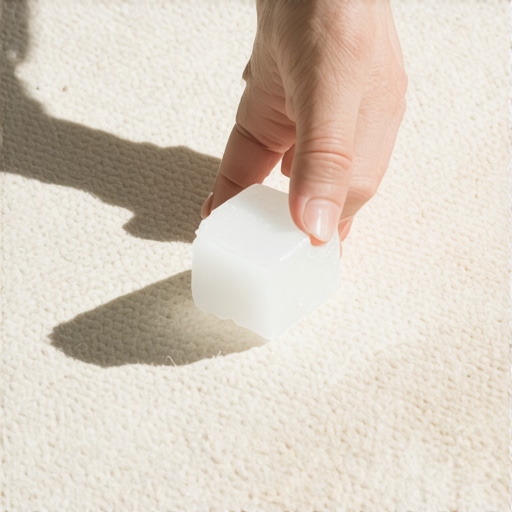
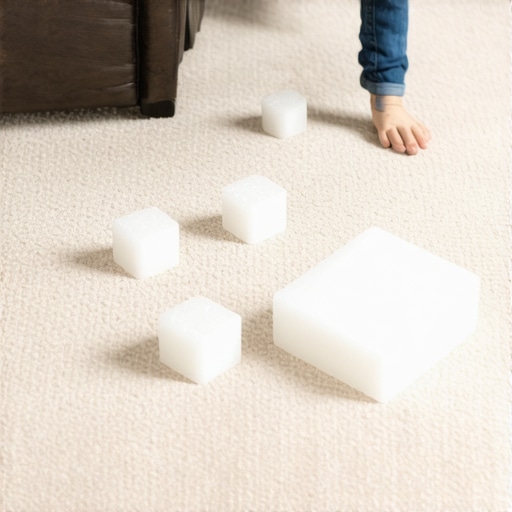
Removing furniture dents using the ice cube hack involves placing frozen water directly into the carpet depression and allowing it to melt completely over several hours. This slow saturation ensures that the moisture reaches the primary backing and the latex adhesive layer, which is where the fiber memory is officially stored and reset. Start by placing enough ice cubes to fill the crater. Do not overdo it. You do not want a puddle that reaches the subfloor, especially if you have a wood subfloor that might rot or a laminate floor nearby that will swell. Let it sit for at least four hours. As the water enters the fiber, it breaks the temporary bonds holding the yarn in its crushed shape. Once the ice is melted, use a clean, white towel to blot up the excess. Never rub. Rubbing creates friction that can fray the tips of the yarn, a condition we call ‘blooming.’ After blotting, use the edge of a spoon or a professional carpet groomer to gently lift the fibers back up. The yarn will be soft and pliable. If the dent is particularly stubborn, you can use a hair dryer on a low setting while you brush. The combination of moisture and heat is the gold standard for fiber recovery. If the carpet is old and the latex backing has become brittle, be careful. Too much moisture can cause the backing to crumble.
| Fiber Type | Resilience Rating | Recovery Method | Acclimation Time |
|---|---|---|---|
| Nylon 6,6 | Excellent | Ice + Light Heat | 24 Hours |
| PET Polyester | Moderate | Steam Extraction | 48 Hours |
| Triexta (SmartStrand) | High | Ice + Agitation | 12 Hours |
| Olefin (Polypropylene) | Low | Professional Grooming | 72 Hours |
Comparing steam versus ice for resilient yarn
Steam cleaners and professional heat extractors offer a faster thermal reset for carpet fibers than the ice cube method, but they carry a higher risk of fiber melting or adhesive delamination. A commercial steamer can reach temperatures that exceed the glass transition temperature of certain synthetic polymers, making it a tool that requires technical expertise and precision. I have seen guys ruin a five thousand dollar rug by getting too aggressive with a steamer. If you hold a steam head over a polyester carpet for too long, you will literally melt the plastic. The ice cube method is the ‘slow and low’ approach. It is safer for the DIY homeowner. However, if you are dealing with a whole room of furniture dents after a renovation, ice cubes are impractical. You need a professional truck-mount unit. The heat from a truck-mount system reaches about two hundred degrees. This heat, combined with high-pressure suction, pulls the fibers back into a vertical state while removing the soil that often acts as a glue, keeping the dent stuck. If your carpet is dirty, an ice cube will just turn the dust in the dent into mud. Clean the carpet first. Then address the dents. If you are working near showers or bathrooms, be mindful of the transition strips. Moisture can migrate under the laminate or tile, causing the tack strip to rust or the subfloor to swell.
- Check the density of the carpet pad before attempting deep moisture recovery.
- Verify that the carpet is power stretched to NWFA standards to prevent ripples after wetting.
- Use a stainless steel spoon or a specialized carpet bone for fiber agitation.
- Ensure the area is fully dry before placing furniture back, or use plastic tabs.
- Avoid using ice cubes on handmade silk or wool rugs without testing colorfastness.
Structural subfloor issues that look like carpet failure
Subfloor leveling and moisture barriers are often overlooked in carpet installations, leading to uneven wear patterns and permanent indentations that mimic furniture damage. A deflection in the plywood subfloor or a hump in the concrete slab will cause the carpet pile to crush prematurely in specific zones, regardless of furniture placement or maintenance routines. Heat is key. But heat cannot fix a bad floor. I have had clients complain about ‘dents’ that were actually just low spots in the house’s framing. If the joists are sagging, the carpet will follow that curve. When you walk over it, you are hitting the ‘shoreline’ of that dip, which grinds the fibers down faster. If you are planning a new carpet install, do not let the salesperson talk you out of floor prep. If the floor is not within one eighth of an inch over ten feet, you will see it. In the world of showers and wet rooms, I see this all the time. Water leaks from a poorly waterproofed curb and gets under the carpet in the bedroom. The moisture causes the carpet backing to swell and then shrink, creating a permanent ‘dent’ that no ice cube can fix. It is a structural failure. Always check your perimeter for moisture before you blame your sofa for the state of your floors. Good flooring is an assembly. It is the subfloor, the adhesive, the pad, and the top layer working as one unit. When one part fails, the whole system is compromised.
“Deflection is the enemy of every joint, and moisture is the slow poison of the subfloor.” – TCNA Technical Bulletin
The long term maintenance of your carpet determines the resale value of your home. You cannot just vacuum and hope for the best. You need to understand the chemistry of what you are walking on. If you have a high traffic zone, rotate your furniture every six months. This prevents the polymer chains from taking a permanent set. It also distributes the wear across the subfloor. If you are using laminate in adjacent rooms, make sure your transitions are zero-threshold or use a slim profile T-molding. Bulky transitions cause people to trip and apply more downward force on the carpet edge, leading to edge-crush. I have spent my life looking at floors from an inch away. I see the physics that homeowners ignore. The ice cube trick is a great tool for your kit, but it is just a bandage if your padding is weak or your subfloor is uneven. Treat your floor like the structural engineering challenge it is, and it will last thirty years. Treat it like a cheap rug, and you will be calling me to rip it out in five. The choice is yours, but the science never lies. Ensure that every moisture barrier is taped and every seam is sealed. That is the difference between a master and an amateur.