How to tell if your subfloor leveler needs a second coat
I spent three days grinding concrete on a job last month just so the floor wouldn’t click like a castanet. Most guys skip the leveling compound. They think the underlayment will hide the dip. It won’t. I have seen fifteen thousand dollar wide-plank installs ruined because someone thought a single bag of self-leveler was a magic wand. You want to know if you need a second coat. The truth is usually found in the physics of surface tension and the unforgiving reality of a straightedge. If you can see light under your level or if the surface looks like a moon crater after the first pour, you are not done yet.
The 1/8 inch that ruins everything
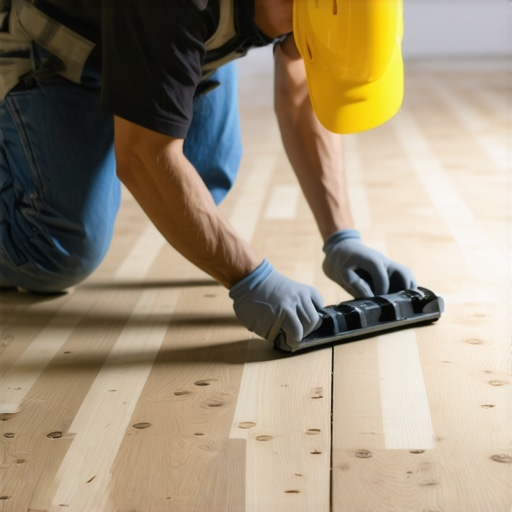
Subfloor levelness is measured by flatness tolerances across a specific radius, typically 1/8 inch over 10 feet for laminate and hardwood. If your first coat of self-leveling underlayment still shows dips, valleys, or deflection when checked with a box beam level, a second pour is mandatory to ensure structural integrity.
When you pour that first batch of calcium aluminate or Portland-based leveler, the liquid follows the path of least resistance. It is physics. If your subfloor has a massive pitch or a deep belly, that first pour might just settle into the bottom of the canyon without reaching the rim. I see this often in older homes where the joists have settled. You pour four bags, and it looks like a puddle in the middle of a desert. You need to understand that leveler is not a floor in itself. It is a remedial substrate. If you are installing a click-lock laminate, any deviation greater than the manufacturer’s spec will cause the tongue and groove joints to flex. Over time, that flex leads to friction. Friction leads to noise. Eventually, the locking mechanism snaps. Now you have a floating floor that actually floats away from the subfloor. That is a failure you cannot fix without tearing the whole thing out.
“A floor is only as good as the subfloor beneath it; deflection is the enemy of every joint.” – Master Flooring Axiom
Why your subfloor is lying to you
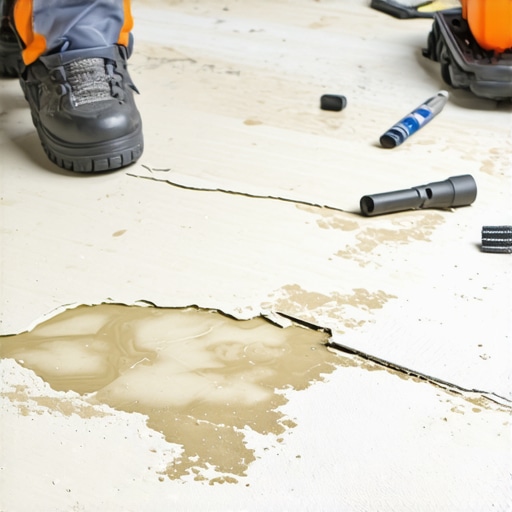
Surface porosity and absorption rates often cause self-leveling compound to sink or shrink during the hydration process. A porous concrete slab can suck the moisture out of the leveler too quickly, causing it to form pinholes or divots that require a secondary application of primer and compound.
Think about the molecular level. Concrete is a sponge. If you did not use a high-quality acrylic primer before that first pour, the slab grabbed the water from your mix. This ruins the flow characteristics. The leveler stops moving before it finds its own level. You end up with a surface that is smoother than the old concrete but still not flat. You can tell this happened if the surface looks chalky or if you see tiny bubbles. Those bubbles are air escaping the slab. A second coat is the only way to bury those imperfections. I always tell people to check for birdbaths. Take a handful of water and splash it on the dried leveler. If it pools in a specific spot, you have a low point. That low point will be the death of your flooring install if you ignore it.
The ghost in the expansion gap
Perimeter isolation strips and expansion gaps must remain clear and unobstructed during the leveling process to prevent hydrostatic pressure issues. If the first coat of leveling agent has slumped away from the walls or created high spots at the threshold, a second pass is required to feather the transitions and maintain level plane.
| Flooring Type | Flatness Requirement (10 ft) | Maximum Deflection | Acclimation Time |
|---|---|---|---|
| Solid Hardwood | 3/16 inch | L/360 | 7 to 14 days |
| Engineered Wood | 1/8 inch | L/480 | 3 to 5 days |
| Laminate / LVP | 1/8 inch | L/480 | 48 hours |
| Ceramic Tile | 1/8 inch | L/360 | N/A |
Many installers think carpet install is the only time you can be lazy. That is a lie. Even with a thick pad, a bad subfloor will show through. You will feel that dip every time you walk across the room. It feels like the floor is giving way. In showers, the stakes are even higher. If you are leveling a subfloor before a shower pan or tile, you are dealing with the Tile Council of North America standards. There is no room for error there. Lippage in a shower is a trip hazard and a drainage nightmare. If your first coat of leveler didn’t give you a perfectly flat plane for your waterproofing membrane, you pour again. You don’t