How to Stop Your Carpet from Fraying at the Bathroom Door
The smell of contact cement and the fine grit of pulverized concrete are the hallmarks of a job done right. I spent thirty years fixing floors that others treated like disposable wallpaper. A carpet fraying at the bathroom door is not a minor cosmetic annoyance. It is a structural failure of the transition system. Most guys skip the leveling compound. They think the underlayment will hide the dip. It won’t. I spent three days grinding concrete on a job last month just so the floor wouldn’t click like a castanet because someone thought a 1/4 inch deviation was acceptable. It is not. When your carpet starts to unravel where it meets the tile or laminate of a bathroom, you are looking at the death of the primary backing due to mechanical shear and moisture infiltration.
The friction point of bathroom transitions
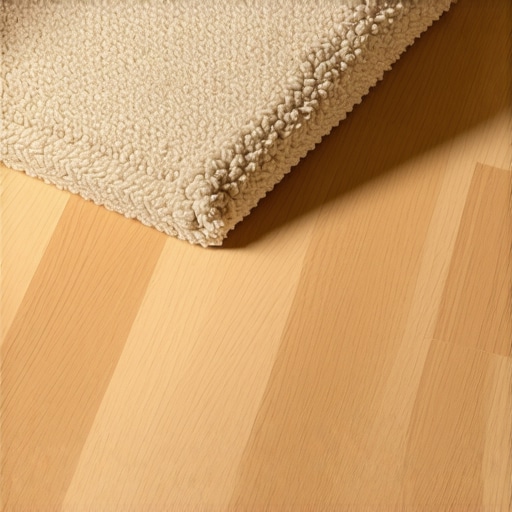
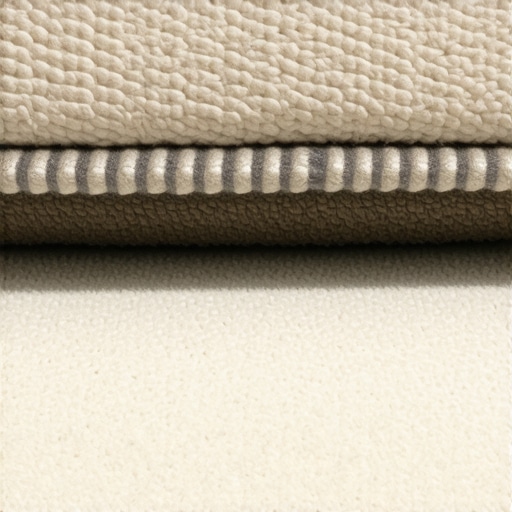
To stop carpet from fraying at the bathroom door you must secure the raw edge using a transition strip or a Z-bar that tucks the carpet pile under a protective metal or vinyl lip. This prevents the door sweep from catching fibers and stops the latex backing from delaminating due to high humidity. The primary cause of this failure is the lack of a proper tensioning point. Carpet is a flexible textile under constant tension. When that tension is released at a doorway, the weave begins to relax. If the edge is exposed, the walking traffic and the air pressure from the door closing create a localized vacuum that pulls at the individual tufts. This is not just a surface issue. It is a chemical breakdown. The SBR latex used to bond the secondary backing to the face fibers is susceptible to hydrolysis. In a bathroom environment, steam and moisture penetrate the edge, softening that glue until the fibers simply slide out of their sockets.
The physics of the transition strip
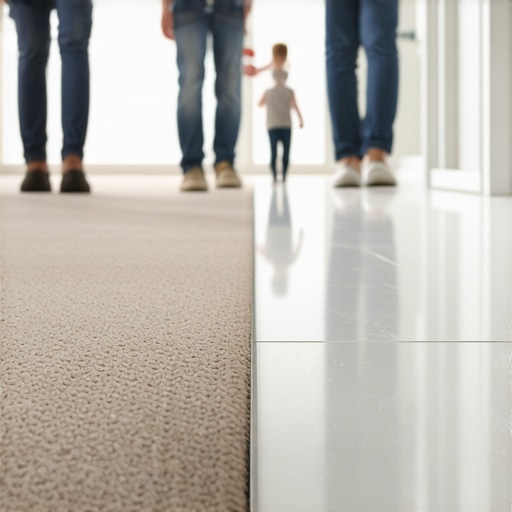
A transition is not a piece of trim. It is a structural anchor. When you install a carpet next to a hard surface like tile or laminate, you are joining two materials with completely different expansion coefficients and vertical heights. The carpet must be stretched to a specific rate of two percent across its length and width. If the transition at the bathroom door does not provide a mechanical lock, that stretch is lost. I have seen thousand dollar installs ruined because the installer used a cheap adhesive instead of a mechanical fastener. You need to understand the PSI exerted by a standard power stretcher. If your tack strip is not anchored into the subfloor with the correct penetration depth, the whole system collapses toward the weakest point, which is usually that bathroom door edge.
“A floor is only as good as the subfloor beneath it; deflection is the enemy of every joint.” – Master Flooring Axiom
The ghost in the expansion gap
Laminate and hardwood require expansion gaps. Carpet requires a tuck. When these two needs meet at a bathroom door, most people leave a gap that is far too wide. This gap becomes a collection point for moisture and dust. Dust is abrasive. Under a microscope, household dust looks like shards of glass. As people step on the transition, those shards grind against the nylon or polyester fibers of the carpet. This is called mechanical wear, and it is the secondary reason for fraying. You must ensure that the transition strip covers the edge completely. A 1/8 inch gap is the difference between a floor that lasts twenty years and one that looks like a dog chewed it within six months. The subfloor must be perfectly level here. If there is a dip, the transition strip will flex. Every time it flexes, it acts like a pair of scissors on the carpet edge.
| Transition Type | Grip Strength | Moisture Resistance | Subfloor Compatibility |
|---|---|---|---|
| Aluminum Z-Bar | Excellent | High | Concrete and Wood |
| Vinyl Transition Strip | Medium | Very High | Plywood Only |
| Nap Lock Bar | High | Medium | Universal |
| T-Molding | Low | Low | Laminate to Tile |
The chemical bond of modified thinset
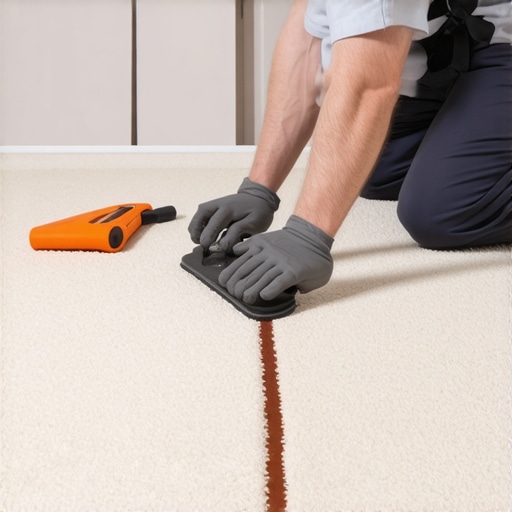
When dealing with showers and wet areas, the moisture barrier must extend under the carpet transition. I see this mistake daily. The installer stops the waterproofing at the tile edge. This is a disaster. Capillary action pulls water from the bathroom floor under the transition and into the carpet padding. This creates a petri dish of mold and slowly dissolves the adhesives holding the carpet together. You need to use a high quality seam sealer on the cut edge of the carpet. This is a specialized polymer that coats the raw ends of the yarns. It creates a monolithic edge that cannot be pulled apart. Think of it like the plastic tip on a shoelace. Without it, the whole thing is destined to unravel. This is where the chemistry of the installation becomes more important than the aesthetics.
The 1/8 inch that ruins everything
Precision is not optional. If the transition strip sits too high, the door will catch it. If it sits too low, it won’t hold the carpet. This is why floor leveling is the most skipped yet most vital step of a carpet install. You cannot expect a piece of thin aluminum to bridge a gap in the subfloor. I use a straight edge on every doorway. If I see light under that level, the leveling compound comes out. You want a transition that is flush with the hard surface and creates a slight compression on the carpet side. This compression is what keeps the fibers from moving. Movement is the father of fraying. If the fiber cannot move, it cannot fray.
“Correct moisture testing in concrete slabs is the only way to guarantee adhesive performance over the life of the floor.” – Master Flooring Axiom
- Inspect the door sweep clearance to ensure it does not drag on the transition.
- Apply a bead of professional grade seam sealer to every cut edge.
- Use a power stretcher to ensure the carpet is taut before tucking into the gullet.
- Ensure the tack strip is placed exactly one half the thickness of the carpet away from the transition.
- Vacuum the gullet before tucking to remove any debris that could prevent a solid seat.
Why your subfloor is lying to you
Subfloors look flat. They are not. Plywood seams swell. Concrete slabs have birdbaths. When you are installing carpet, these imperfections are hidden until you hit a transition point. A bathroom door is a high traffic zone. Every step taken there applies hundreds of pounds of pressure per square inch to a very small area. If the subfloor is not rigid, the carpet backing will delaminate from the stress of bending. This is why I advocate for a rigid transition. Don’t use those flimsy peel and stick strips. They are a joke. You need a mechanical fastener that bites into the subfloor. If you are on concrete, that means drilling and using anchors. If you are on wood, it means using ring shank nails that won’t back out over time. This is the difference between a professional and a handyman.
The surgical repair of a frayed edge
If the fraying has already started, you have to be precise. You cannot just glue it down. You must trim the loose yarns with a sharp blade. Don’t pull them. Pulling a loose yarn is like pulling a thread on a sweater. You will unzip the entire row. Once the loose fibers are gone, you need to re-stretch the carpet. This is the part people hate because it requires a knee kicker or a power stretcher. You have to bring fresh, undamaged carpet to the transition point. Then you cut it fresh and seal it. If you don’t have enough carpet to reach, you have to install a wider transition strip. It is a game of millimeters. The goal is to hide the damaged backing and create a new, sealed edge that can withstand the humidity from the shower and the friction of the door.
The final word on edge stability
Stopping the fray is about controlling the environment and the mechanical forces at play. You are fighting moisture, friction, and tension. By using a Z-bar or a properly anchored nap lock, you create a fortress for the carpet edge. Use seam sealer like your life depends on it. Level the subfloor until it is perfect. Treat the transition as the most important part of the room because it is the part that will fail first if you are lazy. A floor is a structural system, and the doorway is the bridge. If the bridge is weak, the whole system fails. Keep your tools sharp and your transitions tight. That is the only way to keep a carpet where it belongs. Do not let the simplicity of a transition fool you into thinking it is easy. It is the signature of a master installer.