The ‘Ice Cube’ Hack for Removing Heavy Furniture Dents from New Carpet
The Ice Cube Hack for Removing Heavy Furniture Dents from New Carpet
Most guys skip the leveling compound. They think the underlayment will hide the dip. It won’t. I spent three days grinding concrete on a job last month just so the floor wouldn’t click like a castanet. My knees still feel the vibration of the diamond cup wheel. I smell like WD-40 and oak dust most days. People think flooring is just about what looks pretty. They are wrong. It is about the structural integrity of the surface you walk on every single day. When a homeowner calls me crying because their five thousand dollar couch left a permanent crater in their brand new plush nylon, I do not tell them to buy a new rug. I tell them to go to the freezer. This is the reality of fiber memory and molecular restoration.
The molecular recovery of nylon carpet fibers
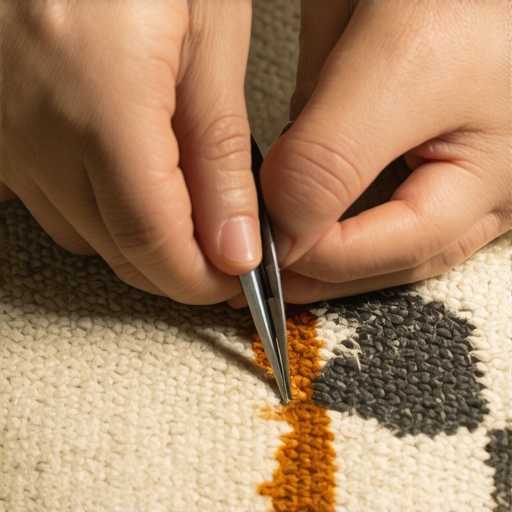
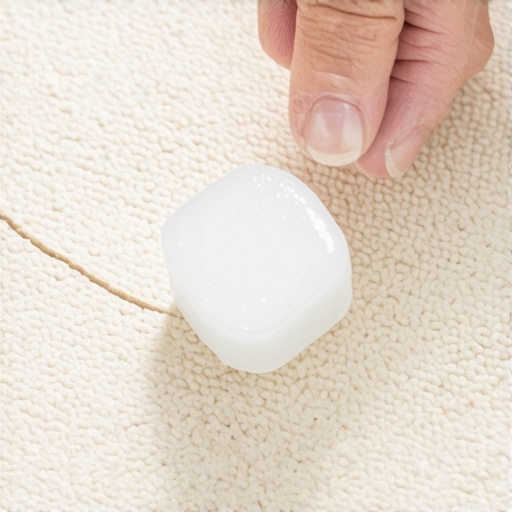
Nylon and polyester carpet fibers possess a resilient molecular structure that allows them to return to their upright position after being crushed. When an ice cube melts into the dent, the water molecules penetrate the fiber core and break the temporary hydrogen bonds holding the pile down. This resets the fiber. The physics of this process relies on the slow release of moisture. A spray bottle just wets the tips. An ice cube provides a sustained drip that reaches the primary and secondary backing of the carpet install. This is where the crimp of the yarn is held. If you do not reach the backing, the dent will return. I have seen guys try to use a steam iron and melt the plastic fibers. Do not do that. You will fuse the nylon into a permanent hard puck of plastic. Use the cold method. It is safer for the chemical bonds of the synthetic polymers.
Subfloor leveling failures that ruin carpet installs
Floor leveling is the most overlooked phase of a professional flooring project. If the subfloor has a deviation of more than one eighth of an inch over a ten foot span, the carpet will eventually show ripples and the padding will degrade faster in the low spots. I have walked onto jobs where the installer just threw down the pad over a dip. Within six months, the carpet stretched. It looked like waves in the ocean. You need to use a high-flow self-leveling underlayment. It must be polymer-modified to ensure it sticks to the plywood or concrete. Without it, your carpet install is a ticking time bomb. I use a straight edge and a flashlight. If I see light under the level, I am not laying a single yard of goods until that hole is filled with compound. It is about the grind. It is about the prep.
Laminate flooring and the expansion gap reality
Laminate flooring requires a specific perimeter expansion gap to account for seasonal changes in humidity and temperature. This gap must be at least one quarter of an inch around all vertical obstructions to prevent the planks from peaking or buckling when the HDF core expands. Many DIY installers make the mistake of pushing the laminate tight against the baseboard. It will buckle. I have seen entire floors lift off the ground like a tent because someone forgot the gap. The core of laminate is essentially compressed sawdust and resin. It reacts to moisture. If you live in a humid climate, that floor is growing. If you lock it in, the locking mechanisms will snap under the pressure. I always use spacers. I never trust my eyes. The physics of wood expansion is a force of nature that no glue can stop.
“A floor is only as good as the subfloor beneath it; deflection is the enemy of every joint.” – Master Flooring Axiom
The chemistry of moisture barriers in showers
Shower installations and flooring are linked by the management of moisture and vapor transmission. A failure in the waterproofing membrane of a shower will lead to subfloor rot that eventually destroys the carpet or laminate in the adjacent room through capillary action. Moisture travels. It finds the path of least resistance. If your shower pan is not sloped a quarter inch per foot toward the drain, water will sit. It will seep into the thin-set. It will eventually find the transition. I have seen laminate floors three rooms away rot because a shower upstairs was leaking into the joist cavity. You must use a topical waterproofing system. Do not rely on just the cement board. Cement board is not waterproof. It is water stable. There is a massive difference. One holds water. The other lets it pass through to the wood framing.
Technical specifications for flooring materials
Understanding the numbers is the only way to ensure a floor lasts twenty years. I do not look at colors. I look at wear layers. I look at the mil thickness. I look at the density of the core. If the product does not have a high density fiberboard core, I do not want it on my truck. It is trash. It is builder-grade garbage that will fail the first time someone spills a glass of water.
| Material Type | Janka Hardness / Density | Moisture Resistance | Typical Lifespan |
|---|---|---|---|
| Solid White Oak | 1360 lbf | Low | 100+ Years |
| High-End Laminate | AC4 / AC5 Rating | Moderate | 15-25 Years |
| Plush Nylon Carpet | N/A (Resilient) | Low | 10-15 Years |
| Porcelain Tile | 7+ Mohs Scale | High | 50+ Years |
The ghost in the expansion gap
The expansion gap is a silent necessity that many homeowners find ugly. They want the floor to go under the baseboards without any transition strips. In large open plans, this is impossible without risking structural failure of the floor locking system. I hate T-moldings as much as the next guy. They are bulky. They catch toes. But they are a tool. If your run is longer than thirty feet, you need a break. The floor needs to breathe. It is a living thing. It moves. If you pin it down with a heavy kitchen island or a wall-to-wall bookshelf, you are killing it. I once saw a floor rip itself apart because a homeowner bolted a pool table through the laminate into the concrete. The floor tried to expand. It couldn’t. It exploded. Use the ice cube hack for your carpet dents, but use your brain for your floor layout.
Checklist for a professional carpet install
- Check subfloor for moisture content using a pin-type meter
- Verify the floor is level within one eighth of an inch
- Install tack strips with a architectural-grade offset
- Select a high-density rebond pad with a minimum of eight pounds
- Power stretch the carpet in four directions to prevent future ripples
- Seal all seams with a professional grade seaming tape and iron
- Trim the pile at the transitions to ensure a clean tuck
Why your subfloor is lying to you
Subfloors often look flat to the naked eye but harbor deep troughs and high peaks that only reveal themselves once a hard surface like laminate or tile is installed. These imperfections cause the floor to flex and eventually fail. You must use a straight edge. You must be diligent. I spend more time with a level than I do with a hammer. If the subfloor is plywood, check for delamination. If it is concrete, check for alkalinity. High PH levels in concrete will eat the adhesive of your floor leveling compound. It will turn it to dust. Then your floor will start to crunch. It sounds like walking on potato chips. It is the sound of a failed job. It is the sound of someone who didn’t do the chemistry homework.
“Deflection in the subfloor is the primary cause of grout failure and tile cracking in modern residential construction.” – TCNA Technical Manual
The 1/8 inch that ruins everything
Precision is the difference between a master and an amateur. A single eighth of an inch of height difference at a doorway can prevent a door from swinging or cause a trip hazard that leads to a lawsuit. I measure twice. I cut once. I calculate the stack height of the entire floor. This includes the subfloor, the leveler, the underlayment, and the finished material. If I am doing a carpet install next to a tile shower, the heights must match. I do not use those cheap metal transition strips. I use custom wood reducers or marble thresholds. It is about the craft. It is about making sure the transition is smooth. If you skip the leveling, you are skipping the quality. The ice cube hack works because it respects the fiber. You must respect the floor. It is the foundation of the home. It takes the most abuse. It deserves the most respect.