The ‘Flashlight’ Trick for Finding Hairline Stress Fractures in Your Garage Door Spring
The ‘Flashlight’ Trick for Garage Door Spring Inspection: Spotting Failures Before They Happen
It is a sound that no homeowner ever wants to hear. You are sitting in your living room, perhaps finishing dinner or watching a movie, when a thunderous “bang” echoes through the house. It sounds like a gunshot or a heavy sledgehammer hitting a concrete floor. The house might even shudder slightly. For many residents, this is the first and only warning that their bay area garage doors have suffered a catastrophic failure. When a garage door spring snaps, it releases years of stored kinetic energy in a single millisecond.
Suddenly, your car is trapped inside, the door is too heavy to lift manually, and you are facing the immediate need for garage door spring replacement. This is more than an inconvenience; it is a safety hazard and a significant disruption to your daily life. However, what if you could see the break coming weeks or even months in advance? Most homeowners ignore their garage systems until they stop moving, but there is a simple, five-minute preventative check that can save you from the stress of an emergency garage door repair.
In this guide, we will introduce you to the “Flashlight Trick” – a professional-grade inspection technique used by experts to identify hairline stress fractures in torsion and extension springs. While you should never attempt to fix garage door spring issues yourself due to the extreme tension involved, being able to diagnose the problem early allows you to schedule a garage door repair bay area service on your own terms, rather than in the middle of a Monday morning rush.
Why Hairline Fractures are the “Silent Killers” of Garage Doors
To understand why the Flashlight Trick is so effective, we must first understand the physics of the garage door system. Your garage door is likely the heaviest moving object in your home, weighing anywhere from 150 to over 400 pounds. The motor of your garage door opener is not designed to do the heavy lifting; its job is merely to provide the initial push and pull. The real work is done by the springs.
Torsion springs, located on a metal shaft above the door opening, operate under immense torque. Every time the door opens or closes, the metal coils are wound or unwound. This is known as a “cycle.” Most standard residential springs are rated for approximately 10,000 cycles. Over time, the constant stress causes the metal to undergo microscopic fatigue. This fatigue manifests as “hairline fractures” – tiny cracks that are often invisible to the naked eye under the standard, dim lighting of a typical garage.
These fractures are the “silent killers” of the industry. They weaken the structural integrity of the steel until it can no longer contain the tension. When the metal finally gives way, the spring doesn’t just break; it explodes. This can send metal shards flying or cause the door to crash down unexpectedly. Just as we use specific lighting techniques in other home maintenance areas – such as The ‘Flashlight’ Secret for Finding Low Spots in Concrete Floors – using light to reveal hidden defects in your springs is the key to preventative safety.
The Science of Spring Fatigue: Why They Snap
Why do springs fail in the first place? It isn’t just about the number of times you use the door. Several environmental factors accelerate the degradation of the metal:
- Oxidation (Rust): Rust is the primary enemy of spring longevity. As rust develops between the coils, it creates friction. This friction adds unnecessary stress to the metal every time the spring moves, leading to premature cracking.
- Temperature Fluctuations: In the Bay Area, we experience varying humidity and temperature shifts. Metal expands and contracts with these changes. Rapid shifts can make the steel more brittle over time.
- Lack of Lubrication: Without regular silicone-based lubrication, the coils rub against each other, wearing down the thickness of the wire.
Before a total break occurs, the metal will always show signs of distress. These signs are often masked by the dark, oily surface of the spring. For businesses, the stakes are even higher, as commercial garage door repair is often necessitated by much higher cycle counts, making regular inspection a matter of workplace safety and operational continuity.
Step-by-Step: How to Perform the ‘Flashlight’ Trick
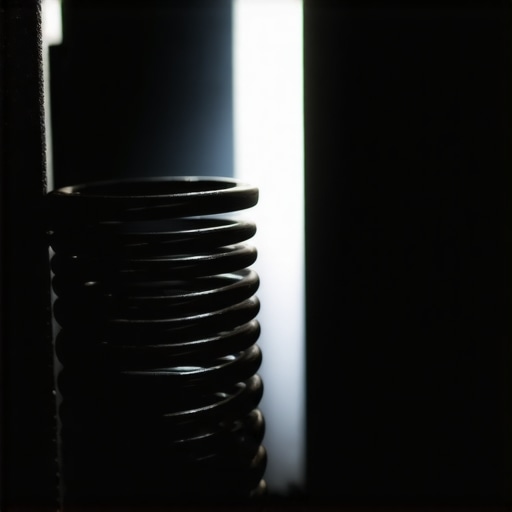
The “Flashlight Trick” relies on a principle called oblique lighting. By hitting a surface with light at a very low angle, you create long shadows that accentuate textures, cracks, and imperfections that would be invisible if the light were shining directly onto the object. Here is how to perform the inspection safely:
1. Safety First
Ensure the garage door is fully closed. Never inspect a spring while the door is in motion or in the open position. If a spring snaps while the door is up, the door could fall instantly. For added safety, unplug the garage door opener so no one else in the house can accidentally activate it while you are near the springs.
2. Create the Ideal Environment
Turn off the overhead garage lights. The darker the garage, the more effective the flashlight will be. You want to eliminate “flat” light that fills in shadows. If your garage has windows, perform this check at dusk or at night.
3. Use the Right Tool
You need a high-lumen LED flashlight. A smartphone light is usually too diffused and weak for this purpose. A tactical-style flashlight with a focused beam is ideal.
4. The Oblique Lighting Technique
Position yourself on a sturdy ladder (if inspecting torsion springs) but stay at a safe distance – do not put your face directly in front of the spring. Hold the flashlight at a **low angle** against the side of the spring coils, shining the beam along the length of the spring rather than directly at it.
5. What to Look For
As you move the light along the coils, look for the following:
- Jagged Shadows: A healthy spring coil should look smooth and rounded. If you see tiny, jagged shadows or “shimmering” lines that cut across the grain of the metal, you are looking at a hairline fracture.
- The “Gap” Check: Use the light to look for “daylight” between coils. Torsion springs should be tightly wound. If the light reveals uneven gaps or areas where the coils look “stretched,” the metal has lost its elasticity.
- Pitting: Look for small craters or rough patches. This is a sign of deep corrosion that has begun to eat into the core of the spring.
If your inspection reveals any of these issues, you need garage door spring replacement immediately. Do not wait for the spring to fail completely, as this often leads to a more expensive fix garage door scenario where other components are damaged in the process.
Beyond the Flashlight: The ‘Two-Finger Test’ and Other Vital Checks
While the Flashlight Trick is excellent for spotting structural damage, it should be part of a broader diagnostic routine. Metal fatigue isn’t always visible; sometimes it manifests as a loss of tension. This is where you should integrate The ‘Two-Finger Test’ for Checking if Your Garage Door Spring Needs Immediate Replacement.
The Balance Test
To check the balance of your door, pull the emergency release cord (usually the red handle) while the door is closed. This disconnects the door from the opener. Manually lift the door to the halfway point and let go. A well-balanced door with healthy springs should stay in place or drift only slightly. If the door slams shut, your springs have lost their tension and are no longer supporting the weight. This puts massive strain on your motor, eventually requiring you to fix garage door opener components.
Auditory Cues
Listen to your door as it operates. Do you hear a rhythmic “clicking” or “popping”? This often indicates that the spring coils are “binding” or rubbing against each other because they are out of alignment or lack lubrication. If the door sounds like it is struggling, it might not be the spring at all; you may need garage door opener repair to address a failing gear kit or motor.
When the Trick Reveals Trouble: Next Steps for Homeowners
If you perform the Flashlight Trick and see those tell-tale jagged shadows, the most important thing you can do is stop using the door immediately. Every additional cycle is a roll of the dice. If the spring snaps while the door is halfway up, it can bend the vertical tracks, snap the cables, and burn out the opener motor.
The cost of delay is high. A simple spring swap is a standard maintenance task. However, if the spring fails and causes the door to fall, you may find yourself needing urgent garage door repair to replace the entire door panel or the track system. Furthermore, a failing spring often masks other issues. For instance, if the spring is weak, the cables often lose tension and jump off their drums, necessitating garage door cable repair in addition to the spring work.
In many cases, homeowners in the Bay Area find that the salt air and humidity contribute to a harsher environment for garage hardware. If your garage floor is also showing signs of wear, such as in cases where your polyurea garage floor coating is peeling, it is a sign that moisture levels in the garage are high – a major contributor to spring rust.
Why Professional Intervention is Non-Negotiable
We cannot emphasize this enough: Do not attempt to fix garage door spring issues yourself. While the Flashlight Trick is a DIY inspection, the repair is a job for a professional. Garage door springs are under enough tension to cause severe injury or even death if they are released improperly.
Professional technicians use specialized tools called winding bars to safely add or remove tension. They also understand the specific requirements of different systems. For example, some homes use the Wayne Dalton Torquemaster system, where the springs are contained inside a metal tube. In these cases, the flashlight trick is impossible, and a professional must perform a balance test and internal inspection.
When you hire a pro to fix garage door spring problems, they don’t just replace the part. A comprehensive service includes:
- Checking for garage door cable replacement needs.
- Inspecting the garage door rollers for flat spots.
- Ensuring the door hasn’t gone off-track, which would require garage door off-track repair.
- Lubricating all moving parts to extend the life of the new springs.
Regular maintenance is the key to avoiding the “gunshot” sound in the middle of the night. We recommend scheduling a professional garage door maintenance visit at least once a year to ensure all components – not just the springs – are in top condition.
The Long-Term Value of Preventative Inspection
In the world of home maintenance, knowledge is power. The Flashlight Trick is a perfect example of how a simple observation can prevent a major household crisis. By taking five minutes once a month to look at your springs under oblique lighting, you transition from a reactive homeowner to a proactive one.
Think of your garage door as an investment. Whether you have recently invested in a new garage door installation or you are maintaining an older system, the goal is the same: safety and reliability. A broken spring is more than just a broken part; it’s a broken schedule, a potential injury, and a security risk for your home.
If your flashlight reveals the “shimmer” of a crack or the “jagged shadows” of a fracture, don’t panic – be glad you caught it. Reach out to a specialist for garage door repair bay area services. Getting a professional to fix garage door issues early is always cheaper and safer than waiting for a total collapse.
Conclusion: Don’t Wait for the Bang
The “bang” of a snapping garage door spring is a sound you can avoid. By incorporating the Flashlight Trick into your monthly home maintenance routine, you can identify the warning signs of metal fatigue long before they lead to a catastrophe. Remember, your springs are the muscles of your garage door; when they are compromised, the entire system is at risk.
If your inspection reveals any signs of trouble – be it rust, gaps, or hairline fractures – it is time to call in the experts. Whether you need a standard garage door spring replacement or an urgent garage door repair because the door is already acting up, professional help is the only safe way forward.
Don’t let a failing spring leave you stranded. Keep your flashlight handy, keep your eyes open, and contact bayareagaragedoorrepairinc.com for all your garage door repair needs in the Bay Area. From garage door cable replacement to complex opener fixes, a proactive approach ensures your door stays on track and your family stays safe.