How to Fix That Annoying Squeak Under Your Laminate Planks
Most guys skip the leveling compound. They think the underlayment will hide the dip. It won’t. I spent three days grinding concrete on a job last month just so the floor wouldn’t click like a castanet. I remember the dust. It gets into your lungs even with a respirator. The homeowner thought I was wasting time. Then they walked on the finished product. Silence. That is the sound of a job done right. If your laminate is squeaking, it is because you or your installer took a shortcut. You ignored the physics of the subfloor. Now you have a friction problem. I smell like WD-40 and oak dust most days, and I can tell you that a squeak is just a symptom of a deeper structural failure. We are going to look at why your floor is talking back to you and how to shut it up for good.
The physics of the laminate friction squeak
Laminate floor squeaks occur when vertical movement causes friction between the tongue and groove locking mechanisms of the planks. This movement is typically the result of subfloor irregularities, expansion gaps being too tight, or hydrostatic pressure affecting the HDF core density and structural integrity. To fix the noise, you must eliminate the void beneath the plank or reduce the friction coefficient of the joint. It is a game of millimeters. If the floor can move, it will make noise. Laminate is essentially a picture of wood glued to a dense sawdust board. That board is incredibly rigid until it meets moisture or an uneven surface. When you step on a plank that sits over a dip, the locking joint acts like a hinge. It rubs. It groans. It clicks. You are hearing the sound of the locking system slowly destroying itself under the weight of your footsteps.
“A floor is only as good as the subfloor beneath it; deflection is the enemy of every joint.” – Master Flooring Axiom
Why your subfloor is lying to you
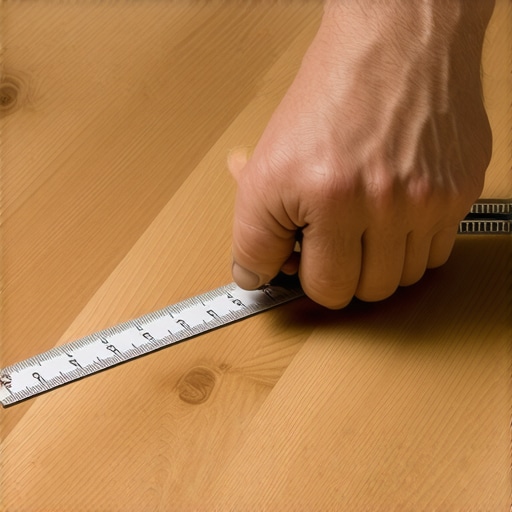
Floor leveling is the most ignored step in a laminate installation because it requires precision grinding or self-leveling underlayment application. A subfloor that looks flat to the naked eye often contains deviations greater than 3/16 of an inch over a 10-foot radius. These micro-undulations create suspension points where the laminate floats without support, leading to audible deflection noise and joint fatigue. I have seen guys throw down 2-millimeter foam and think it acts like a magic carpet. It does not. Foam has a compression set. Once it hits its limit, the plank hits the wood or concrete below. If there is a high spot, the plank teeters. If there is a low spot, the plank bows. Both scenarios lead to the same result. The friction in the click-lock system becomes a mechanical failure. You need to pull out a 10-foot straightedge. If you see light under that bar, you have a problem that no amount of fancy underlayment will fix.
The hidden danger of excessive underlayment cushion
Underlayment density is a factor that many homeowners misunderstand when trying to soundproof a floor. While a thick cushion might seem like a good idea for impact insulation class (IIC) ratings, excessive compressibility allows the locking joints to flex beyond their tensile strength limits. This over-flexing causes the HDF core to rub against the wear layer of the adjacent plank, producing a high-pitched creaking sound. You want a high-density, low-compression underlayment. Think of it like a car suspension. If the springs are too soft, the car bottoms out and scrapes the pavement. If the underlayment is too soft, your floor joints bottom out. I always recommend a high-density fiber or a rubber-based underlayment. These materials provide the necessary support to keep the joints locked in a neutral plane. If you bought the cheap blue foam from a big box retailer, you have already lost the battle against the squeak.
| Material Type | Compression Resistance | Acclimation Time | Best Use Case |
|---|---|---|---|
| High-Density Foam | Moderate | 48 Hours | Residential Bedrooms |
| Recycled Fiber | High | 72 Hours | Main Living Areas |
| Rubber Underlayment | Very High | 24 Hours | Multi-Family Housing |
| 6-mil Poly Film | N/A | None | Moisture Barrier Only |
The ghost in the expansion gap
Expansion gaps must be maintained at a minimum of 1/4 inch to 3/8 inch around the entire perimeter of the room to allow for thermal expansion and hygroscopic movement. If the laminate planks are installed tight against a baseboard or door casing, the floor becomes pressure-locked. This lack of movement space forces the floor to buckle slightly, creating hollow spots and frictional squeaks as the planks bind against each other. It will buckle. It is a mathematical certainty. Wood-based products expand when the humidity rises. If the floor has nowhere to go, it goes up. I once saw a floor that was so tight it had lifted three inches off the subfloor in the center of the room. The homeowner thought they had a ghost. It was just physics. You have to pull the baseboards. Check every edge. If that floor is touching a wall, you need to get a multi-tool and cut back the offending edge. A floating floor must actually float.
Surgical fixes for localized plank noise
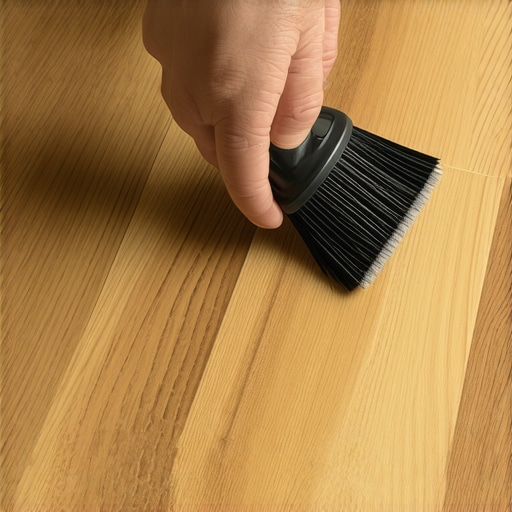
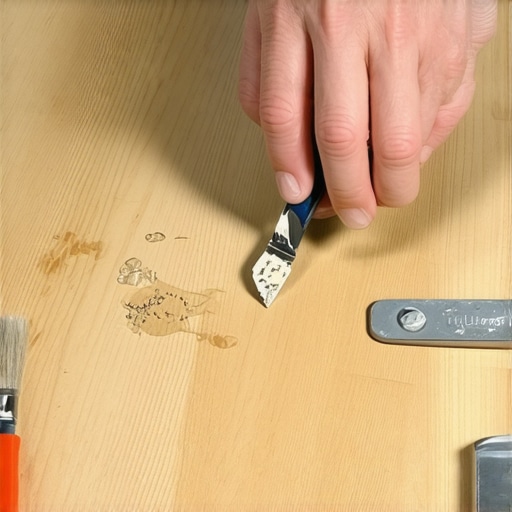
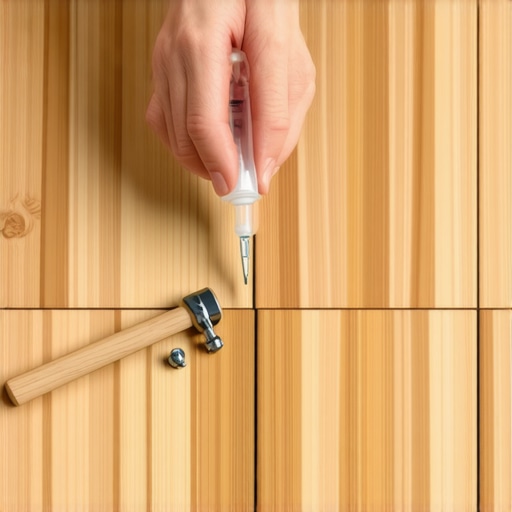
Fixing a squeak without tearing up the floor involves lubricating the joints or injecting specialized adhesives into the voids beneath the planks. Using a dry lubricant like PTFE powder or a specialized floor lubricant can reduce the coefficient of friction within the tongue and groove system. For hollow spots, injecting a low-expansion pressure-sensitive adhesive through a small pilot hole can provide the necessary structural support to stop the movement. I prefer the surgical approach when the floor is already finished and the baseboards are painted. You find the squeak. You mark it with a piece of blue tape. You can try to puff some graphite or talcum powder into the seam. Work it in with your foot. Sometimes that is enough to stop the rubbing. If it is a dip in the subfloor, you are looking at an injection kit. You drill a tiny hole, fill the void with a resin that hardens into a solid support, and then wax-fill the hole. It is not perfect, but it beats pulling up 500 square feet of flooring.
“Subfloor flatness is the single most critical variable in the longevity of a floating floor system.” – TCNA Technical Manual
The moisture trap and HDF swelling
Hygroscopic expansion of the High-Density Fiberboard core is often the root cause of persistent squeaking in laminate flooring. When relative humidity exceeds 60 percent, the wood fibers in the core absorb moisture and swell, changing the geometry of the locking joint. This swelling creates mechanical interference where the tongue no longer fits perfectly into the groove, leading to grinding noises during foot traffic. This is why acclimation is not a suggestion. It is a requirement. You cannot take a floor from a cold warehouse, throw it in a humid house, and click it together. The floor will fight you. You need to maintain a consistent environment. If you live in a swampy area, you need a dehumidifier. If you live in a desert, you might need a humidifier. The goal is stability. A stable floor is a quiet floor. When the core swells, the precision of the millwork is gone. You are left with two pieces of swollen wood rubbing together like sandpaper.
Checklist for a silent laminate installation
- Verify subfloor flatness within 3/16 inch over 10 feet using a mechanical straightedge.
- Acclimate all flooring planks in the installation environment for at least 48 to 72 hours.
- Install a 6-mil polyethylene moisture barrier over concrete slabs to prevent hydrostatic pressure.
- Maintain a consistent expansion gap of 3/8 inch around all vertical obstructions and walls.
- Select a high-density underlayment with a high compression strength to support locking joints.
- Use a tapping block and pull bar to ensure all joints are fully engaged without gaps.
- Check the moisture content of the wood subfloor to ensure it is within 2 to 4 percent of the laminate.
The 1/8 inch that ruins everything
Precision milling in modern laminate products relies on tolerances as tight as 0.1 millimeters. When an installer ignores a 1/8 inch deviation in the subfloor levelness, they are effectively asking the mechanical joint to span a structural bridge without architectural support. This creates stress concentrations at the thinnest point of the tongue, leading to micro-fractures and the inevitable squeak of failure. It sounds small. One eighth of an inch. But in the world of flooring, it is a canyon. If you do not fill that canyon with patching compound, the floor will fail. I have spent years fixing floors where the guy before me said it was good enough. It was not. Good enough is why your floor clicks when you walk to the kitchen at night. You have to be a stickler for the details. You have to be willing to spend the extra time on the prep. The finish work is easy. The prep is the hard part. That is what separates the masters from the hackers. If you want a silent floor, you have to earn it with a level and a bag of floor patch.