The ‘Tapping Block’ Mistake That Ruins Laminate Locking Systems
The structural reality of click joints
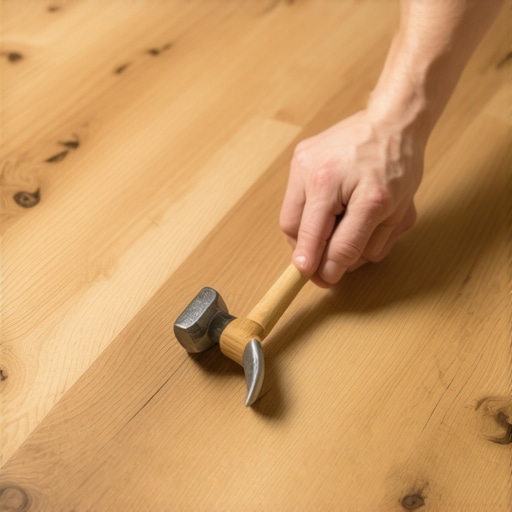
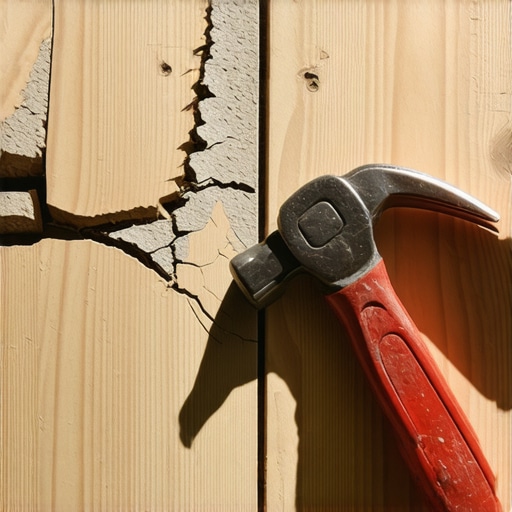
Laminate locking systems are precision-engineered mechanical joints that rely on High-Density Fiberboard stability to maintain structural integrity. When an installer applies excessive lateral force using a tapping block, the milled tongue suffers micro-fractures that compromise the tensile strength of the entire floor, leading to gapping and plank separation. I can tell you the exact moment an installation goes south just by the sound of the mallet hitting the block. It is a sharp, cracking sound that means you just turned a high-quality flooring plank into expensive kindling. I spent three days grinding concrete on a job last month just so the floor wouldn’t click like a castanet, and then the homeowner asked if I could just beat the boards together with a hammer. Most guys skip the leveling compound and think the underlayment will hide the dip. It won’t. If the subfloor is not dead flat, no amount of force with a tapping block will make those joints sit right. You are fighting physics, and physics always wins. When you use a tapping block, you are trying to overcome the friction of the locking profile. If that profile is misaligned because the floor is not level, the force of the hammer goes straight into the weakest part of the board: the thin, milled edge of the tongue. Once that fiberboard is crushed, the joint is dead. It might look tight today, but in six months, it will start to walk.
“A floor is only as good as the subfloor beneath it; deflection is the enemy of every joint.” – Master Flooring Axiom
The physics of impact damage
Mechanical locking mechanisms such as Uniclic or Valinge profiles are designed to engage at specific angles through a rotational movement or a drop-lock sequence. Using a heavy mallet and a tapping block creates a shear force that exceeds the compression limits of the HDF core, resulting in internal delamination and peaking at the seams. People think laminate is tough because of the wear layer. The wear layer is just the armor. The HDF core is the skeleton. If you break the skeleton, the armor doesn’t matter. When you strike a block too hard, you are sending a shockwave through the core. This shockwave creates microscopic cracks in the resin that binds the wood fibers together. This is why you see floors where the edges start to lift or ‘peak’ after a few months. It is not always moisture. Often, it is mechanical failure from the day of install.
| Material Property | HDF Core (Standard) | Locking Joint (Compromised) |
|---|---|---|
| Density (kg/m3) | 850-950 | Less than 600 |
| Tensile Strength | High | Fractured |
| Moisture Resistance | Nominal | Zero |
Why floor leveling determines longevity
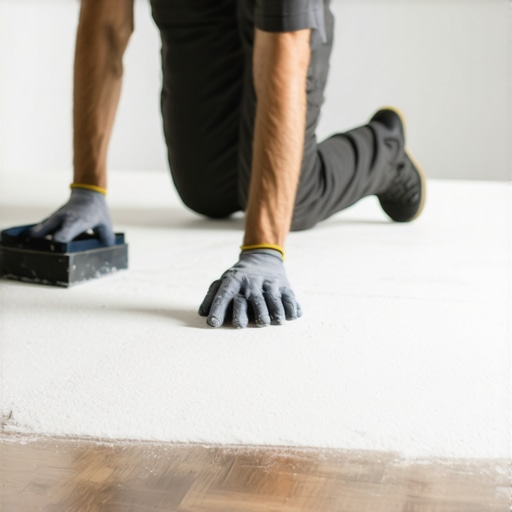
Floor leveling is the process of removing subfloor irregularities to meet the NWFA standard of 3/16 inch over 10 feet or 1/8 inch over 6 feet. Failure to address deflection in the substrate causes the locking joints to oscillate under foot traffic, eventually shearing the tongue and groove and leading to audible clicking. I see this constantly in modern construction. The builder throws down some OSB, it gets rained on during the build, the edges swell, and then someone tries to click a laminate floor over the top of it. You have to get the sander out. You have to get the level out. If you try to force a board over a hump by hitting it with a tapping block, you are just pre-loading the joint with stress. It is like a spring that is waiting to snap.
The moisture trap in modern substrates
Moisture vapor emission from a concrete slab must be measured using relative humidity (RH) probes or calcium chloride tests to ensure levels are below 75% RH. Without a proper 6-mil poly vapor barrier, the HDF core of the laminate will absorb hydroscopic moisture, causing the locking system to swell and eventually fail due to expansion pressure. This is where the chemistry comes in. The resins used in laminate are tough, but they aren’t waterproof. If the core swells even 1%, the geometry of the click joint changes. Now, if you used a tapping block to force those boards together when they were already tight, you’ve left zero room for that swelling. The floor has nowhere to go but up.
A technical comparison of flooring materials
Carpet install techniques involve tensioning the backing over tack strips, whereas laminate relies on a floating floor principle that requires a perimeter expansion gap. Unlike showers where waterproofing membranes like Schluter-Kerdi provide a hermetic seal, laminate joints are vulnerable to topical liquid if the locking profile has been damaged by improper tool use. When you do a carpet install, you want it tight. When you do a shower, you want it sealed. But when you do laminate, you want it floating. You are creating a giant wooden raft that needs to be able to move. If you pin it against a wall or a kitchen island, or if you ruin the joints by being too aggressive with your tools, the raft will break apart.
The correct approach to board engagement
Board engagement should be achieved through proper angle manipulation and gentle pressure rather than high-velocity impact. The tapping block should only be used as a last-resort alignment tool, and the mallet should be a non-marring dead-blow type to minimize vibration transfer to the fiberboard core.
- Check subfloor flatness with a ten foot straightedge
- Ensure the expansion gap is at least 3/8 inch around the entire perimeter
- Use a pull bar for the final row instead of trying to angle a block into the wall
- Verify that the locking profile is clear of debris or dust before engagement
“A floor is only as good as the subfloor beneath it; deflection is the enemy of every joint.” – Master Flooring Axiom
The 1/8 inch that ruins everything
Substrate flatness is the single most vital factor in the installation of floating floors. A 1/8 inch dip in the plywood or concrete creates a void that allows the laminate plank to flex downward, putting upward pressure on the locking joint of the adjacent board. This cyclic loading eventually leads to fatigue failure of the HDF fibers. This is why you cannot fix a bad floor with a bigger hammer. You fix it with self-leveling underlayment or by patching the low spots. The tool you use to install the floor is just as important as the floor itself. A cheap, plastic tapping block often has no ‘give,’ which means all the energy of your strike goes directly into the board. A professional-grade block made of high-density polyethylene or even a scrap piece of the flooring itself is often better, provided you know how to use it. You have to feel the joint engage. If you are swinging like you are at a carnival strength test, you are doing it wrong. The smell of the job site should be oak dust and perhaps a bit of adhesive, not the smell of scorched plastic from a block being beaten to death. Final assessment: if you focus on the subfloor and treat the locking joints like the precision instruments they are, your floor will last twenty years. If you don’t, I will be the guy you call in six months to rip it all out and start over.