How to fix a carpet that has come loose from the tack strip
The hidden mechanics of carpet tension and tack strip failure
I have spent twenty five years with my knees on the subfloor and the smell of WD-40 and oak dust in my nostrils. I have seen every way a floor can fail. Most guys skip the leveling compound. They think the underlayment will hide the dip. It won’t. I spent three days grinding concrete on a job last month just so the floor wouldn’t click like a castanet. That same laziness is why your carpet is currently pulling away from the wall. You cannot treat a carpet like a rug. It is a structural element under tension. When that tension fails, the floor is no longer a performance surface. It is a hazard. This happens because the installer didn’t understand the physics of the tack strip or the chemical reality of the subfloor moisture. Fixing it requires more than just pushing it back. You have to understand the anatomy of the secondary backing and the metallurgy of the pins that hold your room together.
The structural failure of the tension bond
Fixing a carpet that has pulled away from the tack strip requires re-establishing the tension bond between the secondary backing and the zinc plated pins. You must evaluate the integrity of the wood strip, ensure the subfloor is level, and use a power stretcher to achieve 1 to 1.5 percent stretch. This is not a cosmetic adjustment. It is an engineering correction. The carpet is a composite material made of a primary backing, a layer of SBR latex, and a secondary backing. When it comes loose, the secondary backing has often been shredded by the pins or the pins themselves have lost their bite due to oxidation or poor installation. If you live in a high humidity area like New Orleans or Houston, the moisture in the air softens the latex. This makes the carpet grow. As it grows, it loses tension. Eventually, it walks right off the pins. You need to identify if the strip is still anchored to the subfloor or if the concrete nails have popped. A loose strip is a useless strip. I have seen many DIY attempts where someone tried to glue the carpet down. That is a crime against the trade. Glue is for permanent bonds. Carpet needs to be under tension so it can expand and contract without rippling.
“A floor is only as good as the subfloor beneath it; deflection is the enemy of every joint.” – Master Flooring Axiom
Anatomy of the industrial tack strip
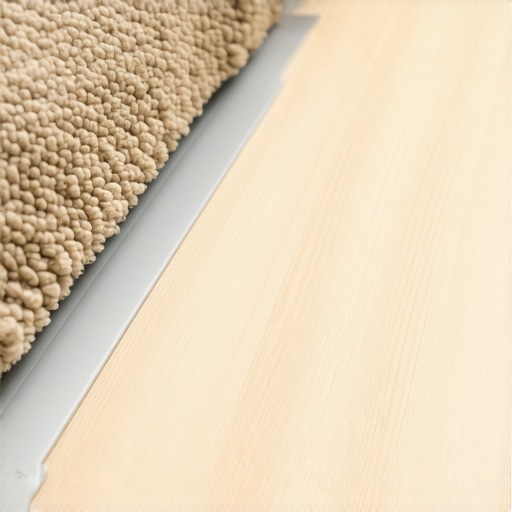
The industrial tack strip is a plywood lath specifically engineered with a density that allows it to hold angled pins at a sixty degree pitch. When a carpet comes loose, it is often due to the pins failing or the wood rotting from high subfloor moisture levels. You must inspect the strip for what I call the ghost in the gap. This is the space between the strip and the baseboard, usually exactly one quarter inch wide. If that gap is filled with dust or debris, the carpet cannot be tucked properly. The pins on a standard strip are made of heat treated steel. In a bathroom or a kitchen adjacent area, these pins can rust. Once they rust, they lose their sharpness. They no longer penetrate the polypropylene weave of the carpet backing. If the strip is black or soft, it has dry rot. You must pry it up and replace it. Do not try to reuse a rotten strip. It will not hold the 400 pounds of pressure a power stretcher exerts. You also need to look at the pins themselves. Are they ‘J’ pins or ‘Z’ pins? The angle is everything. If the pins are bent flat, they won’t catch anything. You might as well be trying to nail Jello to a wall.
The physics of the knee kicker vs power stretcher
A knee kicker is for positioning but the power stretcher is the only tool that provides the structural tension required to keep a carpet on a tack strip long term. Most amateurs and lazy pros rely only on the kicker, which leads to the carpet coming loose within a year. Think of the carpet like a giant rubber band. If you don’t stretch it enough, it won’t stay taut. The knee kicker only moves the carpet about two inches at the point of impact. It does nothing for the middle of the room. The power stretcher uses a long pole system that pushes against the opposite wall. It stretches the entire mass of the textile. This is vital for modern polyester carpets which have a higher elasticity than traditional nylon. If you don’t use a power stretcher, the carpet will eventually develop ripples. Those ripples create a trip hazard and lead to premature wear of the face fibers. I always tell homeowners that if their installer doesn’t bring a power stretcher into the house, they should send him home. It is that important. The force applied must be uniform across the entire perimeter. If you pull one corner more than the other, you will skew the pattern and cause the backing to delaminate.
| Knee Kicker | Perimeter positioning and small room tucks | 100 lbs impulse |
| Power Stretcher | Room wide structural tensioning | 500 lbs leverage |
| Tack Strip | Perimeter anchoring and tension retention | 300 lbs shear strength |
| Seam Iron | Molecular bonding of primary backings | 350 degrees Fahrenheit |
The 1/8 inch that ruins everything
The gulley between the tack strip and the baseboard must be exactly one eighth of an inch wider than the thickness of the carpet when compressed. If this gap is too tight, the carpet will pop out; if it is too wide, the edge will look frayed and unfinished. I have seen guys install tack strips right against the wall. That is a rookie mistake. The carpet needs a place to go. You tuck the excess into that gulley. This creates a friction lock. Between the pins holding the backing and the friction of the tuck, the carpet stays put. If your carpet has come loose, check if the gulley is packed with old padding or dirt. Clean it out with a shop vac and a stiff brush. If you are working on concrete, the strip is held by fluted nails. If those nails have vibrated loose, you need to use a high strength epoxy or masonry screws to reset the strip. Never use regular wood nails on concrete. They will pop the moment you apply tension. I once saw a whole room of expensive wool carpet ruined because the installer used the wrong nails on a slab with a high moisture emission rate. The nails rusted out in six months and the carpet looked like a discarded blanket.
Step by step restoration protocol
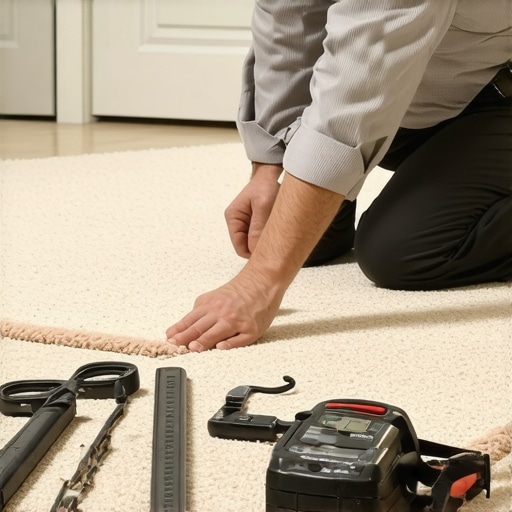
To fix a loose carpet, you must first clear the perimeter, inspect the tack strip integrity, replace damaged sections, and then use a power stretcher to re-engage the backing onto the pins before tucking the edge. It is a methodical process that cannot be rushed. You need to pull back about three feet of carpet to get enough slack to work with. If the backing is shredded, you may need to apply a thin bead of latex seam sealer to reinforce the edge. This prevents the pins from tearing through the same holes again. Here is the checklist I use on every repair job.
- Inspect the subfloor for moisture and levelness.
- Replace any tack strips showing signs of rot or rusted pins.
- Vacuum the gulley to ensure a deep, clean tuck.
- Align the power stretcher at a 15 degree angle to the wall.
- Apply tension until the carpet moves 1 percent of the room length.
- Drive the carpet onto the pins using a carpet awl or a stair tool.
- Trim the excess exactly 1/8 inch beyond the gulley edge.
- Tuck the edge firmly into the gap for a friction lock.
The concrete moisture trap
Concrete slabs are porous and constantly emit water vapor which can degrade the wood tack strip and the carpet backing over time. You must use a moisture meter to verify the slab is below 3 lbs per 1000 square feet before resetting any strips. In regions like the Pacific Northwest, this is a constant battle. If you ignore the moisture, your fix will be temporary. The wood will swell, the nails will loosen, and the carpet will fail again. I always use a synthetic tack strip or a pre-treated wood strip in basements. These are more resistant to the alkaline salts that come up through the concrete. If you see white powder under the carpet, that is efflorescence. It is a sign of high moisture. You need to seal the concrete before you put the carpet back down. Most people want the thickest underlayment, but too much cushion actually causes the locking mechanisms on LVP to snap or the carpet backing to stretch too far. It creates a trampoline effect. That movement is what pulls the carpet off the tack strip. You want a high density pad, not just a thick one. Density provides support. Support prevents the carpet from moving. Movement is the enemy of the tack strip.
“Deflection in the subfloor is the primary cause of premature textile failure; a stable base is not optional.” – TCNA Handbook Supplement
The chemistry of the backing adhesive
The SBR latex used to bond the primary and secondary carpet backings has a specific glass transition temperature and moisture sensitivity that dictates how it behaves under tension. When the latex fails, the carpet delaminates and loses its ability to stay hooked to the tack strip. This is common in cheap, builder grade carpets. They use less latex and more filler like calcium carbonate. This makes the backing brittle. If your carpet feels like it is crunchy or if white dust falls out when you pull it back, the backing is failing. You can’t really fix delamination. You can only patch it. If the carpet is still in good shape otherwise, you can apply a specialized backing consolidator. It is a liquid polymer that soaks into the backing and restores its flexibility. This allows the pins to get a good grip again. Without this, the pins will just cheese wire through the brittle backing the moment you put any tension on it. It is the difference between a floor that lasts five years and a floor that lasts twenty. I take pride in the chemistry. Most guys just want to kick it and quit. They don’t care about the molecular bond. But I do. Because I’m the one who has to come back and fix it when it fails. And I hate doing the same job twice.
The regional weather logic
Environmental factors such as the dry heat of Phoenix or the swampy humidity of Florida dictate the required tension and acclimation time for a carpet repair. A carpet installed in the winter will expand in the summer, requiring more initial stretch. If I am working in the desert, I know that carpet is as tight as it will ever be. In a humid climate, I have to over stretch it slightly because the fibers will relax as they absorb moisture. This is why you see so many loose carpets in the South. The installers don’t account for the expansion. They install it on a dry day and then the first time the AC goes out, the carpet grows half an inch. Now you have a trip hazard in the middle of the hallway. You also have to think about the subfloor temperature. If you have radiant heat, you cannot use standard tack strip nails. You will hit a pipe and then you have a flood on your hands. You have to use adhesive backed strips or specialized short pins. Every region has its own rules. If you don’t know the rules, you are just guessing. And guessing is how you end up with a floor that looks like a topographical map of the Andes. Stick to the standards. Use the right tools. Respect the physics of the floor.