The Mold Signs Your Sacramento Home Inspector Looks for Under the Bathroom Floor
The Mold Signs Your Sacramento Home Inspector Looks for Under the Bathroom Floor
The Sacramento real estate market of 2026 remains a complex landscape for buyers and sellers alike. While inventory has shifted, one thing remains constant: the weight of a professional inspection. Recent data from Redfin suggests that nearly 16.3% of home-purchase agreements are now canceled due to inspection findings – a record high that highlights the growing caution of modern buyers. As a specialist at Mold Inspection Service with over 25 years in construction and 7+ years of dedicated mold expertise, I’ve seen thousands of “perfect” homes reveal their secrets the moment we step into the bathroom. For a home inspector Sacramento residents trust, the bathroom floor isn’t just a surface; it’s a diagnostic map of the home’s structural health.
In this guide, I’ll take you through the specific red flags we look for when evaluating bathroom moisture. Whether you are preparing for a first time home buyer inspection or you are a seller in Midtown looking to get ahead of the game, understanding what lies beneath your tile or laminate is crucial. My name is Jason Ramirez, and I’ve spent my career learning exactly where the “bodies are buried” in a subfloor. Let’s look at why your bathroom floor is the primary battleground for mold and moisture in the Central Valley.
Why the Bathroom Floor is Ground Zero for Mold in Sacramento Homes
Sacramento’s climate presents a unique set of challenges for residential construction. We live in a valley characterized by intense summer heat, the cooling “Delta Breeze,” and concentrated winter rains. This cycle of expansion and contraction, combined with varying humidity levels, puts immense stress on plumbing and flooring seals. When I conduct a Sacramento home inspection, I consider the age of the neighborhood as much as the visible signs of wear.
In older neighborhoods like Land Park or East Sacramento, we often deal with lath-and-plaster walls and original crawlspaces. Here, moisture from a leaking toilet or shower pan can seep into old-growth redwood or Douglas fir subfloors, leading to slow-acting dry rot and hidden mold colonies. Conversely, in a Elk Grove home inspection for a property built in the early 2000s, we frequently find issues with OSB (oriented strand board) subflooring. OSB acts like a sponge; once it gets wet, it loses structural integrity much faster than plywood, creating the perfect breeding ground for Stachybotrys or Aspergillus.
My 25 years of construction experience have taught me that mold doesn’t just happen; it’s a symptom of a structural failure. Usually, that failure starts at the transition between the floor and the wet wall. In the Sacramento Valley, where indoor-outdoor temperature differentials can be extreme, condensation behind bathroom walls can combine with floor-level leaks to create a “mold sandwich” that stays hidden for years.
Visual Red Flags: What the Naked Eye Often Misses
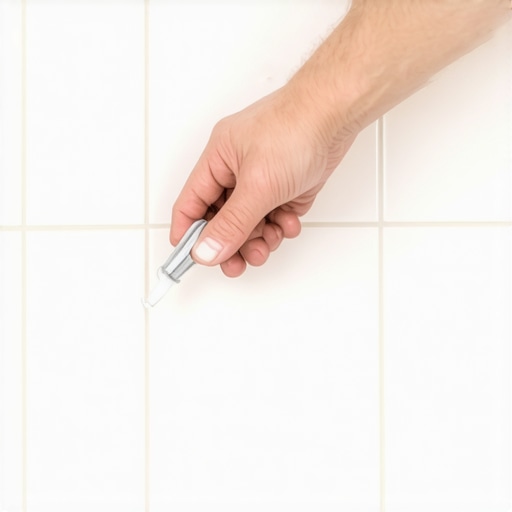
While some mold is obvious, the most dangerous infestations are the ones you can’t see at a glance. A professional home inspector Sacramento looks for the “whispers” of a moisture problem. One of the first things I check is the grout. If you notice grout lines that are darkening or turning black in specific spots – particularly near the base of the toilet or the edge of the shower – that is often a sign of moisture wicking up from the subfloor, not just surface dirt.
Another major red flag is baseboard “wicking.” If the paint on your bathroom baseboards is bubbling, peeling, or showing brown stains, it’s a classic sign of a subfloor leak. Moisture travels. It doesn’t just sit under the tile; it moves toward the walls. This is why stopping water from wicking up your bathroom drywall is so critical during a renovation. If I see “ghosting” – the faint outline of subfloor panels or nails showing through vinyl or laminate flooring – I know immediately that the material underneath has swollen due to high moisture content.
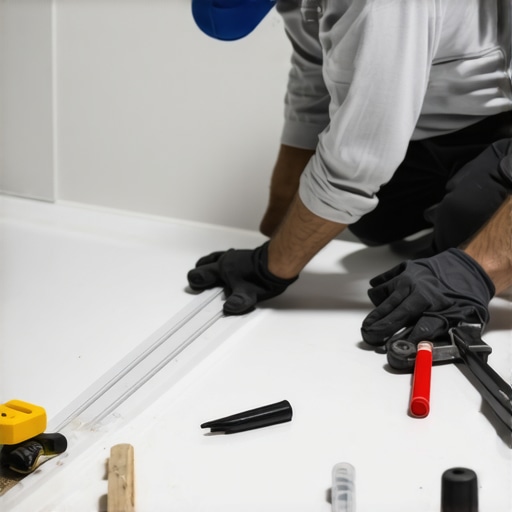
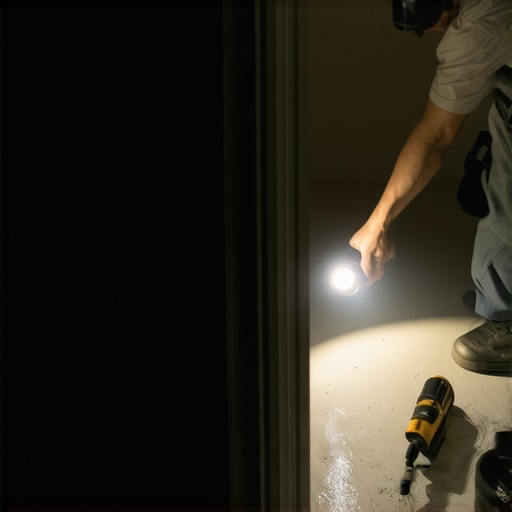
The Flashlight Method: One trick I use during a mold inspection sacramento is the low-angle flashlight test. By placing a high-powered LED flashlight flat against the floor, I can see “hills and valleys” that are invisible from a standing position. These undulations in the floor surface almost always indicate that the plywood or OSB underneath has begun to delaminate or swell from a hidden leak.
The Tactile Signs: Spongy Floors and “Crunchy” Steps
A bathroom floor should feel as solid as the foundation it sits on. During a first time home buyer inspection, I always perform a “walk-test.” I’m looking for deflection – the technical term for a floor that gives or bounces under weight. If you’ve ever wondered why your laminate flooring feels spongy in certain spots, it is rarely the laminate itself; it’s the subfloor losing its ability to hold a load.
In Sacramento’s newer builds, we often see “crunchy” steps. This is the sound of dried mold and mineral deposits rubbing against floor fasteners. If a floor feels soft near the toilet, it usually indicates a failed wax ring. Over time, that tiny drip-drip-drip rots the wood directly around the closet flange. I’ve seen cases where the only thing holding a toilet up was the strength of the tile and thinset, while the wood underneath had the consistency of wet cardboard.
The Cardboard Trick: If I suspect a dip but can’t quite prove it, I’ll slide a piece of thin cardboard or a business card under a straightedge laid across the floor. If the card slides through easily in the center of the bathroom, the subfloor is dipping. This “trough” is where water collects, and where mold will inevitably flourish. We see similar issues in kitchens, which is why your kitchen floor is suddenly spongy around the refrigerator – water follows gravity to the lowest point of the subfloor.
Professional Tools for a Deep-Dive Mold Inspection in Sacramento
A visual and tactile check is only the beginning. To provide a truly comprehensive mold inspection sacramento, we use technology that sees through the surface. As a home inspector Sacramento, I rely heavily on non-invasive moisture meters. These devices use radio frequencies to detect moisture up to an inch below the surface of the tile without needing to drill holes.
Thermal imaging is another game-changer. Using a FLIR (Forward-Looking Infrared) camera, I can identify “cold spots” behind the shower wall or under the floor. Since water evaporates, it cools the surface it’s on. A dark blue plume on my thermal screen in a room that is otherwise yellow and orange is a smoking gun for a hidden leak. This is especially useful for a Roseville home inspection where large, walk-in tile showers are common. These showers often look beautiful but can hide massive leaks in the pan or the curb.
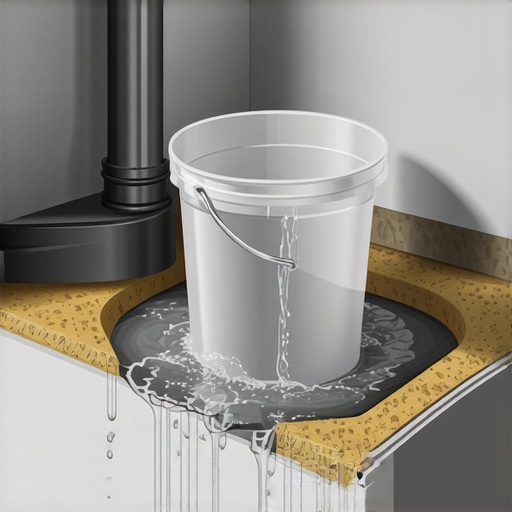
Finally, we use the “Tissue Test” or “Cardboard Test” for detecting hidden drain leaks. By placing absorbent materials in the crawlspace directly under the bathroom plumbing, we can find leaks that only occur when the drain is under “head pressure” (full of water). If you suspect a problem but can’t see it, learning how to find the leak under your shower drain without tearing up tile can save you thousands in unnecessary demolition.
Specific Failure Points: Showers, Toilets, and Thresholds
In my 25 years of construction, I’ve learned that mold follows a predictable pattern. There are three main culprits in every Sacramento bathroom:
- The Shower Curb: This is the #1 failure point. If the waterproof membrane wasn’t wrapped correctly over the curb, water will seep into the wooden framing and then travel under the bathroom floor. This is a primary reason why your shower curb is leaking onto the bathroom floor.
- The Toilet Seal: A wobbly toilet is a mold factory. Every time someone sits down, the wax ring is compressed and shifted. Eventually, the seal breaks. Because the leak is under the base of the toilet, you might not see water on the floor, but the subfloor is quietly rotting away.
- The Threshold: The transition between the bathroom tile and the hallway carpet or wood is a high-traffic area. If water splashes out of the tub and hits this transition, it can seep under the flooring and travel several feet into the hallway before showing signs of mold.
When I conduct a Sacramento home inspection, I pay extra attention to these transitions. In the Natomas area, where soil expansion can cause slight foundation shifts, these plumbing connections are under even more stress than usual.
What to Do if Your Sacramento Home Inspection Finds Mold
First, don’t panic. Finding mold during a home inspector Sacramento visit is common, and in most cases, it is entirely remediable. If I find moisture levels above 15-20% in your subfloor, that is the threshold where mold growth becomes active. At that point, a specialized mold test is the next logical step.
For buyers, a mold finding is a powerful negotiation tool. It allows you to ask for a credit or for the seller to perform professional remediation before closing. For sellers, especially those doing a Roseville home inspection or selling in Elk Grove, being proactive is key. If you know your floor feels a bit soft, fix it now. “In 25 years of construction, I’ve learned that mold doesn’t just happen; it’s a symptom of a structural failure, usually starting at the transition between the floor and the wet wall,” I often tell my clients. Addressing the leak is only half the battle; you must also remove the contaminated organic material (the wood and drywall) to ensure the mold doesn’t return.
Whether you are in Midtown, North Natomas, or the foothills, your bathroom floor tells a story. Make sure you have a professional who knows how to read it. A thorough inspection today prevents a “money pit” tomorrow, ensuring your Sacramento home remains a safe, healthy investment for years to come.