Why Your Floor Leveler is Ghosting the Shape of the Subfloor
I spent three days grinding concrete on a job last month just so the floor wouldn’t click like a castanet. My back was screaming. The dust mask was failing. But the slab was 1/4 inch out of level over 10 feet. If I had poured leveler without prep, it would have just mirrored the dip. That is what we call ghosting. It is the mark of an amateur who trusts gravity more than he trusts his own eyes. I have seen guys dump five bags of self leveler onto a slab and walk away, only to return to a floor that looks like a topographical map of the Andes. You cannot just pour and pray. The physics of surface tension and the chemistry of the bond determine if your floor is a performance surface or a failure waiting to happen. Flooring is not a cosmetic choice. It is a structural engineering challenge that starts at the molecular level of the subfloor.
The ghost in the leveling compound
Why your floor leveler is ghosting the shape of the subfloor occurs when the material follows the existing contour of the substrate instead of creating a perfectly flat plane. This phenomenon is usually the result of incorrect water-to-powder ratios, substrate porosity, or surface tension issues. When the leveler is too thin, it lacks the compressive strength to hold its own weight over a void, leading it to slump and mirror the original dip. To prevent this, you must control the viscosity and ensure the substrate is sealed so it does not suck the moisture out of the leveler prematurely. Most people think gravity does the work for them. Gravity is actually your enemy if the leveler is not thick enough to resist the pull into the lowest points of the room.
“A floor is only as good as the subfloor beneath it; deflection is the enemy of every joint.” – Master Flooring Axiom
Why your subfloor is lying to you
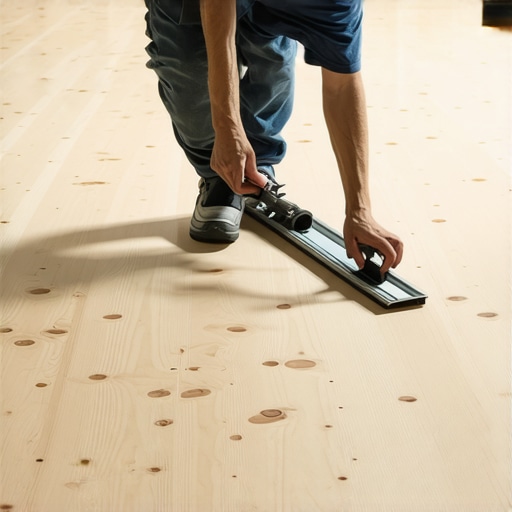
Your subfloor looks flat because your eyes are easily fooled by shadows. I have walked onto jobs where the homeowner swore the concrete was perfect, only to find a 3/8 inch hump right where the laminate was supposed to lay. Concrete slabs are never flat. They are wavy oceans of hardened minerals. Plywood subfloors are no better. They have crowns and valleys. When you introduce moisture, they move. If you are preparing for a carpet install, you might get away with minor imperfections because the pad hides the sins of the builder. But if you are installing laminate or luxury vinyl, those dips are death. The locking mechanisms are engineered to work on a flat plane. Any deviation causes the joints to rub. That rubbing turns into a squeak. Eventually, the plastic tongue snaps. Now you have a floor that bounces and clicks. You have a floor that failed because you believed a lie. You need to use a 10-foot straightedge. Anything over 3/16 of an inch is a problem. No underlayment will fix a structural dip. It only pads it.
The chemistry of a failed bond
Most installers treat primer like an option. It is not an option. It is the bridge between two different chemical realities. Concrete is porous. When you pour wet leveler onto dry concrete, the concrete acts like a sponge. It pulls the water out of the leveler faster than the leveler can hydrate. This ruins the crystalline structure of the cement. The leveler becomes brittle. It loses its flow. This is why it ghosts. The leveler stops moving before it can fill the dip. You need a high-quality acrylic primer to seal those pores. This primer creates a mechanical bond. It allows the leveler to stay wet longer. This extra time is what allows the material to seek its own level. Without it, you are just throwing money away. In showers, this is even more dangerous. If the leveler beneath your tile is not properly bonded, the thermal expansion of the hot water will cause the tile to pop. I have seen entire shower floors lift like a carpet because the installer skipped the primer on the mortar bed.
| Material Type | Drying Time | Max Thickness | Compressive Strength |
|---|---|---|---|
| Portland Cement Leveler | 24 Hours | 1.5 Inches | 4000 PSI |
| Calcium Aluminate Leveler | 4 Hours | 5 Inches | 5500 PSI |
| Gypsum Based Leveler | 12 Hours | 2 Inches | 3000 PSI |
| Feather Edge Patch | 20 Minutes | 1/2 Inch | 3200 PSI |
The 1/8 inch that ruins everything
Professional standards like the NWFA and TCNA are not suggestions. They are the laws of the land. They specify that a floor must be flat within 1/8 inch over a 10-foot radius for most hard surfaces. If your leveler ghosts and leaves a 1/4 inch dip, you have failed the test. The physics are simple. When a person walks over a dip, the floor deflects. This deflection puts tension on the top of the joint and compression on the bottom. Repeated thousands of times, the material fatigues. While most people want the thickest underlayment, too much cushion actually causes the locking mechanisms on LVP to snap under pressure. You want a firm, flat base. You do not want a trampoline. If your subfloor leveler is ghosting, it means you did not use enough volume. You have to calculate the cubic footage of the low spots. If the math says you need ten bags, buy twelve. It is better to have a little extra than to run out and leave a cold joint in the middle of the room. Cold joints are another way the subfloor shape haunts your finished floor.
“The installer is the final inspector. Any job site condition that is not within the specifications must be reported before the installation begins.” – NWFA Standards Manual
The checklist for a flat floor
- Check moisture levels in the slab using an RH meter to ensure the leveler won’t blow off the surface.
- Vacuum the floor twice because dust is a bond breaker that causes leveler to peel.
- Apply the recommended primer and let it get tacky before pouring.
- Measure the water with a precise pitcher to ensure the mix isn’t too thin.
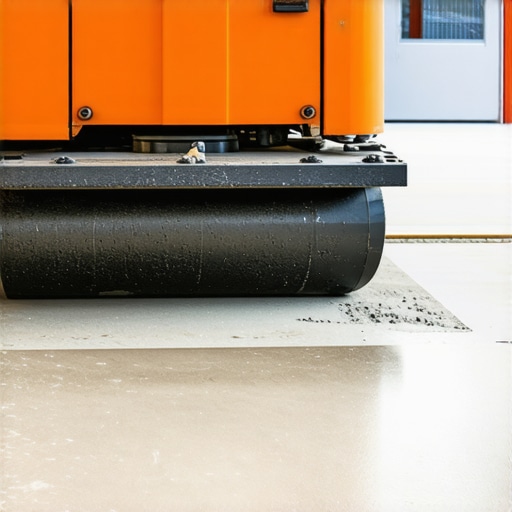
- Use a gauge rake to set the depth of the pour and a spiked roller to release air bubbles.
- Keep the room temperature stable to prevent the leveler from drying too fast.
From showers to laminate installations
Every room has its own set of rules. In showers, your leveling or mud bed must provide a consistent slope toward the drain. If the leveler ghosts here, you get standing water. Standing water leads to mold. In a carpet install, the stakes are lower, but you can still feel a major hump through the pad. For laminate, the flatness is non-negotiable. Laminate is essentially a giant sheet of wood fiber. It expands and contracts as a single unit. If it has to climb over a hill in your subfloor, it creates friction. That friction ruins the installation. I tell my apprentices that the prep is 80 percent of the job. The actual flooring is just the victory lap. If you spend your time on your knees with a grinder and a level, your floor will last thirty years. If you spend your time trying to find a cheaper leveler, you will be back in two years to fix the cracks. Do it right the first time. Respect the chemistry of the adhesive and the physics of the subfloor. Stop letting the ghosts of the old floor haunt your new work.