
How to Keep Your White Carpet White in a House Full of Kids
How to Keep Your White Carpet White in a House Full of Kids
I have spent twenty five years behind a counter smelling of floor wax and stale coffee, listening to homeowners tell me they want that cloud-white aesthetic for their living room. I usually look them in the eye and ask if they have a golden retriever or a toddler. If they say both, I tell them to go buy a brown rug and save us both the headache. I once walked into a house where a fifteen thousand dollar white Saxony was ruined within a month because the installer didn’t use a moisture barrier on a slab that was weeping. The homeowners thought it was a spill. It wasn’t. It was the subfloor literally vomiting minerals through the fiber. Most people treat carpet like a blanket, but it is an engineered filtration system that sits on your floor. If you are going to commit to white carpet with kids in the house, you need to understand the physics of the fiber and the chemistry of the mess. You cannot treat this like a casual decoration choice. This is a maintenance war that you are likely to lose if you do not have a structural plan for your carpet install and a strict protocol for floor leveling before the first tack strip is even hammered down.
The microscopic war against particulate matter
White carpet maintenance requires a high frequency of soil extraction and fiber agitation to prevent permanent graying and traffic lane wear. The success of keeping a white floor clean depends on particle suspension and the mechanical removal of dry silica before it can abrade the protective coatings of the yarn. When a child walks across a white carpet with dirty feet, they are not just dropping dirt. They are depositing tiny shards of silica and granite that act like microscopic hacksaws. Every time someone steps on those particles, they saw away at the clear coat of the nylon fiber. Once that coating is gone, the fiber becomes porous. Once it is porous, it is no longer white; it is a sponge for every juice box spill and mud track that enters the home. You have to get the dirt out before it is walked in. That means a vacuum with a high CFM rating and a brush roll that is adjusted to the exact height of the pile. If your brush is too high, it does nothing. If it is too low, it creates friction heat that can actually melt the tips of synthetic fibers, leading to a permanent fuzzy look that people mistake for dirt. It is not dirt; it is a heat-damaged fiber that will never reflect light correctly again.
Why your subfloor determines your carpet life
Subfloor preparation and floor leveling are the foundational requirements for carpet longevity because uneven substrates cause localized fiber abrasion and seam failure. You might think that a thick pad hides a bad subfloor, but that is a lie told by lazy contractors. I spent three days grinding concrete on a job last month just so the floor wouldn’t click like a castanet and so the carpet wouldn’t wear out in the high spots. When you have a dip in your subfloor, the carpet bridges over it. Every time a kid runs over that spot, the carpet stretches and snaps back. Over six months, that stretching breaks down the secondary backing of the carpet. On a white carpet, this shows up as a dark shadow because the fibers are leaning at different angles, reflecting light differently. It looks like a stain, but it is actually a structural failure of the floor itself. If you want white carpet to last, you must ensure the floor is flat within three sixteenths of an inch over a ten foot radius. If it is not, you are just throwing your money into a pit of leveling compound that you should have used in the first place.
“A floor is only as good as the subfloor beneath it; deflection is the enemy of every joint.” – Master Flooring Axiom
The structural failure of the cheap pad
Carpet padding must meet a minimum density rating of six to eight pounds to provide impact absorption and prevent fiber crushing in high traffic areas. Homeowners always want to save money on the pad because they cannot see it. That is a mistake that will ruin a white carpet in two years. A cheap, low density foam pad will bottom out under the weight of a running child. When the pad bottoms out, the carpet fiber takes the full force of the footfall against the hard subfloor. This crushes the yarn. Once a white nylon or polyester fiber is crushed flat, it loses its ability to reflect light, and it looks gray. You can clean it until you are blue in the face, but it will still look dirty because the physical shape of the yarn has been altered. I recommend a high density frothed foam or a synthetic rubber pad for white carpets. It needs to be firm. If it feels like a marshmallow, it is garbage. You want a pad that resists the foot but doesn’t feel like concrete. This is the only way to keep the pile standing upright, which is the secret to keeping it looking white.
Laminate transitions and shower dampness
Moisture migration from adjacent showers or kitchen spills can cause wicking stains in carpeted areas where vapor barriers are insufficient. This is why the transition between your bathroom and your hallway carpet is often the filthiest place in the house. If you have a shower that isn’t properly ventilated, that moisture hangs in the air and settles into the carpet. Damp carpet attracts dust like a magnet. Then you have laminate or tile meeting the carpet at the door. If that transition isn’t sealed, moisture gets under the laminate and travels to the carpet pad. The pad acts like a giant wick, pulling the moisture up through the carpet fibers. As the water evaporates at the surface, it leaves behind all the dirt and minerals it picked up along the way. This is called wicking. It is why you can clean a spot on a white carpet and have it reappear two days later. You didn’t get the subfloor dry. You have to address the moisture at the source, or your white carpet will always have a yellow ring around the bathroom door.
| Fiber Type | Stain Resistance | Durability | Acclimation Time |
|---|---|---|---|
| Nylon 6,6 | High (Treated) | Excellent | 24-48 Hours |
| Triexta | Inherent | Very High | 24 Hours |
| Polyester | Medium | Moderate | 24 Hours |
| Wool | Low (Oily) | High | 72 Hours |
Chemical reactions in the stain removal process
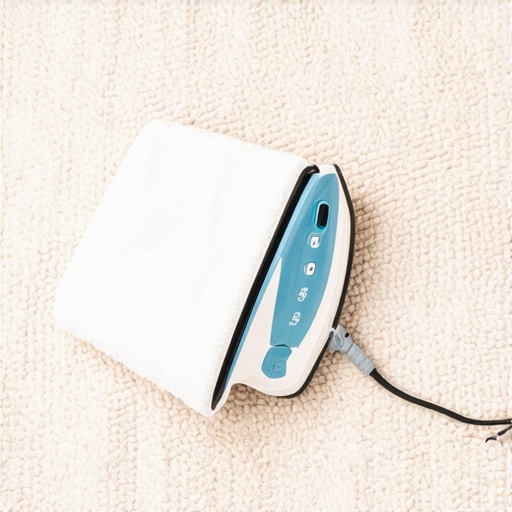
Stain removal chemistry relies on the pH balance of the cleaning solution and the cationic charge of the carpet fiber. Most homeowners go to the big box store and buy a bottle of stuff that says it removes everything. That is a lie. Most of those cleaners have a very high pH, which is fine for cutting grease, but it actually strips the stain resistant coating off the carpet. Once you use a high pH cleaner on a white carpet, you have created a permanent magnet for dirt. The residue left behind is sticky. It catches every speck of dust that floats by. Within a week, the spot where you cleaned the spilled juice is now a black circle of dirt. You must use a neutral pH cleaner and you must rinse it with clear water. If you don’t rinse, you haven’t cleaned anything; you have just moved the dirt around and added soap to it. I tell people to use a white towel and blot, never scrub. Scrubbing untwists the yarn. A white carpet with untwisted yarn looks like a frizzy mess and it will never look clean again.
The physics of the vacuum cleaner
Effective vacuuming requires a HEPA filtration system and a motorized beater bar to dislodge embedded soils from the base of the carpet pile. If you are using a cheap vacuum on white carpet, you are essentially just grooming the surface while the sand and grit stay at the bottom, grinding away at the backing. You need a machine that creates enough lift to pull air through the backing of the carpet. This is where the carpet install quality comes back into play. If the carpet was not power stretched correctly, it will have small ripples. The vacuum will lose suction at every ripple. You need a tight, flat surface for the vacuum to work. In high traffic areas with kids, you should be vacuuming three times a week. Twice is for the dust, the third time is to reset the pile and prevent the fibers from leaning. This prevents the shadow effect that makes white carpet look old before its time.
- Always use a power stretcher during installation to prevent ripples and suction loss.
- Check the subfloor for moisture before laying the pad to prevent wicking stains.
- Use a high density pad of at least eight pounds to protect the fiber structure.
- Keep a pH neutral spot cleaner on hand for immediate protein and tannin spills.
- Ensure transitions to laminate or tile are sealed to prevent moisture migration.
“A floor is only as good as the subfloor beneath it; deflection is the enemy of every joint.” – Master Flooring Axiom
The checklist for a white carpet survival
If you are determined to keep that white carpet looking like a showroom floor while kids are running around, you have to be disciplined. It starts with the floor leveling and ends with a strict no shoe policy. I tell my customers that a white carpet is not a floor covering, it is a lifestyle. If you are the type of person who leaves the dishes in the sink, you do not want white carpet. You want something that hides your sins. But if you can follow a maintenance schedule and understand that the carpet install is a technical engineering project, you can make it work. Just don’t come crying to me when the dog tracks in red clay and you try to scrub it out with dish soap. You will just end up back in my shop buying a new floor, and I will be here to sell it to you, probably something in a nice, forgiving charcoal gray this time around.