How to Remove Pet Urine from Deep Carpet Fibers Once and for All
I have spent twenty five years with sawdust under my nails and the smell of WD 40 on my clothes. I have seen every type of failure a floor can suffer. Most people treat their carpet like a rug they can just toss in the wash. It is not. It is a complex assembly of primary backings, secondary backings, SBR latex adhesives, and polyurethane foam. When your dog or cat decides to use that assembly as a restroom, you are not just dealing with a stain. You are dealing with a structural biohazard. Most guys skip the leveling compound. They think the underlayment will hide the dip. It won’t. I spent three days grinding concrete on a job last month just so the floor wouldn’t click like a castanet. But even worse is when I pull back a carpet and find a dark, damp map of every time the family dog had an accident over five years. The plywood was black. It wasn’t just a carpet problem. It was a structural decay issue. This is the reality of deep carpet contamination. If you want to fix it, you have to stop thinking like a cleaner and start thinking like an architect.
The physics of the biohazard puddle
Pet urine follows the path of gravity, moving through nylon fibers, penetrating the carpet backing, and pooling in the padding. This liquid waste then saturates the subfloor, where uric acid crystals form as the moisture evaporates, creating a permanent odor source that reacts to humidity. To understand the gravity of the situation, you must look at the cross section of a standard carpet install. You have the face fibers, usually a synthetic blend. Below that is the primary backing. These layers are held together by a layer of latex. When urine hits this, it does not just sit on top. It undergoes capillary action. It spreads wider as it goes deeper. A spot the size of a baseball on the surface is likely the size of a hula hoop once it hits the plywood or concrete. This is why surface scrubbing is a waste of your time and your money. You are just polishing the top of a toxic iceberg.
“A floor is only as good as the subfloor beneath it; deflection is the enemy of every joint.” – Master Flooring Axiom
Why your retail spray failed
Most retail cleaners use surfactants and heavy fragrances to mask the ammonia scent rather than using enzymes to break the molecular bonds. These detergents often leave a sticky residue that attracts soil, leading to re-soiling and a permanent dark spot on the floor surface. The chemistry of urine is unforgiving. It starts as an acid and turns into an alkaline as it dries. When it is in its alkaline state, it becomes a salt. These salts are hygroscopic. That means they pull water out of the air. If you live in a place with high humidity, like the coastal regions or the swampy Midwest, your floors will smell worse on rainy days. The moisture reactivates the salts. Your grocery store spray cannot touch these salts. It might kill some bacteria on the surface, but the uric acid crystals remain untouched, tucked away in the pores of the wood fibers or the tiny pits of a concrete slab. You need a chemical catalyst that specifically targets the nitrogenous waste.
The subfloor secret no one tells you
The subfloor acts as a porous sponge for liquid contaminants, meaning that pet urine can cause structural rot or mold growth if not properly neutralized. If the plywood or OSB becomes saturated, it may require mechanical grinding or sealing with a vapor barrier to prevent odor transmission. When I am doing a carpet install, I always check the subfloor for staining. If I see those dark rings, I know the carpet is a goner. But the floor beneath it needs work too. If it is concrete, the urine has traveled down into the aggregate. If it is wood, the urea has likely caused the layers of the plywood to delaminate. You cannot just put new carpet over that. It would be like putting a clean shirt over a dirty body. You have to treat the wood with a phenolic disinfectant or a shellac based sealer. This locks the odor in. It stops the gas exchange between the contaminated wood and your living space. If the damage is deep enough, you might even need floor leveling compounds to smooth out the areas where the wood has swollen from the moisture.
The ghost in the expansion gap
Urine residue often migrates toward the expansion gaps near baseboards and tack strips, where it can remain undisturbed by vacuuming or steam cleaning. These hidden reservoirs of bacteria continue to off gas, making the room smell even after the visible stain is removed. I have seen cases where the urine traveled under the baseboards and wicked up into the drywall. This is a nightmare for a flooring guy. You can clean the floor all day, but the smell is in the walls. When you are performing deep extraction, you have to get right up to the edge. The tack strip, which is that strip of wood with the sharp nails that holds your carpet in place, is usually the first thing to rot. It is made of cheap plywood. It soaks up urine like a straw. If that strip is dark or rusty, rip it out. Do not try to save it. It is a five dollar piece of wood that will ruin a five thousand dollar carpet install.
Breaking the uric acid crystal
To neutralize odors, you must use an enzymatic cleaner that contains protease and amylase to digest the proteins and starches found in biological waste. These biological catalysts break the molecular chains of the uric acid crystals, converting them into water and carbon dioxide for complete removal. This is not a fast process. You cannot spray it and wipe it. Enzymes need dwell time. They are like little construction workers eating away at a pile of debris. They need the right temperature and the right amount of moisture to work. I tell people to saturate the area and cover it with plastic wrap. This keeps the enzymes from drying out before they finish their job. If the enzymes dry, they stop working. You want them to stay active for at least twenty four hours. This allows them to follow the same path the urine took, deep into the backing and the pad.
| Contaminant Type | Penetration Depth | Recommended Treatment |
|---|---|---|
| Fresh Urine | Fibers only | Blotting and Surface Enzyme |
| Dried Urine | Padding and Backing | Sub-surface Extraction |
| Repeated Exposure | Subfloor and Joists | Replacement and Sealing |
| Old Salts | Microscopic Pores | Phenolic Encapsulation |
The physics of extraction
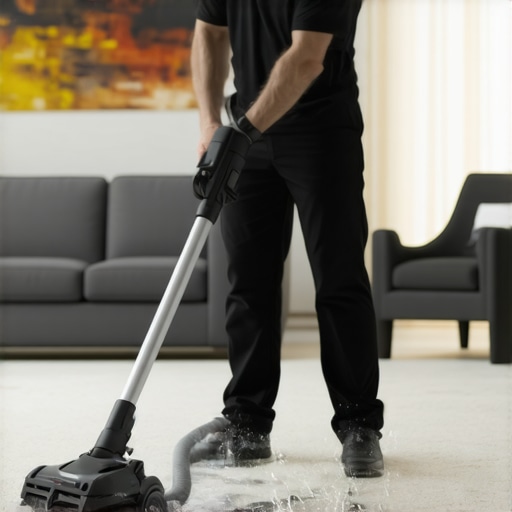
Sub-surface extraction tools work by creating a vacuum seal against the carpet backing, allowing the technician to pull liquid directly from the padding without spreading the stain. This high pressure process is the only way to remove saturated contaminants that have moved beyond the reach of a standard vacuum. Think of a straw. If you put a straw into a glass of water and put your finger over the top, you can lift the liquid out. A sub-surface tool, often called a water claw, does the same thing. It focuses all the suction of a truck-mounted machine onto a small area. It pulls the water, the urine, and the enzymes through the carpet and out of the house. If you just use a regular floor wand, you are only cleaning the top. You are leaving the soup in the pad. That pad is like a sponge. You can never get it 100 percent clean, but sub-surface extraction is the closest you will get without ripping the floor up.
“Proper carpet install requires a tensioned stretch to prevent ripples where odors trap.” – NWFA Standard Reference
The 1/8 inch that ruins everything
An incorrectly installed carpet with even a 1/8 inch gap at the seams allows pet waste to bypass the protective layers and reach the floor leveling or subfloor. Proper seam sealing and power stretching are vital steps to ensure the longevity of the installation and the hygiene of the home. When the carpet is loose, it moves. When it moves, the backing rubs against the pad. This creates friction and heat, which can break down the latex. Once that latex is gone, the urine can flow through the carpet like it is a sieve. I always insist on a tight stretch. It is not just about the look. It is about the integrity of the system. If you have ripples, you have air pockets. Air pockets hold odors. A tight floor is a clean floor.
When to walk away and start over
Sometimes the damage is so extensive that the cost of cleaning exceeds the value of the carpet, making replacement the only logical solution. If the urine has reached the laminate or hardwood beneath, or if the subfloor shows signs of structural failure, a full tear out is required. There is a point of no return. If the urine has saturated more than 20 percent of the floor area, you are fighting a losing battle. The cost of the chemicals and the labor for extraction will be more than a new carpet install. In those cases, I tell my clients to rip it out. We scrap the carpet, we scrap the pad, and we treat the subfloor. Maybe we switch to a different material. We look at laminate or luxury vinyl plank, which are easier to clean, although they have their own issues with expansion and contraction. But even then, if you do not fix the subfloor, the ghost of that smell will come back to haunt you every time the sun hits the floor.
Decontamination Checklist for Homeowners
- Identify the exact boundaries of the contamination using a high intensity UV light.
- Remove any solid waste or surface moisture with a dedicated wet vacuum.
- Apply a heavy dose of enzymatic cleaner to the site, extending six inches beyond the visible stain.
- Cover the area with plastic to maintain moisture for at least twenty four hours.
- Use a sub-surface extraction tool to pull the liquid from the padding.
- Rinse the area with a mild acetic acid solution to remove any leftover alkaline salts.
- Accelerate drying with high velocity air movers or dehumidifiers.
- Inspect the tack strips for signs of rot or rust and replace if necessary.
- Check the subfloor for dark staining and apply an odor blocking primer if needed.
- Re-stretch the carpet to ensure no pockets or ripples remain for future contamination.
Regional climate and odor activation
The environmental conditions of your geographic region play a major role in how pet odors behave within your flooring. High ambient humidity will hydrate dried uric acid crystals, causing them to release ammonia gas and volatile organic compounds into the indoor air. If you are in a place like Houston or Miami, your floor is a living thing. It breathes. When the humidity spikes, those crystals in your subfloor swell. They start to off-gas. You might think you cleaned the floor in January, but come July, the smell is back. This is why a vapor barrier is so important. In some regions, we use a 6 mil poly film under the flooring to stop moisture from the ground from coming up through the slab. If you have a pet problem on a slab in a humid area, you are fighting two sources of moisture. You have to keep the floor dry from both sides. It is a constant battle against the elements and biology. Take care of your subfloor, and it will take care of you. If you treat it like a trash can, it will eventually smell like one. Keep your tools sharp and your subfloor dry. That is the only way to win in this business.