The Water-Drop Test for Deciding if Your Grout Needs Re-Sealing
I spent three days grinding concrete on a job last month just so the floor wouldn’t click like a castanet. Most guys skip the leveling compound. They think the underlayment will hide the dip. It won’t. I have sawdust under my nails and I have seen more failed showers than most people have seen hot meals. A floor is a performance surface, not a decoration. If you ignore the physics of your subfloor or the chemistry of your grout, you are building on a foundation of sand. Grout is the most misunderstood component of a tile installation. It is a porous, cementitious bridge that is constantly under attack by moisture and gravity. When homeowners ask about their grout, they usually want to talk about color. I want to talk about permeability. The water drop test is the only way to know if your structural integrity is at risk from the top down.
The science of grout porosity
Grout porosity refers to the volume of open pores within the cement matrix that can absorb liquids or gases through capillary action. Most standard grout is composed of portland cement, graded sand, and pigments. During the hydration process, water reacts with the cement to form a crystalline structure. As the excess water evaporates, it leaves behind microscopic voids. These voids are the gateway for water, oils, and bacteria. The size and frequency of these voids depend on the water to powder ratio used during mixing. If an installer used too much water to make the grout easier to spread, the resulting cured product will be as porous as a brick. This is why the water drop test is a vital diagnostic tool for every homeowner with a tile floor. You are measuring the surface energy and the ability of the grout to resist the polar pull of water molecules. If the sealer is intact, the water will bead. If the sealer has degraded or was never applied, the grout will act as a straw, pulling moisture deep into the thin-set and eventually the subfloor.
“A floor is only as good as the subfloor beneath it; deflection is the enemy of every joint.” – Master Flooring Axiom
The thirty second water test procedure
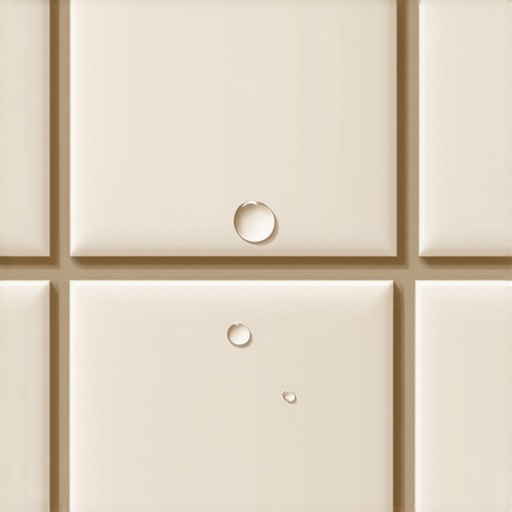
The water drop test is a simple diagnostic method used to determine the current efficacy of a grout sealer. You do not need expensive sensors or a degree in civil engineering to perform this. You need a bottle of distilled water and a keen eye. Start by cleaning the area. If there is a layer of wax or soap scum on the grout, the test will give you a false positive. Scrub the grout line with a neutral cleaner and let it dry for twenty four hours. Once the area is bone dry, place several drops of water onto the grout joint. Watch the clock. In a properly sealed installation, the water will sit on top of the grout like a bead of mercury. It should maintain its spherical shape for at least five minutes. If the water begins to flatten and the grout underneath starts to darken, your sealer is failing. If the water disappears instantly, your grout is wide open to contamination. This lack of protection means that every time you mop, you are actually pushing dirty water into the core of your floor.
| Sealer Type | Molecular Action | Expected Lifespan | Application Area |
|---|---|---|---|
| Silane Siloxane | Penetrating Reactive | 3 to 5 Years | Exterior Stone and Porous Tile |
| Fluoropolymer | Hydrophobic Oleophobic | 5 to 10 Years | Kitchens and Showers |
| Acrylic Resin | Topical Film Forming | 1 Year | Decorative Backsplashes Only |
Why showers are a nightmare for unsealed grout
Showers represent the most aggressive environment for grout because of the constant cycle of saturation and evaporation. In a shower, water is not just sitting on the surface. It is often under pressure from the showerhead and is mixed with surfactants like soap and shampoo. These surfactants lower the surface tension of water, making it even easier for it to penetrate the grout pores. If the grout in your shower fails the water drop test, you are risking more than just stained lines. You are risking the integrity of the wall cavity. Moisture vapor transmission can move through unsealed grout and condense on the studs or the subfloor. This leads to the growth of mold that you cannot see until it is too late. I have seen showers where the tile looked perfect, but the subfloor was so rotted it felt like walking on a trampoline. A solid sealer is the only thing standing between your tile and a total structural failure. Don’t trust a builder grade sealer to handle the daily deluge of a modern master bath.
Floor leveling and structural integrity
Floor leveling is the mandatory first step for any tile or laminate installation that most people try to skip. If your subfloor has a dip greater than one eighth of an inch over ten feet, your grout is going to crack regardless of how well you seal it. When a subfloor is uneven, the tile must bridge the gap. This creates a void. When you walk on that tile, it flexes. Portland cement grout has zero tensile strength. It cannot bend. It only breaks. Those hairline cracks are like a highway for water. You can perform the water drop test all day, but if the grout is physically cracked, the sealer cannot bridge that gap. This is why I spend so much time with a straight edge and a bag of self leveling underlayment. You have to get the foundation flat before you can worry about the chemistry of the sealer. This applies to carpet install and laminate as well. A flat floor prevents the vertical movement that destroys locking mechanisms and stretches carpet fibers until they ripple.
- Ensure the subfloor meets TCNA deflection standards of L over 360.
- Vacuum all dust from the grout lines before testing or sealing.
- Use distilled water for testing to avoid mineral staining on the grout.
- Test multiple areas including high traffic paths and corners.
- Record the time it takes for water to absorb into the grout matrix.
How moisture affects laminate and carpet transitions
Laminate and carpet are often installed adjacent to tiled areas, making the grout seal a vital concern for the entire floor plan. Laminate floors are essentially high density fiberboard with a decorative layer. They are extremely sensitive to moisture. If the grout at the transition to a bathroom is unsealed, water will travel under the T-molding and into the core of the laminate. This causes the edges to swell and the wear layer to peel. It is a death sentence for the floor. Carpet install is equally at risk. When water migrates through unsealed grout, it can reach the carpet tack strip. The moisture causes the wood strip to rot and the metal nails to rust. The rust then bleeds into the carpet fibers, creating permanent orange stains at the doorway. I always tell my clients that the grout in the bathroom protects the carpet in the hallway. Everything in the house is connected by the subfloor, and water is the common enemy of every material we use.
“Proper subfloor preparation and deflection control are the foundation of any successful tile installation.” – Master Flooring Axiom
The chemistry of hydrophobic barriers
Modern sealers use advanced chemistry to create a hydrophobic barrier that is thin enough to remain invisible but strong enough to repel oils and water. The most effective products are penetrating sealers, also known as impregnators. These products use silanes or fluoropolymers to line the interior of the grout pores. They do not coat the top of the tile. Instead, they change the surface tension inside the grout matrix. This is a vital distinction. A topical sealer can peel or flake off when moisture vapor tries to escape from the slab. A penetrating sealer allows the grout to breathe while still blocking liquid water from entering. This molecular zooming shows us that the sealer is not a solid wall, but a chemical filter. It allows individual water vapor molecules to pass through but forces liquid water to bead up. If your floor fails the water drop test, it means these molecules have been abraded away by foot traffic or dissolved by harsh, acidic cleaners. You must replenish this barrier to maintain the structural health of your flooring system.
The 1/8 inch that ruins everything
The difference between a floor that lasts fifty years and one that fails in five is often just one eighth of an inch. This is the maximum allowable deviation for most large format tile and luxury vinyl plank. When people ignore the leveling requirements, they create a situation where the grout is under constant mechanical stress. The water drop test is a great way to check for chemical protection, but you also need to look for physical failure. If you see grout turning to powder or popping out in chunks, sealer won’t save you. That is a subfloor issue. I have had homeowners beg me to just put a new layer of grout over the old stuff. I won’t do it. That’s like putting a fresh coat of paint on a rusted out truck. You have to address the movement in the subfloor first. Only then does the water drop test become a meaningful metric for your home maintenance routine. Stop looking at your floor as a rug and start looking at it as an engineered assembly of layers.