How to Salvage Floor Leveler That Is Setting Too Fast
How to Salvage Floor Leveler That Is Setting Too Fast
You can smell the panic before you see it. It is that metallic, dusty scent of high-performance cement beginning its exothermic transition too soon. I have been there. I remember a job site last year where the HVAC failed on a mid-July afternoon. We were pouring a hundred bags of self-leveler over a radiant heat system. The subfloor was sucking the moisture out of the mix like a sponge. Most guys skip the leveling compound. They think the underlayment will hide the dip. It won’t. I spent three days grinding concrete on a job last month just so the floor wouldn’t click like a castanet because the previous installer let the leveler flash-set into a mountain range. When that bucket starts to get hot in your hands, you have about ninety seconds to make a decision that determines if you are going home or if you are spending the next twelve hours with a jackhammer.
The chemical panic of a flash setting floor
To salvage self-leveling underlayment that is setting too fast, you must immediately reduce the temperature of the mix, break the surface tension with a spike roller, and mechanical agitation to keep the polymers from locking. Flash setting often occurs due to high ambient temperatures, improper water ratios, or a failure to use a primer on a porous concrete substrate. If the leveler begins to stiffen, stop pouring immediately and focus on the edges where the new mix meets the old. This is where the structural bond is most vulnerable.
Understanding the physics of the pour is non-negotiable. Self-leveling underlayment is not just wet cement. It is a complex cocktail of calcium aluminate cement, crystalline silica, and proprietary polymers. When you add water, you trigger a hydration cycle. This reaction is exothermic. It creates its own heat. If your water source is sitting in a hot truck, or if the subfloor is over 80 degrees, the reaction accelerates. The molecules move faster. They find their neighbors and lock into a lattice structure before the mix has time to seek its own level. It stops being a liquid and becomes a gel. Once it hits the gel stage, you are in the danger zone. You cannot simply pour more water on top. Doing so will break the polymer chains and result in a floor that looks okay but has the structural integrity of a soda cracker. It will delaminate. It will crack under the weight of a carpet install or the shifting weight of laminate planks.
“A floor is only as good as the subfloor beneath it; deflection is the enemy of every joint.” – Master Flooring Axiom
The physics of the rescue mission
If the mix is stiffening in the bucket, you can try a one-time re-tempering. Add a small amount of ice-cold water, but no more than three percent of the total volume. Use the mixing paddle at a high RPM for thirty seconds. This is a gamble. It is better to dump the bucket in a waste area than to pour a compromised batch on a client’s floor. If the leveler is already on the floor and looking like peanut butter, use a spike roller. The spikes penetrate the surface skin and release trapped air and gas. This helps the material settle back down. It buys you time. I have seen guys try to use a trowel to force it flat. Don’t do it. You will leave ridges that are harder than the original concrete within an hour. The spike roller is the only way to move the aggregate without destroying the finish.
| Condition | Action Required | Success Probability |
|---|---|---|
| Mix is warm in bucket | Add ice water and re-mix | High |
| Mix is gelling on floor | Aggressive spike rolling | Medium |
| Surface is skinning over | Apply mist of cold water | Low |
| Mix is hard to the touch | Mechanical grinding later | Zero |
Why your subfloor is lying to you
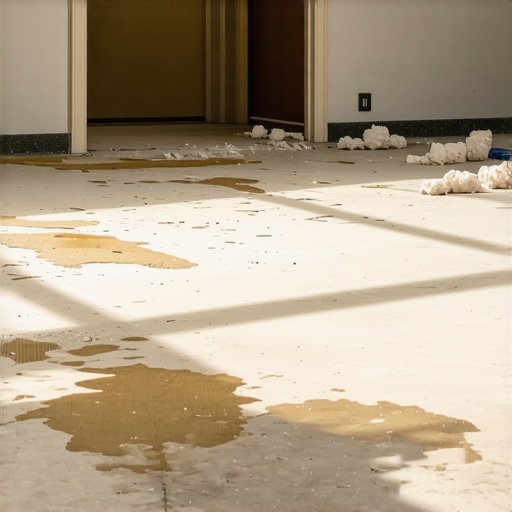
The most common reason for a fast set is a thirsty subfloor. If you are pouring over old concrete, that slab is a desiccant. It wants every drop of water in your leveler. If you did not use a high-quality primer, or if you diluted the primer too much, the concrete will rob the leveler of the moisture it needs for hydration. The leveler does not dry; it cures. If the water is gone before the cure is finished, you get a flash set. This is common in showers and bathroom remodels where the old mortar bed was removed. That old slab is dry. It is hungry. You need to prime it until it has a slight sheen that stays for twenty minutes. If the primer disappears in two minutes, your leveler will flash set. Every single time. There is a contrarian data point here that most big-box stores won’t tell you. While people want the thickest underlayment for comfort, too much cushion actually causes the locking mechanisms on LVP to snap under pressure. The same logic applies to leveler. Thicker is not always better if the bond to the subfloor is weak due to a fast set.
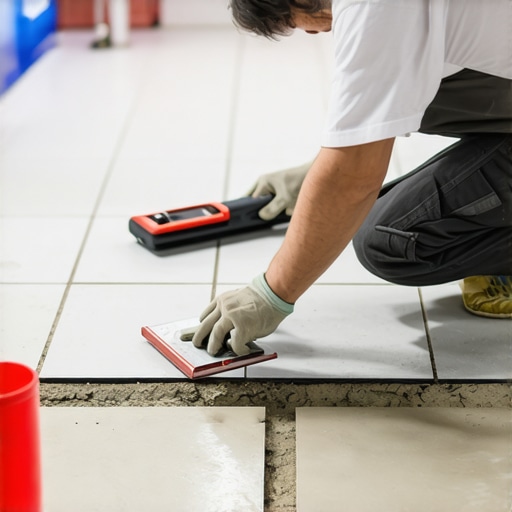
- Check subfloor temperature with an infrared thermometer.
- Use chilled water if the room is over 75 degrees.
- Always use a calibrated measuring pitcher for water.
- Keep a spike roller and cleats ready before the first bag is opened.
- Shut off any forced-air heating or cooling that creates drafts.
The 1/8 inch that ruins everything
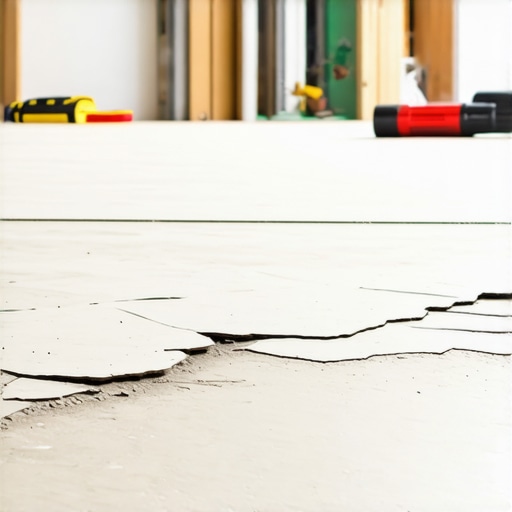
Precision is the difference between a floor that lasts fifty years and one that fails in five. If you are prepping for laminate or a carpet install, you might think a few ridges from a fast-setting leveler won’t matter. You are wrong. A 1/8 inch peak will create a pivot point. Every time someone walks across that floor, the planks will flex. Eventually, the tongue and groove will shear off. Then you have a floating floor that actually floats. If your leveler set too fast and left you with a mess, you have to wait. Let it cure fully. Then get the diamond cup wheel out. You have to grind those ridges down. It is dusty. It is loud. It is the price of a bad pour. I tell my apprentices that the prep is the job. The flooring is just the victory lap. If the prep is botched because you rushed the mix or ignored the temperature, you haven’t saved time. You have just scheduled a repair for next week.
“Subfloor preparation is 90% of the installation; if you ignore the chemistry, the physics will punish you.” – Master Flooring Axiom
The hidden danger of high humidity
In regions like the Gulf Coast, humidity changes the game. While heat accelerates the set, high humidity can actually create a deceptive surface. The top looks wet, but the bottom is already locking up. This is common when leveling for showers. The moisture in the air prevents the surface from skinning, so you think you have more time than you actually do. You start moving the material around and suddenly you realize the bottom half is solid. This creates internal shearing. It is like a geological fault line in your floor. If you are in a humid environment, you must use a moisture meter on the slab before you start. Even if the slab looks dry, the vapor emission rate can interfere with the leveler’s chemistry. You need a barrier. You need a plan. And you need to work in small sections. Do not try to pour a thousand square feet at once if you do not have a crew of four people. One to mix, one to carry, one to pour, and one to roll. If you are solo, you are asking for a disaster.
Always remember that the manufacturer’s instructions were written in a laboratory at 72 degrees and 50 percent humidity. Your job site is not a laboratory. It is a chaotic environment with drafts, dust, and temperature swings. You have to adapt. If you see the leveler starting to pull instead of flow, stop. Do not throw more bags into the mix hoping to fix it. Clean your tools. The chemistry of cement is unforgiving. Once the lattice begins to form, you are just fighting the inevitable. The best way to salvage a fast-setting floor is to prevent it by controlling the variables before the first bag is cut open. Prep the floor. Chill the water. Prime the surface. Then, and only then, do you start the clock.