The ‘Vacuum Trick’ for Finding Loose Carpet Tack Strips
The physics of the vacuum trick for identifying failed carpet transitions
I spent three days grinding concrete on a job last month just so the floor wouldn’t click like a castanet. Most guys skip the leveling compound. They think the underlayment will hide the dip. It won’t. I have seen countless installs where the installer ignored the structural integrity of the subfloor because they wanted to finish the job before five o’clock. My knees have the scars to prove that shortcuts in this industry lead to failures every single time. When you are standing on a carpet that feels soft but sounds like a haunted house when you walk near the baseboards, you have a mechanical failure. Usually, it is a loose tack strip that was never properly anchored to the substrate. I smell like WD-40 and oak dust most days, and I have learned that the only way to find these ghosts is to use physics against them. This is where the vacuum comes in. You are not just cleaning the floor, you are performing a pressure test on the hardware holding your room together.
The phantom click beneath the carpet fibers
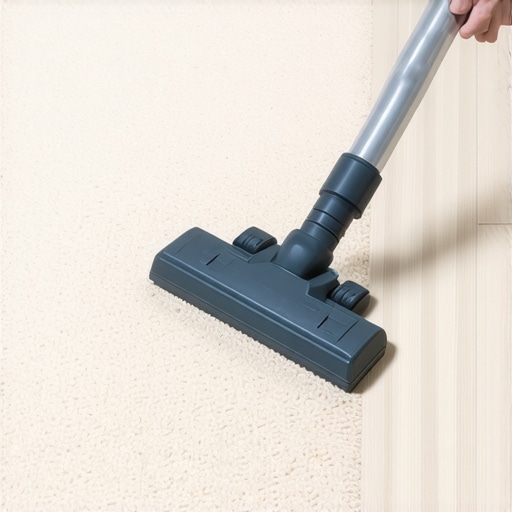
Loose carpet tack strips are identified by using high-powered vacuum suction to create a pressure differential that lifts the carpet and the strip simultaneously. If the strip is not anchored, it will strike the subfloor with a distinct audible click. This method reveals failures in concrete pins or wood screws.
Carpet installation is a game of tension. We use power stretchers to put hundreds of pounds of force on a fabric that wants to shrink back. The only thing standing between a flat floor and a wrinkled mess is a thin strip of birch or poplar plywood studded with sixty-degree steel pins. When these strips are installed on a concrete slab, the installer uses a powder-actuated tool or a masonry nail. Over time, moisture migration through the slab can oxidize these fasteners. In high-humidity environments like the Midwest, the moisture vapor emission rate can reach five pounds per one thousand square feet. This moisture weakens the chemical bond of any adhesive used and eventually allows the nail to wiggle. When you run a vacuum with a high-suction beater bar over that edge, you are creating a temporary vacuum seal. The lift capacity of the machine is enough to pull a loose strip up just a fraction of an inch. When the suction breaks, the strip snaps back down. That is the sound of a failing floor.
“A floor is only as good as the subfloor beneath it; deflection is the enemy of every joint.” – Master Flooring Axiom
Why your subfloor is lying to you
Subfloors often hide structural depressions that prevent tack strips from making full contact with the carpet backing. These dips cause the strip to hover slightly above the substrate. Proper floor leveling requires cementitious compounds to eliminate variances greater than one-eighth of an inch over a ten-foot span.
You can buy the most expensive carpet in the world, but if your subfloor has a dip, that carpet will fail. This is especially true near transitions to laminate or tile. I have walked into jobs where the laminate was installed perfectly flat, but the carpet next to it was diving into a hole. This happens because the installer did not check for levelness. They just rolled out the pad and hoped for the best. When we talk about floor leveling, we are talking about the molecular bond between the concrete and the leveling agent. You need a primer that penetrates the pores of the slab. If you skip the primer, the leveling compound will sit on top like a dry cracker. It will eventually crack and turn into grit. That grit gets under your tack strips and acts like sandpaper, slowly grinding away the fasteners every time you walk by. It is a slow death for a floor. I have seen people try to fix this by just hammering in more nails, but if the substrate is compromised, you are just nailing into dust.
| Substrate Type | Fastener Protocol | Bond Strength | Moisture Tolerance |
|---|---|---|---|
| Plywood CDX | Ring-shank steel | High | Moderate |
| Concrete Slab | Zinc-hardened pin | Moderate | Low |
| OSB Board | Coated screw | High | Minimal |
| Self-Leveler | Specialized adhesive | Variable | High |
The chemical reality of moisture barriers and showers
Moisture migration from adjacent wet areas like showers can travel through subfloors and rot carpet tack strips from the bottom up. Capillary action pulls water through concrete pores, leading to the oxidation of metal fasteners and the delamination of the plywood strips used in carpet stretching.
I have spent years looking at the relationship between wet areas and dry areas. When a shower is built, the waterproofing membrane is the most vital component. However, even a perfect shower can contribute to high ambient humidity in a bedroom. If the bathroom floor is tile and the bedroom is carpet, there is a transition point that is incredibly vulnerable. If the tile was not installed with the correct TCNA-approved thin-set, moisture can seep under the transition strip. This moisture finds the tack strip and begins to rot the wood. Wood is organic matter. When it gets wet, it expands. When it dries, it shrinks. This cycle of expansion and contraction eventually pulls the nails right out of the floor. This is why you see carpet pulling away from the bathroom door. It is not a bad carpet; it is a moisture management failure. You need to ensure that the floor leveling compound used at the transition is waterproof and that a silicone bead is used to seal the gap between the different materials.
The structural cost of a bad stretch
A carpet that is not stretched to industry standards will move during vacuuming, putting uneven stress on the tack strips. This movement eventually loosens the fasteners. Proper installation requires a power stretcher to achieve a one to one-and-a-half percent stretch across both the length and width.
Many installers today rely on a knee kicker. A knee kicker is a tool for positioning, not for stretching. If you do not use a power stretcher, you are leaving the carpet loose. A loose carpet is a moving carpet. Every time you walk on it, you are pushing a wave of fabric in front of your feet. This wave hits the tack strip and tries to pull it off the floor. Over five years, that is thousands of tugs on a few small nails. Eventually, the nails give up. The vacuum trick works here because the loose fabric allows the vacuum to grab the carpet more easily. If the carpet is tight like a drum head, the vacuum cannot lift it. If it is loose, the vacuum lifts the fabric, the fabric lifts the strip, and you hear the clack-clack-clack of a failing install.
- Inspect the perimeter for any signs of carpet rippling or bunching.
- Run a high-suction vacuum directly along the baseboard line.
- Listen for a metallic clicking sound as the vacuum passes.
- Feel for any movement in the transition strips between carpet and laminate.
- Check the moisture levels of the subfloor if the strips feel soft or spongy.
- Replace any strips where the wood has begun to delaminate or darken.
“Surface preparation is the most essential part of any flooring installation; failure to address the substrate results in a total system failure.” – TCNA Handbook Standards
The molecular bond of modern adhesives
Modern flooring adhesives rely on cross-linking polymers to create a permanent bond between the tack strip and the substrate. These bonds can be compromised by high pH levels in concrete or by the presence of old adhesive residue from previous laminate or vinyl installations.
When I am working on a high-end job, I do not just trust nails. I use a high-strength construction adhesive specifically designed for subfloors. But you cannot just squirt glue on a dusty floor. You have to clean the surface to a molecular level. That means grinding off the old paint, the old glue, and the drywall mud that the painters left behind. If you glue a tack strip to drywall mud, you are just gluing it to paper. It will fail. I have seen guys try to install over old laminate glue. The new adhesive reacts with the old chemicals and turns into a sticky goo that never hardens. This is the chemistry of the floor. It is about understanding how different materials interact. If you are installing carpet near a shower, you need an adhesive that can handle a high pH. Concrete is naturally alkaline. When it gets damp, that alkalinity rises and can actually eat the glue. This is why we use moisture-stable primers before we ever think about putting down a tack strip or a leveling compound. It is about building a foundation that will last longer than the house itself.