The ‘Penny Test’ for Checking Gaps Under Your Laminate Baseboards
The Penny Test for Checking Gaps Under Your Laminate Baseboards
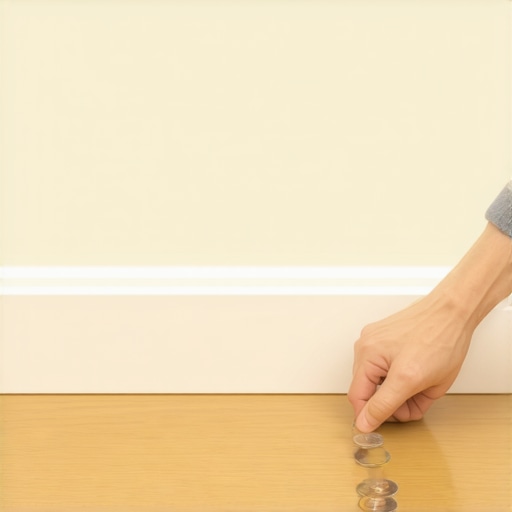
Most guys skip the leveling compound. They think the underlayment will hide the dip. It won’t. I spent three days grinding concrete on a job last month just so the floor wouldn’t click like a castanet. That experience taught me one thing. A floor is only as good as the slab or the plywood sitting beneath it. If you walk across your laminate and hear a hollow thud, or if you see a sliver of darkness between the floor and the trim, you have a structural problem masquerading as a cosmetic one. The penny test is the quickest way to diagnose if your installer took shortcuts or if your house is naturally shifting beyond the tolerances of a floating system. Grab a copper coin. If it slides under the baseboard without resistance, your floor is likely hovering over a void. This gap suggests that the floor leveling was neglected or that the subfloor is currently bowing under environmental stress.
The ghost in the expansion gap
A gap under the baseboard indicates that the laminate floor is not sitting flush with the subfloor due to uneven leveling or excessive expansion. When the floor moves vertically under weight, it creates a squeak or a bounce. This movement eventually breaks the tongue and groove locking mechanisms, leading to permanent floor failure. Laminate is a floating floor. It is not nailed down. It needs to move horizontally, but it should never move vertically. If you can fit a penny between the floor and the shoe molding, the floor is ‘bridging.’ This means it is stretching across a low spot in the subfloor like a bridge over a canyon. Eventually, the weight of a person or a piece of furniture will force that bridge down. When it drops, the click-lock joint takes the full force of the impact. It will crack. Once those joints crack, the floor is dead. You cannot glue it back together effectively. This is why floor leveling is the most important step in any installation.
Why your subfloor is lying to you
Subfloor prep requires checking the surface for any deviation greater than 1/8 inch over a 10 foot radius to ensure stability. Most subfloors look flat to the naked eye. They are not. Concrete slabs have high spots called ‘humps’ and low spots called ‘birdbaths.’ Plywood subfloors have ‘crowning’ at the joists. If you ignore these, the laminate will telegraph every single one of those imperfections. Using a 10 foot straight edge is the only way to verify the truth. If you find a dip, you must use a high-quality self-leveling underlayment. These products are often made of calcium aluminate or Portland cement mixed with polymers. They flow like water to fill the low spots. If you skip this, the penny test will show you exactly where you failed. In regions like Phoenix, the dry heat can shrink the wood components of your home, making these gaps even more prominent. The air sucks the moisture out of the baseboards and the subfloor, causing wood to pull back and reveal the voids that were once hidden.
“A floor is only as good as the subfloor beneath it; deflection is the enemy of every joint.” – Master Flooring Axiom
The physics of the 1/8 inch that ruins everything
Precision in flooring measurements is the difference between a floor that lasts thirty years and one that fails in three. The 1/8 inch tolerance is a hard rule. When a floor spans a gap larger than this, the air trapped underneath acts as a bellows. Every time you step, you are pushing air and dust through the joints. This creates a clicking sound. Over time, the friction of the boards rubbing against each other wears down the decorative wear layer. Laminate is made of High-Density Fiberboard (HDF). This is essentially compressed sawdust and resin. It is incredibly strong in compression but weak in shear. Vertical movement puts the locking joints in a shear state. This is where the chemistry of the core comes into play. The density of the HDF determines how much pressure the joint can withstand before it snaps. Cheap laminate has a low-density core that will crumble the moment the floor starts bouncing over a subfloor dip.
Critical Performance Metrics for Flooring Materials
| Material Type | Janka Hardness Rating | Standard Acclimation Time | Expansion Gap Requirement |
|---|---|---|---|
| Laminate (HDF Core) | N/A (Wear Layer Varies) | 48 to 72 Hours | 1/4 to 3/8 Inch |
| Engineered White Oak | 1360 lbf | 72+ Hours | 1/2 Inch |
| Solid Brazilian Cherry | 2350 lbf | 7 to 14 Days | 3/4 Inch |
| Luxury Vinyl Plank | N/A (Rigid Core) | 24 to 48 Hours | 1/4 Inch |
The friction between carpet install and laminate transitions
Transitions between carpet and laminate require a sturdy T-molding or a reducer to manage the difference in height and material tension. When you perform a carpet install next to a laminate floor, the carpet is stretched toward the transition. This creates lateral tension. If the laminate is not properly leveled at that transition point, the carpet tack strip will sit higher or lower than the laminate edge. This creates a trip hazard and a visual gap. You must ensure the subfloor is perfectly level at the doorway. If the laminate side is lower, the penny test will show a gap under the transition piece itself. This allows dirt and moisture to migrate under the floating floor, which is a recipe for disaster. The subfloor must be a continuous, flat plane across the entire transition zone to prevent the transition strip from rocking or snapping underfoot.
Water in the wrong places near showers and baths
Laminate near showers must be protected by a perimeter seal of 100 percent silicone to prevent moisture from reaching the HDF core. Even ‘waterproof’ laminate has a weakness at the expansion gap. If you have a gap under your baseboards near a bathroom, steam from showers will settle in that void. The HDF core will absorb that moisture like a sponge. This causes ‘peaking’ where the edges of the boards turn upward. Once a laminate board swells, it will never go back to its original shape. The penny test is vital here. If there is a gap, it means the silicone seal is likely broken or non-existent. You need that baseboard to sit tight against the floor with a bead of silicone at the bottom to create a watertight tub. Without this, the humidity from the shower will delaminate the floor within months.
- Check every corner with a penny to find subfloor dips.
- Ensure baseboards are nailed into studs and not just the drywall.
- Verify the presence of a 1/4 inch expansion gap behind the trim.
- Inspect the transition strips for any signs of vertical movement.
- Use a moisture meter to check the slab before any floor leveling work.
The chemistry of the bond and adhesive integrity
Successful floor leveling depends on the chemical bond between the primer and the existing subfloor material. If you are pouring leveler over a concrete slab, you cannot just dump the bag and hope for the best. You must use a latex-based primer. This primer penetrates the pores of the concrete and creates a ‘bridge’ for the new leveling compound to grab onto. Without this, the leveler will delaminate. It will crack under the weight of the laminate floor, and you will hear a crunching sound every time you walk. This is a common failure in fast-track construction. People skip the primer to save a few hours. A week later, the floor feels like you are walking on potato chips. The penny test identifies these hollow spots early. If the floor feels bouncy and you see a gap, the leveling compound has likely failed or was never used in the first place.
“Deflection is the silent killer of modern flooring installations; if the subfloor moves, the floor fails.” – TCNA Technical Manual
The final diagnostic for a lasting surface
A professional flooring job is defined by the absence of sound and the presence of tight, clean lines at the perimeter. If your floor passes the penny test, it means your installer took the time to address the subfloor. It means they understood that the decorative layer is just the skin, while the subfloor is the skeleton. In dry climates, you might see small gaps open up during the winter. This is normal wood movement. However, a gap large enough for a coin is usually a sign of a structural dip. Do not ignore it. If you find a gap, you may need to pull the baseboard, lift the planks, and fill the low spot with a feathered-edge patch. It is a pain to fix, but it is cheaper than replacing the entire floor when the joints eventually snap. Quality flooring is about the things you cannot see. It is about the prep, the leveler, and the patience to let the materials acclimate to the room. Take care of the subfloor, and the laminate will take care of you.